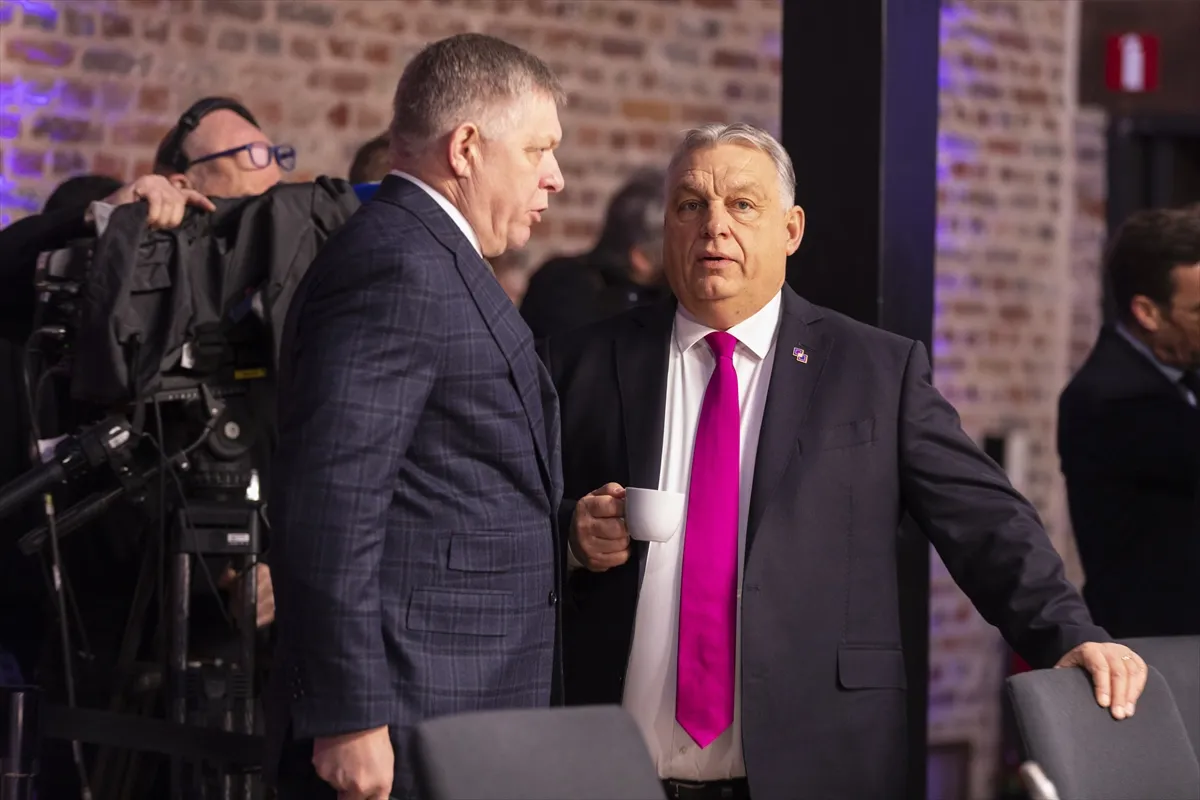
The European Union (EU) has failed to finalize its latest sanctions package against Russia after Hungary and Slovakia declined to support it during a foreign ministers’ meeting in Brussels. EU foreign policy chief Kaja Kallas described the situation as a significant setback, stressing that efforts to achieve consensus will continue. “Unfortunately, we did not reach an agreement on the 20th sanctions package,” Kallas stated. “This is a setback and message we didn’t want to send today, but the work continues.”
Kallas expressed regret that both Hungary and Slovakia have stepped back from the agreement previously reached by EU leaders, which she believes violates the “sincere cooperation clause” outlined in EU treaties. Antonio Costa, President of the EU Council, and Ursula von der Leyen, President of the EU Commission, are set to address the issue with Hungarian Prime Minister Viktor Orban, who has been vocal in opposing the sanctions package.
The proposed sanctions were initially intended to include mechanisms for utilizing frozen Russian assets to fund the measures. Kallas hinted that if current efforts do not yield results, the EU might reconsider this approach.
Ongoing Challenges in Ukraine and Beyond
Addressing the conflict in Ukraine, Kallas emphasized that continued diplomatic efforts are essential but lamented the absence of a ceasefire, noting that the war is nearing its fourth anniversary. “It’s not Ukraine that is the obstacle to peace, Russia is. We must flip the script from pressure on Ukraine to surrender territory to what Russia must do to meet the basic conditions for just and lasting peace,” she remarked. Kallas cautioned that Russia’s “maximalist demands cannot be met with minimal responses.”
In addition, the EU has decided to limit the size of the Russian diplomatic mission in the bloc to 40 personnel. Kallas indicated that this measure aims to prevent the influx of “hundreds of thousands of former Russian soldiers” into the Schengen area, thereby reducing the risk of “war criminals and sabotage roaming European streets.” She also shared a document with EU member states, detailing the concessions expected from Russia, including the withdrawal of troops from occupied territories and adherence to existing international agreements.
International Relations in Focus
Kallas also addressed tensions in the Middle East, specifically criticizing Israel’s expansion of powers in the West Bank. She asserted that such actions breach international law and jeopardize the prospects for a future Palestinian state. “Twenty-six countries want sanctions on the violent settlers in the West Bank. It has been on the table for quite some time, and one doesn’t want it, so this is clearly the problem that we have in our decision-making processes,” Kallas explained.
Furthermore, she cautioned about the deteriorating relationship between the United States and Iran, warning that both nations are “inching dangerously towards war.” Kallas underscored the limited opportunities for diplomacy, stating, “The window of diplomacy is very narrow, and any military intervention risks hard-to-control consequences.”
On the topic of Venezuela, Kallas mentioned that the EU is set to discuss a new approach regarding sanctions, indicating a potential shift in policy contingent on reaching a consensus among member states.
The ongoing dialogues and negotiations reflect the complex landscape of international relations and the hurdles the EU faces in its efforts to impose sanctions effectively while balancing differing national interests within its member states.