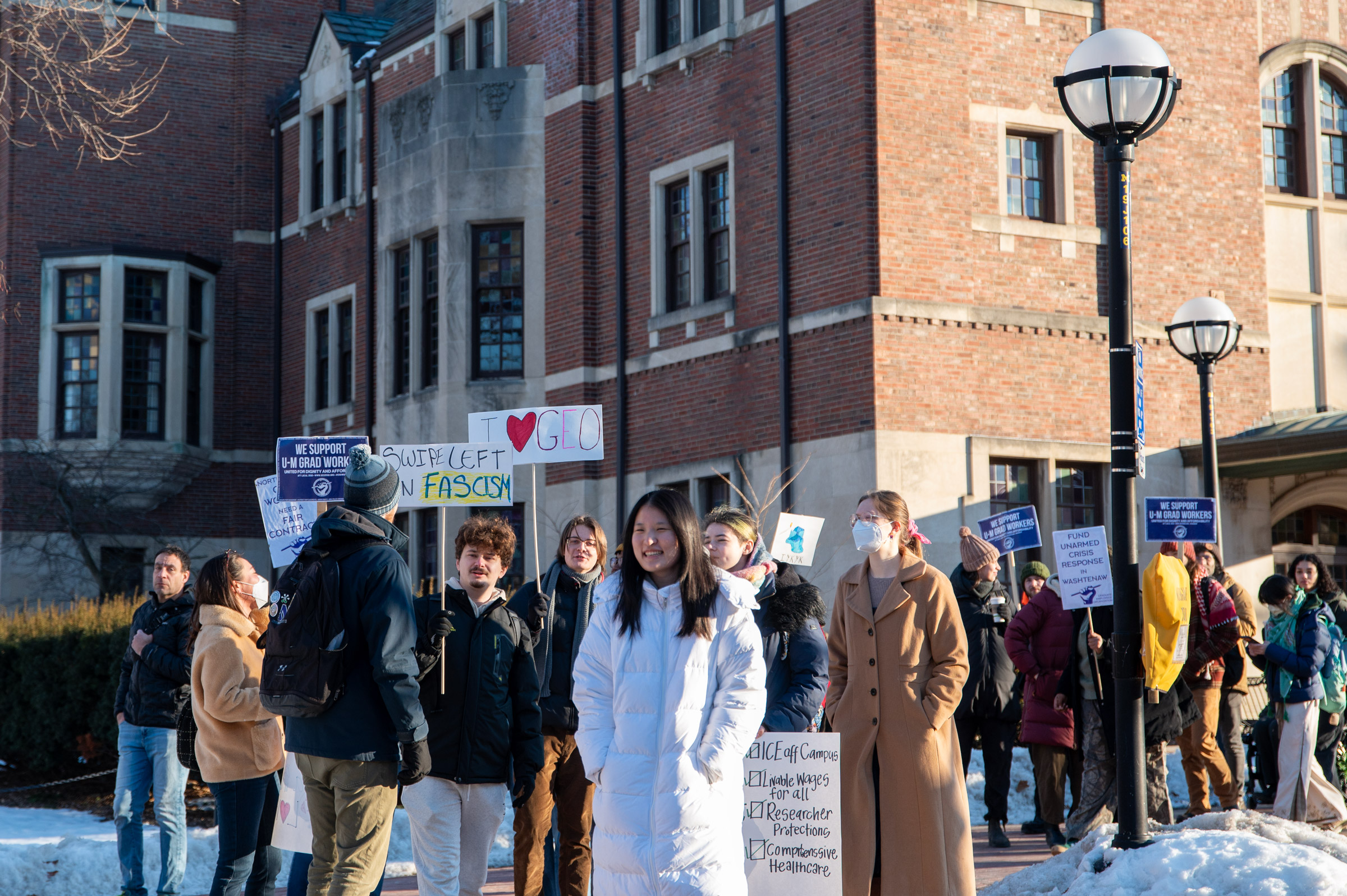
The Graduate Employees’ Organization (GEO) staged a protest on the morning of February 12, 2026, at the Michigan League, advocating for improved wages and working conditions for graduate student employees. The demonstration coincided with a scheduled contract bargaining session between GEO and the University of Michigan’s Human Resources department, which was ultimately canceled. This cancellation followed a decision by mediator Micki Czerniak to suspend all bargaining sessions for a period of 28 days.
Demands for Fair Pay and ICE Protections
During the protest, participants carried signs demanding fair pay and called for an end to collaboration with U.S. Immigration and Customs Enforcement (ICE) on campus. Chants such as “Ann Arbor is a union town, if we don’t get it, shut it down” echoed through the gathering, highlighting the urgency of their demands. Protesters also advocated for the expansion of Ann Arbor’s Unarmed Crisis Response Program, which would redirect non-criminal calls from police to trained crisis responders.
Daniel Weaver, chair of GEO’s salary working group, explained that the purpose of the picket was to reach out to the University administration. He emphasized that the leadership has become disconnected from community input. “Leadership, in general, works hard to be insulated from a lot of the people who work here,” Weaver stated. He expressed the need for greater visibility of the voices that contribute to the University’s operations.
The picket drew support from a variety of community members, including University lecturers, undergraduate student organizations, and local political figures. Yousef Rabhi, an Ann Arbor mayoral candidate and Washtenaw County commissioner, attended the protest holding a sign that read “Fair Work, Fair Pay.” Rabhi expressed his solidarity with GEO’s demands for better wages and an ICE-free campus, describing the University’s decision to halt in-person contract negotiations as disrespectful to labor practices.
Solidarity Among Students
Support for GEO’s cause extended beyond graduate students. Undergraduate students, including Siena Ramirez, a member of the TAHRIR Coalition, emphasized the importance of solidarity in the fight against ICE on campus. “It’s our responsibility to support each other’s rights,” Ramirez remarked. She noted that the struggles of GEO directly affect all students on campus, highlighting the interconnectedness of their advocacy efforts.
Hiab Teshome, president of GEO, reiterated the significance of collective support from the University community. “Everyone is affected by the things the University does,” Teshome said. He underscored that the presence of allies at the picket demonstrates the power of unity in effecting change.
As the protest continued, discussions surrounding the need for protections against ICE remained a central theme. GEO had previously proposed measures to limit the University’s cooperation with ICE and to alert the community of any ICE presence on campus during their last bargaining session.
The ongoing struggle for fair wages and enhanced protections reflects the broader challenges faced by graduate student employees in the current educational landscape. The GEO continues to advocate for changes that they believe are essential for a supportive and equitable academic environment.