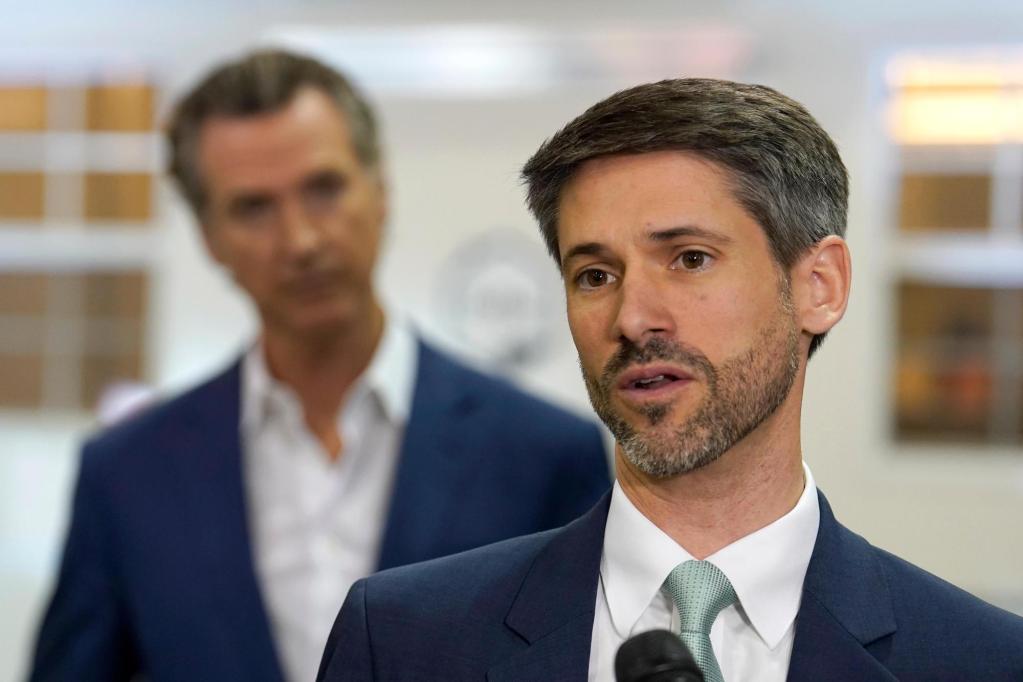
San Jose Mayor Matt Mahan has officially declared his candidacy for Governor of California, joining a crowded field of candidates aiming to succeed Gavin Newsom. His entry marks a significant moment in what has been an unusual gubernatorial election cycle, characterized by numerous candidates entering and exiting the race. Prior to Mahan’s announcement on March 15, 2024, there were eight Democrats and two Republicans vying for the position.
Shifting Dynamics in the Race
The field of candidates is now likely set, as potential challengers have either committed to running or withdrawn from consideration. With the primary election scheduled for June, polling will take on increased importance. Candidates who struggle in the polls may find themselves sidelined, facing limitations in funding and media attention as they navigate the race.
Mahan’s candidacy is noteworthy, particularly as he has been a vocal critic of Newsom. Until now, billionaire Tom Steyer was the only Democratic contender to openly challenge the state’s governance, yet he refrained from directly linking Newsom to California’s pressing issues. Mahan, however, has been more explicit in his criticism.
In a commentary for the San Francisco Standard last August, Mahan condemned Newsom for focusing on his opposition to former President Donald Trump rather than addressing state-specific challenges. He stated, “Gov. Newsom’s supporters say he is ‘breaking the internet’ and ‘owning’ Trump. But the governor, and every elected official and leader, also need to own up to the truth. And the truth is that California has the highest unemployment rate in the nation, at 5.5%, and nearly half the nation’s unsheltered homeless people.”
Mahan’s Vision for California
In announcing his bid, Mahan emphasized his desire for a governor who not only champions Democratic values but also effectively addresses California’s significant problems. “I’m jumping in this race because we need a governor who is both a fighter for our values and a fixer of our problems,” he said. Mahan cited progress on homelessness, public safety, and housing supply in San Jose as evidence of his capability to lead on these issues at a state level.
As the campaign unfolds, one of the key challenges for Mahan and other Democratic candidates will be the state’s ongoing budget deficits. The debate over whether to cut spending or raise taxes looms large. A proposed ballot initiative, which seeks to impose a 5% tax on the wealth of approximately 200 billionaires in California, has been framed as a potential solution for funding healthcare programs facing cuts.
This wealth tax has become a focal point for the left wing of the Democratic Party. Both Newsom and Mahan share concerns that such a tax could drive wealthy Californians out of the state, diminishing their investments and impacting job creation. Despite California’s reputation as a deep blue state, its Democratic politicians are not uniformly progressive. Mahan and former Los Angeles Mayor Antonio Villaraigosa represent more centrist viewpoints, which could lead to friction with union leaders and more left-leaning factions within the party.
The outcome of this gubernatorial campaign will serve as a litmus test for the political landscape in California, reflecting the balance between progressive and centrist ideologies. As the June primary approaches, candidates will need to articulate their positions clearly to resonate with voters across the diverse state.