The operation known as Metro Surge, which saw federal immigration agents deploy in large numbers across Minneapolis, has officially ended. Tom Homan, the former “border czar” under President Donald Trump, made the announcement at Fort Snelling, a site of ongoing protests against the Immigration and Customs Enforcement (ICE) presence in the city. This decision follows intense community mobilization over the past two months, marking a significant moment in the fight against federal immigration enforcement in Minnesota.
Since its inception in December 2023, Operation Metro Surge involved the deployment of over 3,000 federal agents. The Trump administration characterized this effort as the “largest immigration enforcement operation in U.S. history.” However, the operation instilled fear within immigrant communities, leading many to avoid work and school. Minneapolis Mayor Jacob Frey reported that the local workforce lost approximately $47 million in wages during this period, while local businesses suffered losses exceeding $80 million in January alone.
ICE’s activities disproportionately targeted communities of color, notably the Somali, Latino, and Hmong populations, as well as individuals with pending asylum claims. The tragic deaths of community members Renee Nicole Good and Alex Pretti at the hands of federal agents intensified public outrage, prompting widespread protests demanding the removal of ICE from their neighborhoods. Good was fatally shot while observing an ICE raid, and Pretti was killed while attempting to intervene in an arrest.
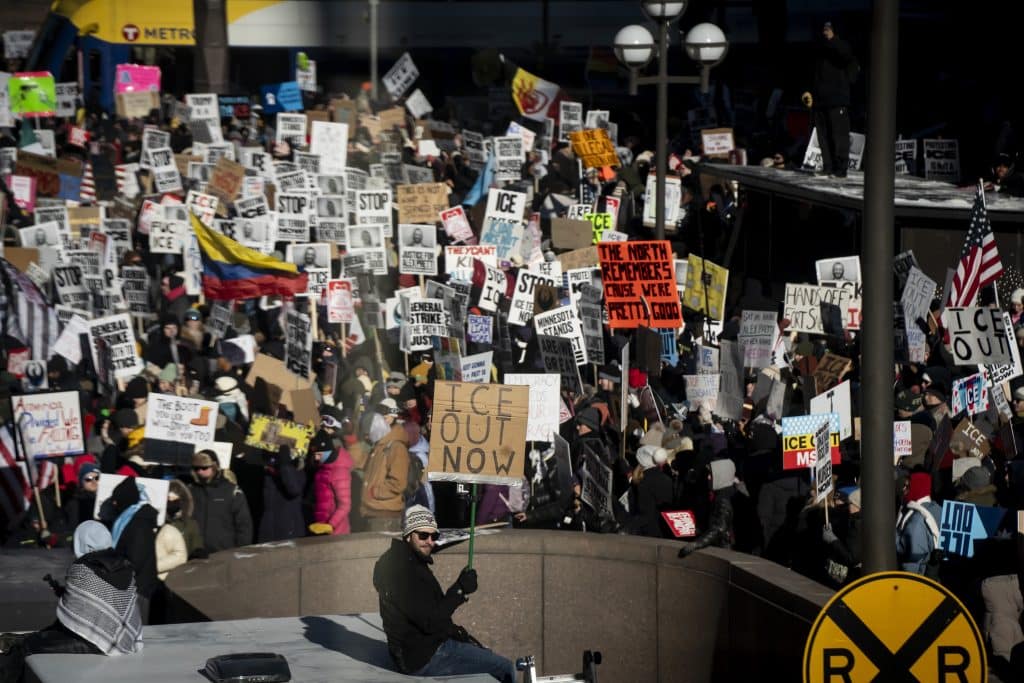
The community response was immediate and powerful. Thousands took to the streets in protest, organizing rapid response networks and mutual aid initiatives to protect their neighbors from ICE actions. On January 23, 2024, a massive shutdown occurred, labeled a day of “no work, no school, no shopping,” where workers called in sick or walked off their jobs. Estimates suggest that one in four Minnesotans participated, demonstrating the collective strength of the community.
### Community Mobilization Challenges Federal Authority
The mobilization in Minneapolis underscored a pivotal lesson: that organized community action can challenge the authority of federal enforcement agencies. The protests not only highlighted the dire situation faced by immigrant families but also showcased the potential for solidarity among the working class. Activists created neighborhood patrols and documented ICE activities, ensuring that community members were informed and supported.
Schools became a focal point of resistance, with educators collaborating with parents to establish safety corridors for students. Teachers used their understanding of local needs to facilitate support systems, providing resources such as groceries and financial assistance to families reluctant to leave their homes for fear of detention.
The direct involvement of workers in these actions demonstrated a broader shift within the labor movement, where many are beginning to recognize their role in advocating for immigrant rights. This newfound awareness reflects a growing sentiment that the struggles of workers and immigrants are inextricably linked.
### The Role of Unions in Social Movements
As the situation evolved, the role of labor unions in the fight for immigrant rights became increasingly critical. While unions expressed solidarity with the protests, the actual mobilization often came from rank-and-file workers rather than union leadership. On the day of the shutdown, many unions endorsed the action, yet few took significant steps to organize their members. This disconnect raises important questions about the future of labor movements and their ability to respond to grassroots initiatives.
Rank-and-file workers demonstrated their potential by organizing walkouts and participating in protests. In one notable instance, over 85 percent of union members in a local Communication Workers of America (CWA) chapter did not report for work in solidarity with the protests. The Minneapolis bus network was temporarily halted as drivers refused to transport police or those arrested during ICE operations.
Despite the impressive grassroots mobilization, the lack of coordinated action from union leadership highlights the need for a reevaluation of how unions engage with social movements. If unions can harness the energy and creativity of their members and align with community efforts, they have the potential to significantly impact the ongoing fight for immigrant rights.
### A Call for Class Independence
The Minneapolis experience also raises critical discussions about the political landscape. The Democratic Party’s response to the situation has sparked debate about its alignment with grassroots movements. While some leaders have positioned themselves as allies, their actions often reflect a desire to contain dissent rather than fully support the demands of the community.
The recent unrest in Minneapolis, combined with the administration’s missteps, presents an opportunity for a renewed focus on class independence. Many community members express skepticism regarding the Democratic Party’s intentions, rooted in a history of compromises that have left working-class interests sidelined. The lessons learned from Minneapolis could inspire a broader movement advocating for a labor movement that prioritizes the needs of the working class over political allegiances.
As the community continues to navigate the aftermath of Operation Metro Surge, the fight for immigrant rights is far from over. Thousands remain in detention, and the potential for ICE operations to shift elsewhere looms. Local residents emphasize the importance of maintaining pressure on all fronts, advocating for the release of detainees and for the complete removal of ICE from their communities.
The Minneapolis community’s struggle reflects a growing awareness of collective power, demonstrating that when ordinary people unite for a common cause, they can challenge even the most formidable political forces. With ongoing mobilization and strengthened alliances between labor and community movements, there is potential for significant change in the fight against oppressive immigration policies.