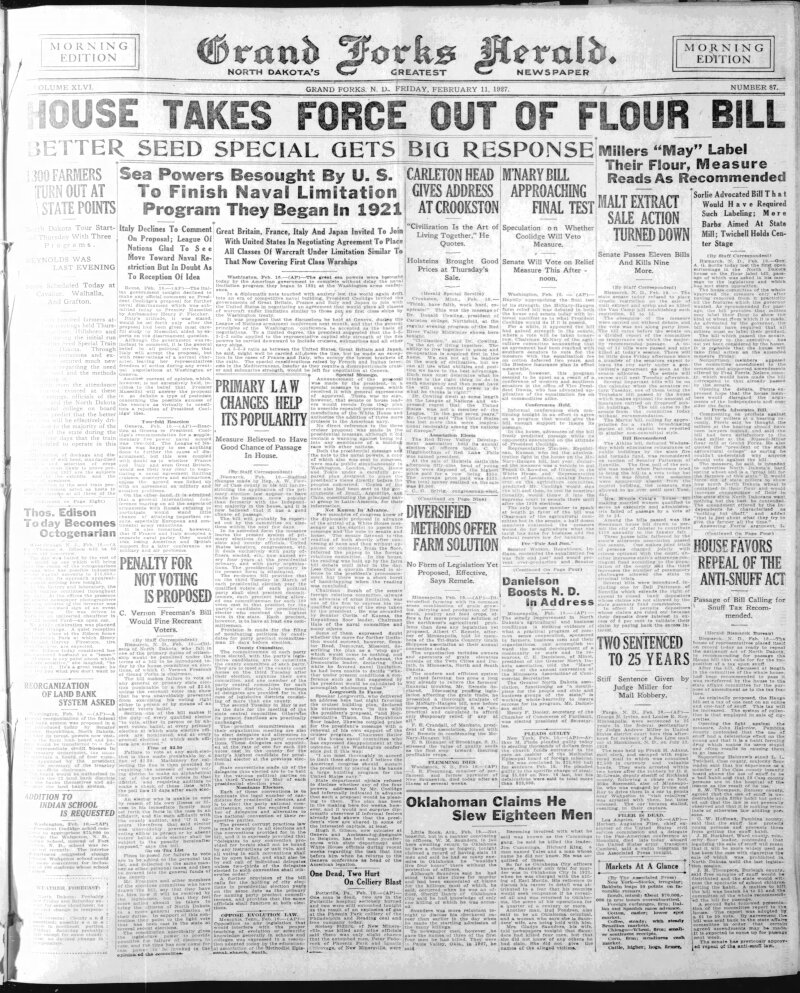
On February 11, 1927, the Grand Forks Herald reported on a significant legislative proposal in North Dakota, which sought to impose a fine of $2.50 on citizens who fail to vote. This initiative, spearheaded by C. Vernon Freeman, chairman of the house committee on elections, aims to encourage greater civic participation among voters in the state.
The proposed bill outlines that any qualified elector who does not participate in general or primary elections would be subject to the fine unless they can provide adequate justification for their absence. Such justifications include being unavoidably prevented from voting in person or through an absentee ballot.
According to the bill, every qualified voter would be required to cast their vote either in person or by absentee ballot at every primary election where state officers are nominated and at every general election where these officers are elected. The mechanism for enforcing this fine includes a system where assessors in each voting district will compile alphabetical lists of qualified voters. Auditors will then cross-check these lists with the poll records 15 days after each election to identify non-voters.
In cases where an elector is unable to vote due to illness, either personally or within their immediate family, the bill allows for an affidavit to be filed with the county auditor. If the auditor deems the reasons sufficient, the elector will be exempt from the proposed penalty.
The fines collected from non-voting citizens would be added to the personal tax list and collected in a manner similar to other personal taxes. The funds would then contribute to the general funds of the county, providing an additional fiscal element to the proposal.
Freeman and other members of the elections committee expressed uncertainty regarding how the legislature would receive the bill. Nevertheless, they believe it is crucial to foster a sense of responsibility among North Dakota citizens regarding their voting duties. They point to low voter turnout in recent elections as a motivating factor for this legislative action.
The North Dakota constitution grants the legislature the authority to establish penalties for failure to vote, and the committee feels that the current political climate necessitates invoking this power. As the proposal moves forward, it has the potential to reshape civic engagement in the state, prompting discussions about the responsibilities of citizenship and the importance of participation in democratic processes.