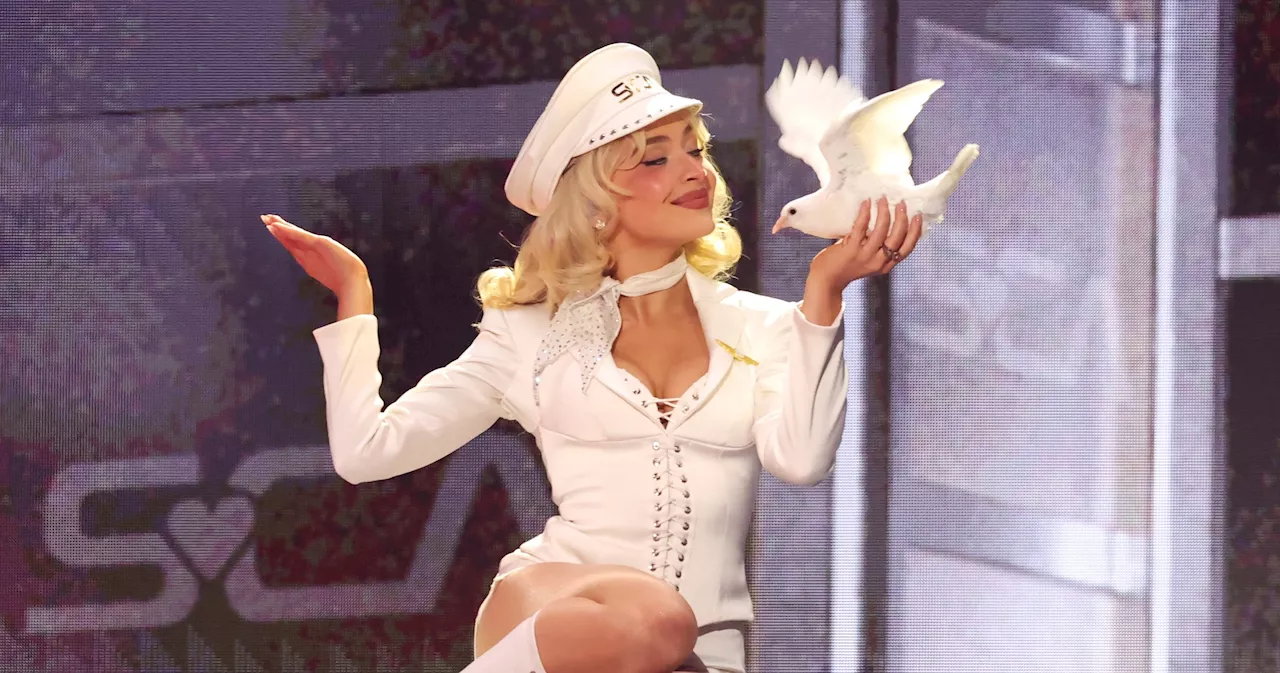
Sabrina Carpenter faced backlash from the animal rights organization PETA after incorporating a live dove into her performance at the 2026 Grammy Awards. The singer showcased the bird during her rendition of “Manchild” at the Crypto.com Arena in Los Angeles on February 1, prompting the organization to label the act as cruel and unnecessary.
During the performance, Carpenter, 26, held the white dove in her hands while seated in what resembled an airplane as part of an airport-themed backdrop. PETA took to its official X account to voice its criticism, asserting, “Hey Sabrina, bringing a live bird onto the Grammys stage is stupid, slow, useless … and cruel!” The post included an image of Carpenter with the dove and emphasized that such conditions, including bright lights and loud noises, could cause fear and distress to the bird, which belongs in the open sky.
The organization further questioned the decision, stating, “Did Sabrina Carpenter really just bring a bird on stage in 2026?! The ‘Manchild’ singer is giving childlike behavior. Leave animals out of the #GRAMMYS!” PETA was present at the event, having staged a separate demonstration within the Grammy gifting suite, where a “walking, talking robo-chicken” distributed vegan food samples to celebrities.
Carpenter, who garnered six nominations at this year’s ceremony, including Song of the Year for “Manchild,” has previously faced scrutiny for her creative choices. Her album, Man’s Best Friend, released in August 2025, was met with criticism for various reasons, including the lyrics of “Manchild,” which some interpreted as ableist. The line referencing “slow” raised concerns among fans, with one user commenting, “The word ‘slow’ in manchild … is a historically ableist term,” suggesting that it overlooked the needs of disabled individuals.
The album cover also drew negative attention, featuring Carpenter posing on all fours while being pulled by her hair, which some deemed as glorifying domestic violence. Critics expressed their disapproval on social media, highlighting the serious implications of such imagery.
In response to the backlash surrounding her album, Carpenter addressed the issue during an interview with Interview magazine last September. “You can be sure that anything I do and say has a little bit of a wink to it,” she explained. “If I’m being completely transparent, I don’t do anything anticipating what the reaction will be. I only do things that speak to me, that feel right, and make sense when you hear the music.”
The controversy surrounding her Grammy performance adds to Carpenter’s history of navigating public criticism regarding her artistic expression. As she continues to evolve in her career, the implications of her choices resonate with both her audience and advocacy groups alike.