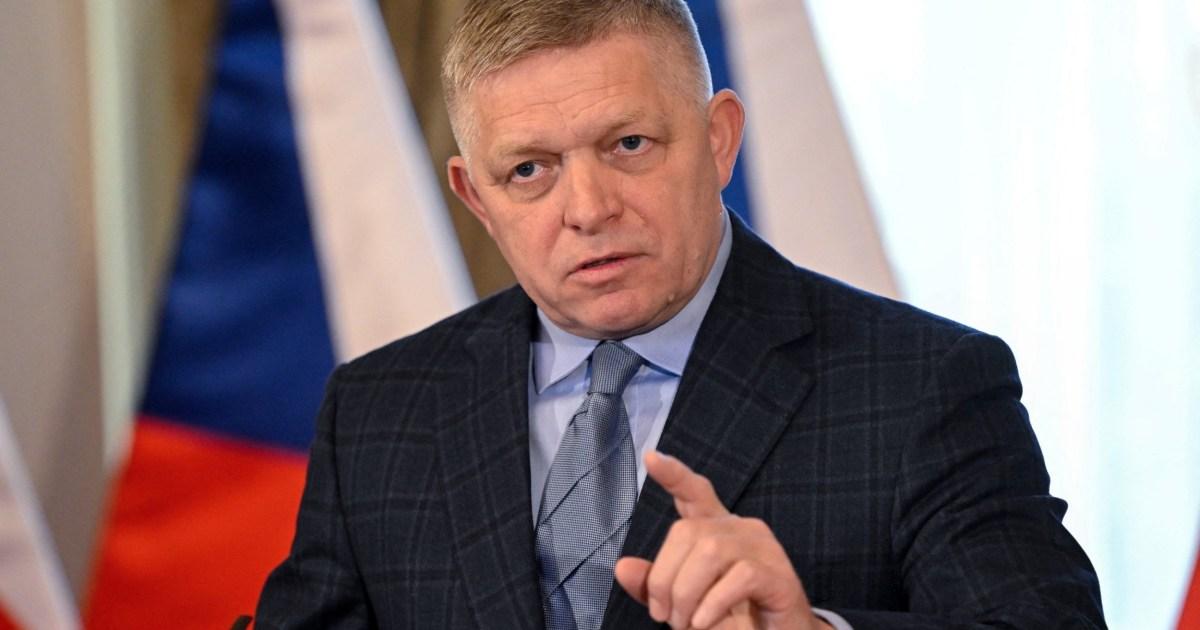
During a recent meeting at his Mar-a-Lago estate, Donald Trump faced scrutiny over his mental state from one of his prominent European allies, Slovak Prime Minister Robert Fico. Fico described Trump’s demeanor as “dangerous” during discussions, leading to heightened concerns among diplomats regarding the U.S. President’s psychological well-being.
Details of the Meeting Emerge
Fico’s remarks, reported by Politico, came to light after five anonymous diplomats disclosed details about their encounter with Trump. According to these sources, Fico expressed his concerns regarding Trump’s mental state during a separate meeting in Brussels on January 22, 2024. This meeting involved European officials addressing Trump’s escalating threats related to Greenland.
While Fico did not officially raise concerns about Trump’s mental health during the Brussels meeting, his comments to fellow EU politicians indicated a level of unease. As a staunch supporter of Trump, Fico’s critical remarks have attracted considerable attention. His alignment with Trump on various controversial issues highlights the complexities of their political relationship.
White House Responds to Criticism
The White House quickly dismissed Fico’s comments as “fake news.” Anna Kelly, a spokesperson for the White House, stated, “This is absolutely total fake news from anonymous European diplomats who are trying to be relevant. The meeting at Mar-a-Lago was positive and productive.” This response underscores the tensions between the U.S. administration and European allies regarding Trump’s leadership style.
Fico’s meeting with Trump was not classified as an official engagement, although it included prominent figures such as U.S. Secretary of State Marco Rubio and Slovakia’s Foreign Minister. Following their discussions, Fico remarked that he and Trump shared a “complete agreement” regarding the perceived crisis within the European Union.
Fico has had a tumultuous political history, having survived an assassination attempt in 2024 that left him seriously injured. He previously served as Slovakia’s Prime Minister from 2006 to 2010 and again from 2012 to 2018. His resignation in 2018, prompted by public outrage over the murder of investigative journalist Ján Kuciak, did not diminish his influence in Slovak politics.
Since returning to power, Fico has formed a Eurosceptic coalition, advocating for closer ties with the Kremlin and urging Ukraine to negotiate peace with Russia. His comments regarding the conflict reflect a controversial stance that has strained relationships within NATO, as he stated to public broadcaster RTVS, “What do they expect, that the Russians will leave Crimea, Donbas, and Luhansk? That is unrealistic.”
In February, Fico’s government faced backlash after he shut down Slovakia’s anti-corruption office, resulting in widespread protests and warnings from Brussels about the importance of upholding the rule of law.
The ongoing scrutiny of Trump’s mental state, coupled with Fico’s remarks, illustrates the complex dynamics at play within international politics, particularly among allies navigating a shifting geopolitical landscape.