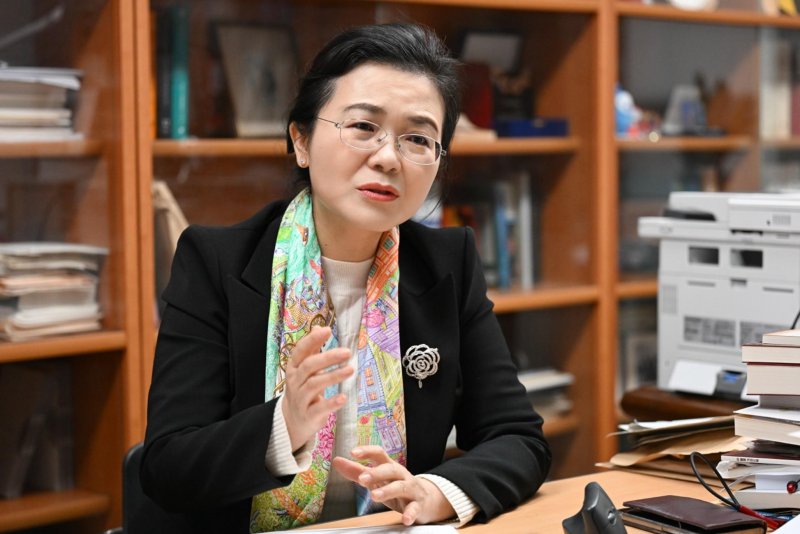
A law professor from Korea University has expressed serious concerns regarding a series of proposed judicial reforms in South Korea. Cha Jin-ah, a specialist in constitutional law and former researcher at the Constitutional Court, warned that the reforms could undermine judicial independence and disrupt the separation of powers. During an interview on December 17, 2023, she stated, “unchecked power leads to dictatorship,” highlighting the potential risks of these legislative changes.
The reform package, which is supported by the ruling party, includes plans to expand the number of justices on the Supreme Court, create an appellate court, establish a special court for treason, and introduce a new criminal offense for “distorting the law.” Cha acknowledged that while some reform elements could be beneficial, the rushed approach and the number of bills being processed simultaneously raise alarms about political motivations and the consolidation of power.
Concerns About Proposed Changes
Cha noted that while she agrees in principle with increasing the Supreme Court justices, the proposed increase of 12 justices would effectively double the court’s size, leading to “blatant political appointments.” She suggested that adding just four justices, which would create one additional division, would be more appropriate. Furthermore, she expressed skepticism about the proposed court petition system, describing it as overly simplistic.
“If all final judgments alleged to violate due process or infringe fundamental rights become subject to constitutional review, how would the Constitutional Court filter them?” she questioned. This statement underscores the potential logistical challenges that could arise from implementing such a system.
The ruling party has indicated a willingness to revise certain controversial elements of the proposals, such as the special court for treason and the crime of distorting the law. Cha, however, argues that the very existence of a special court for treason is inherently unconstitutional. She believes that these reforms could lead to politically motivated trials that undermine fair legal processes.
Judicial Independence at Risk
Cha expressed deep concern over the implications of introducing a crime of distorting the law, which she described as archaic. She referenced Germany as the only advanced country with a similar provision, which was established to punish judges and prosecutors who collaborated with the Nazi regime. Cha warned that if adopted in South Korea, this clause could be misused to pressure judges and officials into compliance with political demands, thereby eroding judicial independence.
The proposed abolition of the court administration office and the creation of a judicial administration committee also drew her criticism. Cha emphasized that judicial power, as enshrined in the Constitution, encompasses not only adjudication but also administrative functions. She argued that stripping judicial administrative authority would be unconstitutional and could lead to significant disruptions in the judicial process.
In her view, stopping these bills from passing will require strong public opposition. “Winning an election does not mean everything the ruling party does equals the people’s will,” she stated. “Democracy does not operate only on election day. The people entrust power but also must control it.”
Cha also highlighted the crucial role of the opposition in addressing the potential erosion of the separation of powers. She called on opposition leaders to present compelling criticisms of the proposed reforms and to offer reasonable alternatives to maintain a balanced governmental structure.
As the debate over these judicial reforms continues, the implications for South Korea’s legal framework and democratic processes remain significant. The upcoming legislative decisions will undoubtedly shape the future of the nation’s judiciary and its ability to function independently from political influence.