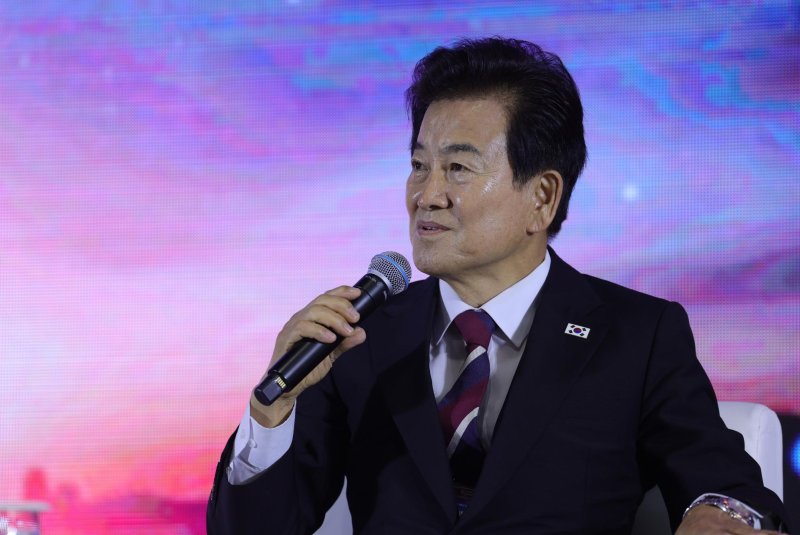
The unification policy of South Korea is experiencing a significant shift, raising concerns among experts. Cho Young-ki, secretary general of the Korea Foundation for the Advancement of the Korean Peninsula and a former professor at Korea University, argues that the current direction is troubling as North Korea appears to be moving toward a fourth-generation hereditary succession. His analysis comes in light of the recent emphasis on Kim Jong Un‘s daughter, Ju-ae, in state media narratives.
Concerns Over Succession and Policy Direction
Cho highlights that North Korean state media has given significant coverage to Ju-ae, especially during prominent events such as the New Year celebrations. Her appearance at the Kumsusan Palace of the Sun, where the bodies of Kim Il Sung and Kim Jong Il are interred, is seen as particularly meaningful. Cho argues that this deliberate positioning signals an intention to elevate her status as North Korea heads toward a future party congress.
This potential succession poses threats to the already fragile situation in North Korea, according to Cho. He contends that it may entrench what he describes as “extractive institutions,” which perpetuate poverty and repression. Such developments create additional barriers to the long-term goal of unification between North and South Korea.
In his critique, Cho contrasts these extractive systems with “inclusive institutions,” advocating for a South Korean unification strategy that promotes inclusive political and economic frameworks in the North. He expresses concern regarding the recent actions of the Ministry of Unification, suggesting a shift from a firm strategy toward an engagement approach characterized as appeasement.
Shifts in Human Rights Framing
Cho takes issue with the ministry’s recent work report, which includes the decision to dismantle a North Korean Human Rights Center and reframe discussions around “North Korean human rights” as “inter-Korean human rights cooperation.” He warns that this change risks implying a false equivalence in the human rights situations of both Koreas, thereby downplaying the severe abuses occurring in the North.
Moreover, he asserts that the ministry’s approach inadvertently accommodates North Korea’s “two-state” narrative, which he links to Kim’s stance throughout 2023. Cho emphasizes that North Korea’s ongoing focus on bolstering its nuclear capabilities indicates that it has not shifted from its coercive objectives. He firmly rejects the notion that Pyongyang would refrain from using nuclear weapons, countering what he calls complacent assumptions.
Despite growing public skepticism about unification, Cho urges the Ministry of Unification to persist in advocating for the merger of the two Koreas. He proposes a self-directed strategy that safeguards South Korea’s rights and security while also addressing the needs of North Korean citizens.
As a key policy tool, Cho underscores the importance of access to information within North Korea, noting the regime’s efforts to block outside influences as evidence of this strategy’s potential effectiveness. He calls for an urgent reevaluation of the government’s unification policy framework to better align with the current geopolitical landscape.
The views expressed in this column reflect the author’s perspective and are not necessarily representative of all opinions regarding the complex issue of Korean unification.