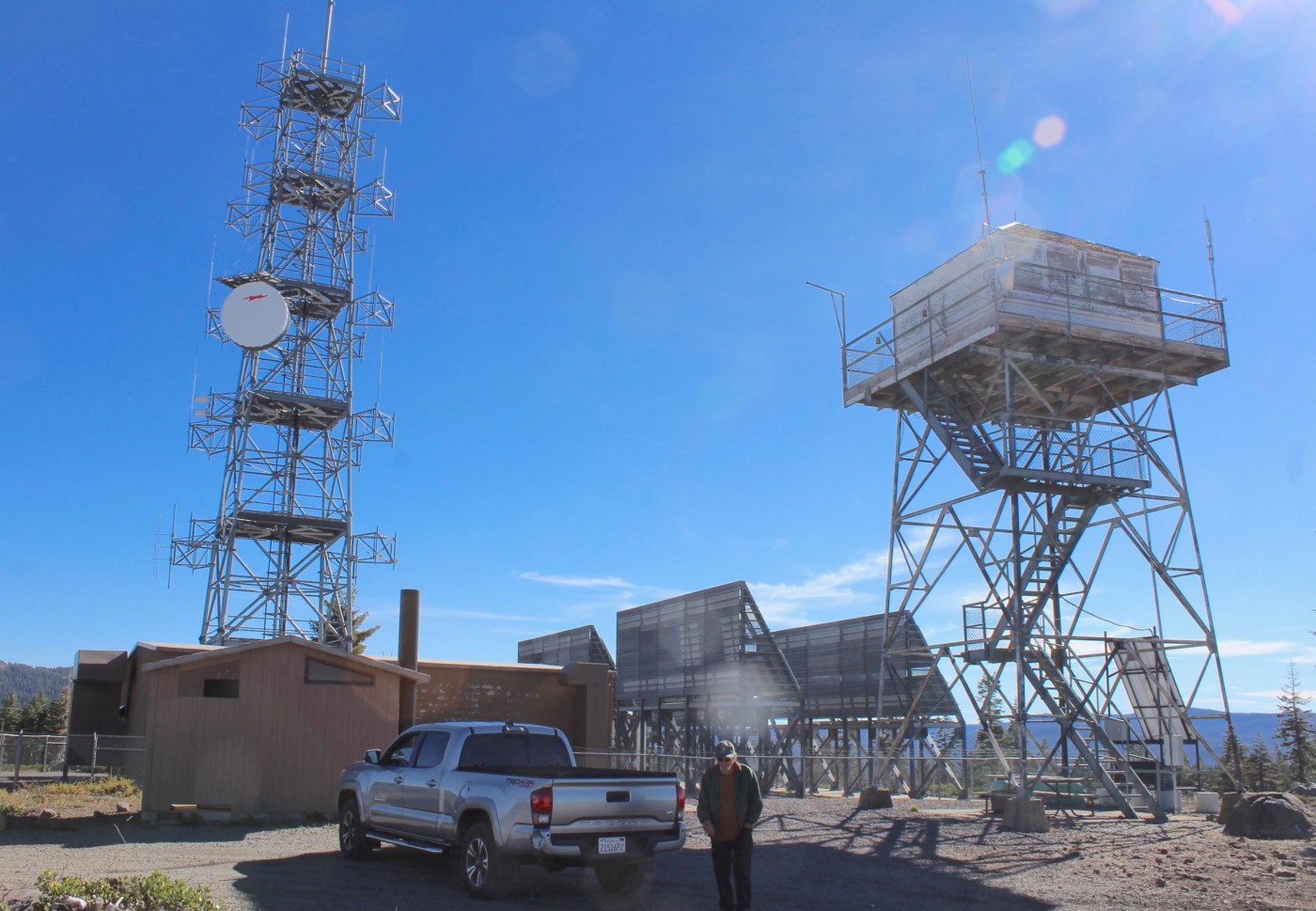
A retired Forest Service employee is advocating for the retention and staffing of the Colby Mountain Lookout, emphasizing the irreplaceable value of human observation in wildfire detection. In a letter addressed to Lassen National Forest Supervisor Rick Hobson, Gary McHargue highlighted the limitations of camera systems compared to trained human lookouts, particularly in the context of wildfire management.
McHargue, who retired from the Lassen National Forest and served for 31 years, underscored the importance of maintaining the lookout’s existing structure. He recalls hiring Ken Jordan as a fire detection lookout in 1985, describing him as one of the best employees he ever had. Throughout his career, Jordan demonstrated exceptional attention to detail and a strong commitment to fire safety.
In his letter, McHargue pointed out the inherent limitations of camera detection systems. He argued that cameras cannot fully assess the surrounding terrain or interpret daily weather variations, which are crucial in identifying potential fire risks. The Colby Mountain Lookout has specific blind spots, such as the Deer Creek Canyon, where smoke could go unnoticed without a human lookout present to survey the area using binoculars.
McHargue explained that a trained lookout can detect smoke before it becomes a significant threat, while cameras, being stationary, lack the flexibility to monitor changing conditions effectively. He noted that human lookouts can also pinpoint lightning strikes accurately and communicate their locations to dispatch and air support, providing critical information for wildfire management.
According to McHargue, human observation is particularly vital during nighttime lightning storms, as a lookout can identify glow from new fire starts that cameras might miss. He referenced a historical case in the mid-1970s when a “sleeper start” fire was detected months after a lightning storm, illustrating the importance of continued human vigilance in fire detection.
During a recent visit to the Colby Mountain Lookout, McHargue assessed the structure’s condition, finding it sound but in need of routine maintenance, such as painting and repairs to grounding wires. He expressed concern that wildfire detection has not received adequate attention or funding compared to initial attack resources like hotshot crews and air units, which are undeniably important.
McHargue emphasized that investing in fire lookout staffing and maintenance is a sound financial decision. He believes that early detection and prevention are far more cost-effective than addressing the aftermath of a major wildfire event. The existing lookout tower, which has served the community for nearly 90 years, represents a proven resource for protecting both natural and human assets in the area.
Ultimately, McHargue’s letter serves as a call to action for local authorities to recognize the value of human lookouts in fire detection. He argues that the combination of experienced personnel and established infrastructure provides a viable solution for wildfire management in the Lassen National Forest, benefiting both residents and the natural environment.