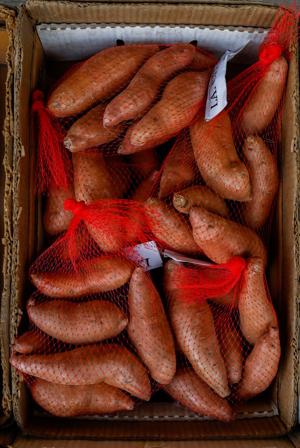
Every year, the debate over sweet potatoes and yams resurfaces, especially during the Thanksgiving holiday. Many people wonder whether these two foods are truly different or if one holds superiority over the other. According to horticulturist Dan Gill, the confusion surrounding these vegetables largely stems from historical mislabeling that dates back to the transatlantic slave trade.
The term “yam” was originally used by enslaved Africans in the Americas to describe the sweet potatoes they encountered, specifically the variety known as Ipomoea batatas. This happened because the sweet potatoes served as a substitute for the starchy yams, or Dioscorea rotundata, that they had known in Africa. The misnomer persisted and became entrenched in American culinary language.
In the 1930s, sweet potato breeders in Louisiana developed new and improved varieties of sweet potatoes, characterized by their softer texture and vibrant orange flesh. To differentiate these newer types from the older varieties, growers began marketing them as “yams.” This choice led to further confusion, as “yams” were already recognized as a distinct tropical vegetable. Nevertheless, the name stuck, and today, many consumers still refer to sweet potatoes as yams.
As a result, the terms “yam” and “sweet potato” have become interchangeable in Southern cuisine. While some may argue that yams are superior, Gill asserts that this perception was only accurate in the mid-20th century when traditional yams were more prevalent. Nowadays, all commercially available sweet potatoes or yams in the United States share similar characteristics: they are soft, moist, and sweet.
Given this historical context, it may be more accurate to simply refer to these vegetables as sweet potatoes. However, the lingering traditions and established terminology make it unlikely that this change will occur anytime soon.
In addition to the sweet potato and yam debate, Gill provided advice for gardeners as the seasons change. He recommends avoiding fertilization for most plants during the fall to help them harden off for winter. Fertilizers stimulate growth and are best applied at the start of a plant’s growing season. For newly planted pansies, petunias, and dianthus, which thrive in cooler months, fall marks the beginning of their growing season, and fertilization can be beneficial.
Gardeners should also be mindful of other seasonal tasks. For example, potted chrysanthemums can either be discarded after blooming or planted into gardens for future blooms. It is advisable to prune these plants back in February to encourage new growth in the spring.
As winter approaches, gardeners need to monitor their plants for pests. Aphids can be managed with insecticidal soap, while caterpillars may require spinosad or B.T. for control. Additionally, many gardeners choose to bring tropical plants indoors for the winter, ensuring they receive ample light from bright windows.
The ongoing discussion regarding sweet potatoes and yams not only reflects culinary preferences but also highlights the significance of historical context in food terminology. As families gather around their Thanksgiving tables, understanding this background can enrich the meal and the traditions surrounding it.