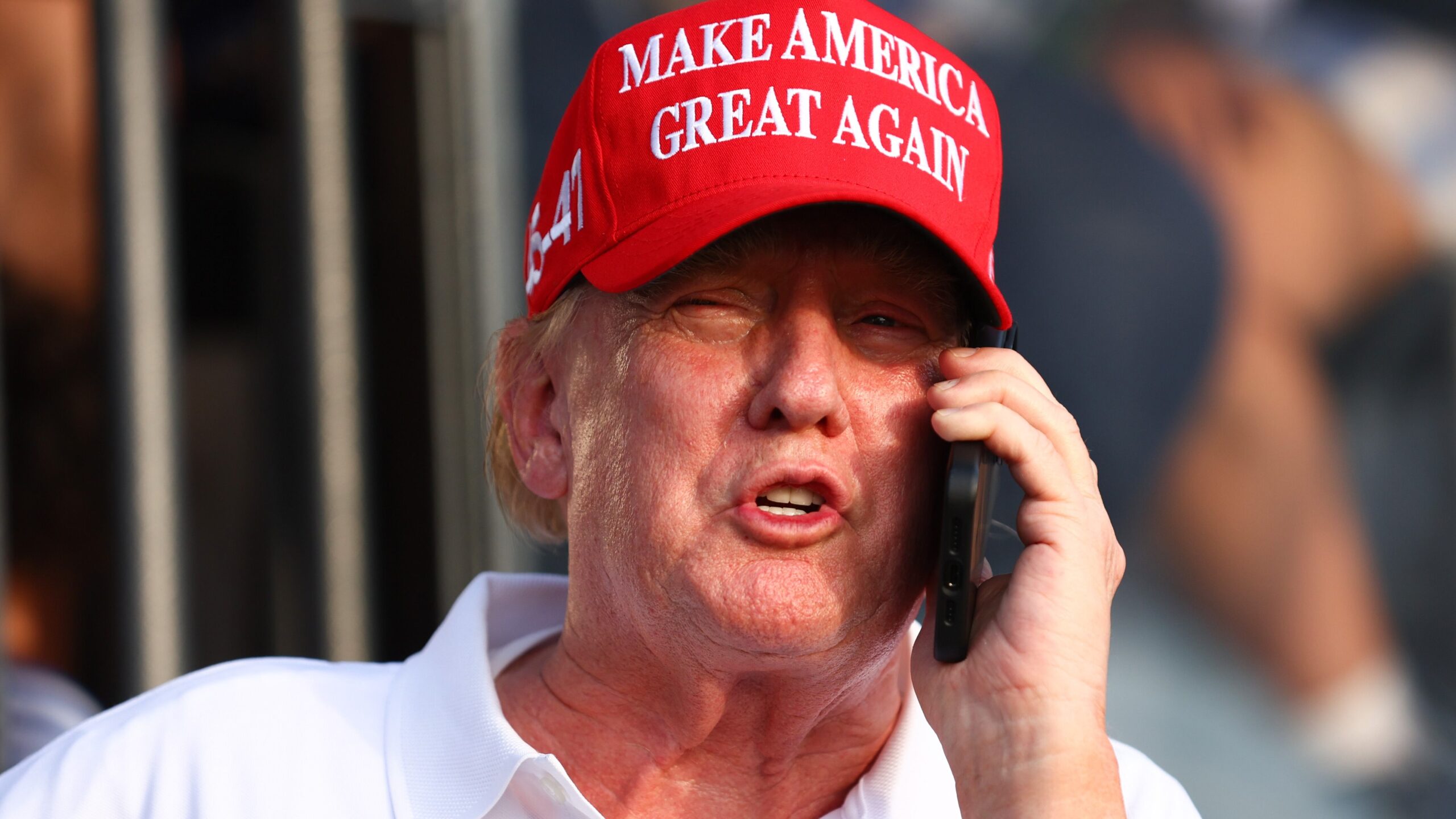
Donald Trump, the 79-year-old President of the United States, interrupted a significant meeting regarding the war in Iran to take a phone call with reporter Liz Landers from PBS NewsHour on the morning of October 16, 2023. Despite being engaged in official discussions about the conflict, Trump spoke about various aspects of the situation in the Middle East, including updates about Iran’s crucial oil terminal, Kharg Island.
In her posts on X, Landers detailed their conversation, revealing critical information about Kharg Island, which serves as Iran’s economic lifeline for nearly all crude oil exports. Trump mentioned that the island is largely “out of commission” following a recent U.S. attack, but he deliberately spared the oil pipes to avoid extensive damage. “I didn’t want to hit the pipes because, you know, it’s years of work to put them together,” Trump stated during the call.
The President expressed his intentions to target the small oil terminal again, asserting, “I told them openly, I’ll knock the hell out of it.” He further explained his strategy around military actions, emphasizing that he intentionally left a buffer zone of “100 yards” around any oil-related infrastructure, indicating the complexities involved in rebuilding after conflict. Trump noted the potential consequences of aggressive actions, stating, “It takes a lot to rebuild infrastructure.”
Trump also shared his prediction regarding oil prices, claiming they would “drop like a rock” once the war concludes. He expressed optimism about the duration of the conflict, saying, “I don’t believe it will be long.” This phone call occurred against a backdrop of growing concerns from the White House regarding Trump’s frequent communications with media outlets about the Iran situation.
According to an anonymous official within the administration, Trump’s numerous calls with various media organizations, including ABC, CNN, and the New York Times, have led to worries about the management of these interactions. The source described the situation as “out of control,” noting that Trump often treats these calls casually, engaging in light banter while addressing serious topics.
Amid these concerns, White House Press Secretary Karoline Leavitt defended Trump’s accessibility to the media. She characterized him as the “most transparent and accessible president in history,” asserting that the press is eager for updates and that the volume of calls reflects their interest.
Trump’s casual approach to media calls has raised eyebrows among journalists, with some insiders indicating that reporters might be misjudging the seriousness of their inquiries. A source told Semafor that during calls, Trump often appears preoccupied and is known to put conversations on speakerphone in front of groups, which can lead to a less formal exchange.
As the situation in Iran continues to evolve, Trump’s comments and engagement with the media will likely remain a focal point of discussion. Whether this approach will influence public perception or policy outcomes remains to be seen.