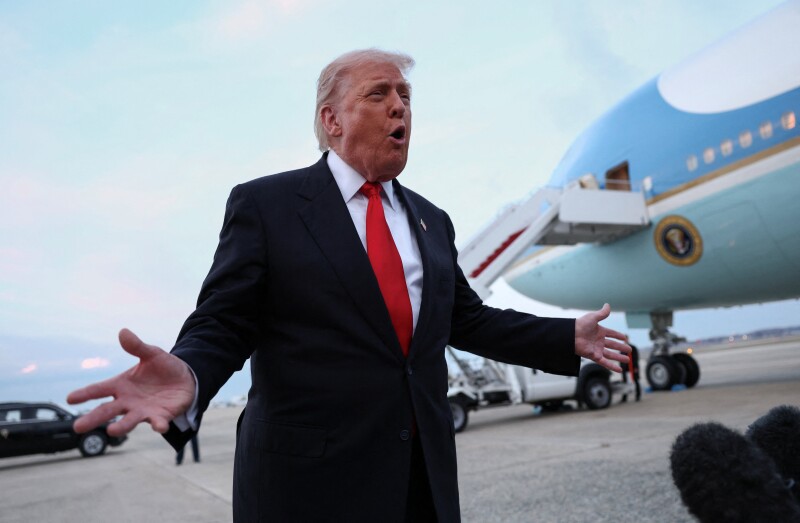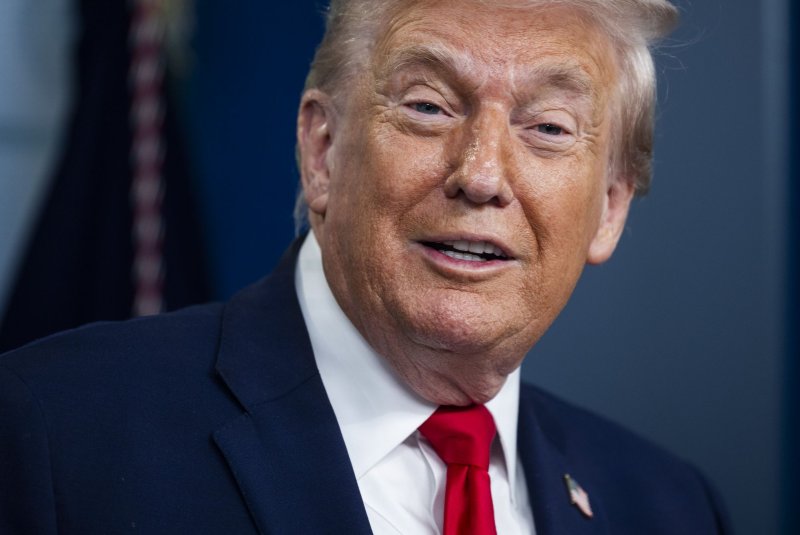
At a press briefing on January 20, 2024, President Donald Trump made headlines with his assertive remarks regarding the potential acquisition of Greenland. When asked by a reporter how far he was willing to go to secure the territory, Trump replied, “You’ll find out.” This comment came during a lengthy two-and-a-half hour session at the White House, where Trump primarily focused on highlighting his administration’s achievements over the past year, including immigration policies, the Nobel Peace Prize, and his actions regarding the Immigration and Customs Enforcement agency.
Trump’s comments raised eyebrows, particularly when a reporter suggested that pursuing Greenland could risk the integrity of NATO. In response, Trump stated, “I think something’s going to happen that’s going to be very good for everybody.” He continued to emphasize his contributions to NATO, claiming, “Nobody’s done more for NATO than I have,” referencing his efforts to increase member contributions to 5% of their gross domestic product.
Trump pointed out that NATO allies were purchasing significant military assets from the United States, indirectly linking this to security concerns surrounding Greenland. “We need [Greenland] for security purposes, national security and world security,” he asserted.
International Reactions and Tensions
Earlier that day, French President Emmanuel Macron addressed the World Economic Forum in Davos, Switzerland, where he appeared to critique Trump’s imperialistic approach without naming him directly. Macron emphasized the importance of cooperation over “new imperialism or new colonialism.” He stated, “We do prefer respect to bullies,” and reinforced the need for a united European response to threats, particularly in light of Trump’s recent comments about imposing 200% tariffs on French wine as a form of retaliation for France’s support of Greenland and Denmark.
Macron condemned the proposed tariffs as “unacceptable,” asserting that no threats would sway European nations regarding their stance on international issues. “Europeans will respond in a united and coordinated manner should they be confirmed,” he noted, highlighting a commitment to uphold European sovereignty.
During the press briefing, Trump was also asked about his relationships with Macron and UK Prime Minister Keir Starmer. He responded positively, stating, “I think I get along very well with them. They always treat me well.” Trump added, however, that both leaders needed to address their countries’ challenges related to immigration and energy, specifically criticizing reliance on wind energy.
Before concluding his remarks, Trump shared a text conversation with Macron, indicating a willingness to collaborate on issues like Syria and Iran. He declined Macron’s offer for a meeting in Davos, citing logistical issues, and noted that Macron would likely no longer be present by the time he arrived.
As Trump prepared to depart for Davos later that evening, the discussions surrounding Greenland and NATO continued to draw attention, reflecting the complex and often contentious dynamics of international relations under his administration.