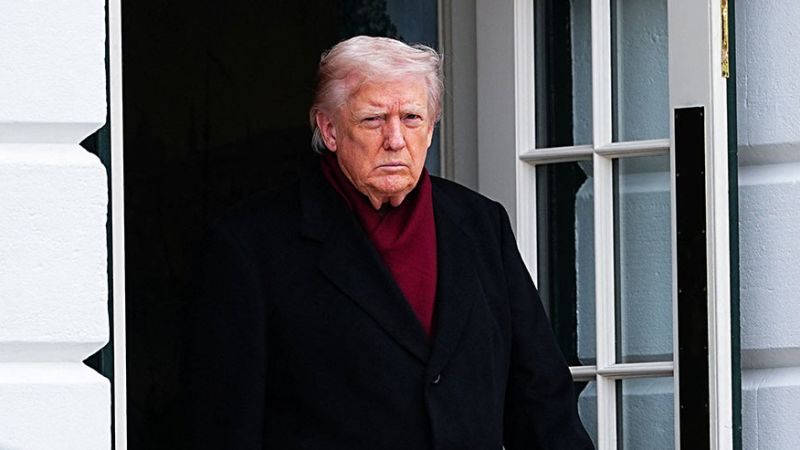
President Donald Trump is set to deliver a prominent economic address on November 14, 2023, at the Mount Airy Casino Resort in eastern Pennsylvania. This event marks the beginning of a series of domestic trips aimed at underscoring the Republican Party’s focus on “affordability,” an issue both parties are prioritizing ahead of next year’s midterm elections.
The economic landscape has become a contentious battleground, with leaders from both sides striving to convey their messages while deflecting responsibility for financial hardships affecting millions of Americans. For Trump, who campaigned on the promise of economic prosperity, this trip serves as a critical test of his ability to deliver results as the GOP braces for challenges in maintaining its House and Senate majorities.
An adviser close to the president acknowledged the situation’s gravity, stating, “Everybody gets it at the White House. We’ve got a lot of work to go, and it’s frustrating for the president, but it’s what we’ve got to deal with.” More than a year after his election victory, recent polls reveal that a majority of Americans feel Trump has yet to fulfill his economic promises. Without a swift recovery in public perception, he risks significant losses in the upcoming midterms.
Polling data reveals a stark view of the economy among the public. A recent Gallup poll showed that 40% of Americans rated economic conditions as poor in November, up from 37% in October. Additionally, a Fox News survey found that 76% of voters view the economy negatively. The Republican Party has seen a decline in its historical advantage over Democrats concerning economic issues, with many voters expressing concerns about rising costs in essentials such as groceries, utilities, and healthcare.
As Trump prepares for his address, a key question remains: Will he continue to assert that the economy is thriving under his leadership, or will he acknowledge the pressing concerns voiced by Americans?
Strategic Shift in Messaging
After notable electoral wins for Democrats in New Jersey, Virginia, and California, alarm bells rang out within the White House. These victories underscored the importance of addressing affordability, which has emerged as a top concern for voters. According to administration officials, Trump’s focus has shifted toward emphasizing his economic policies while encouraging fellow Republicans to adopt a similar approach.
“He feels this is a communication issue,” said one official. “He wants Republicans to step it up in talking about all the good work being done to improve the economy.” Representative Brian Fitzpatrick, a Republican from Pennsylvania defending a district Trump lost in 2024, echoed this sentiment, stating that affordability is the paramount issue. “That trumps everything else,” he remarked, while also criticizing the president’s characterization of affordability concerns as a “Democratic scam.”
Trump has expressed frustration at the notion of fundamental flaws in the economy, which he often claims to have salvaged from the policies of former President Joe Biden. Instead, he has pointed fingers at Biden, asserting that he inherited a struggling economy and that his policies require time to show results. Despite his dismissal of affordability concerns, his advisers recognize the need for a more empathetic approach.
In light of this, the White House is pressing Trump to acknowledge the financial struggles faced by many Americans. They urge him to contrast his policies with those of congressional Democrats rather than focusing on his predecessor, who no longer poses a political threat.
“You’ve got to feel their pain. You’ve got to talk about it every day,” a Trump adviser emphasized.
Future Economic Strategy
As part of a renewed strategy, Trump’s team is prioritizing “policy time” in the president’s schedule. This includes a series of trips aimed at communicating his economic platform more effectively, beginning with the event in Pennsylvania. Starting early next year, the White House intends to establish a routine of weekly trips to various cities across the country, all linked to economic discussions.
During a recent roundtable focused on supporting farmers, Trump acknowledged the necessity of a stronger economic message. He stated, “It’s a very simple statement: They caused it, we’re fixing it.” This approach reflects a commitment to addressing voters’ concerns while touting the administration’s efforts to alleviate inflation and improve economic conditions.
Despite ongoing challenges, officials within the White House believe it is still possible to regain public support on economic matters. They point to recent drops in gas prices and tax relief expected to benefit voters. However, they also recognize that progress must translate into tangible benefits that voters can perceive.
In conclusion, as President Trump embarks on this crucial journey in Pennsylvania, all eyes will be on how he navigates the delicate balance between asserting economic success and recognizing the challenges faced by everyday Americans. The outcome of this trip could have significant implications for the Republican Party as it prepares for the midterm elections.