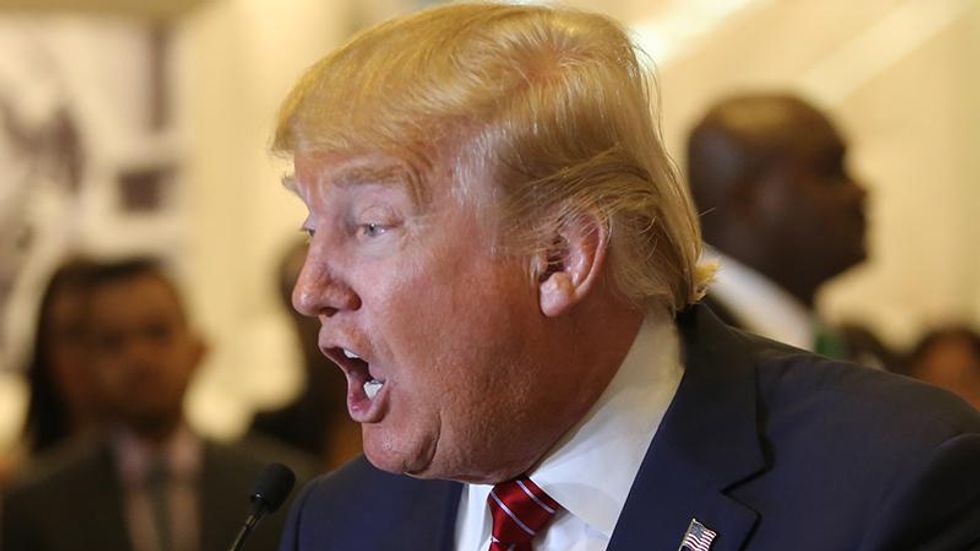
Former President Donald Trump issued a concerning statement over the weekend regarding the release of political prisoners in Venezuela. Through his social media platform, Truth Social, Trump expressed gratitude to the Venezuelan government for what he described as a significant step in releasing these individuals. His message, however, contained an ominous warning that has drawn attention.
Trump’s post acknowledged the Venezuelan government’s actions, stating, “Venezuela has started the process, in a BIG WAY, of releasing their political prisoners. Thank you!” He expressed hope that the freed prisoners would recognize the role the United States played in their situation, saying, “I hope those prisoners will remember how lucky they got that the USA came along and did what had to be done.”
What followed was a stark message that many interpreted as a threat. Trump warned, “I HOPE THEY NEVER FORGET! If they do, it will not be good for them.” This statement has raised concerns among observers about the implications of such a remark, especially from a former president of the United States.
Despite the potentially alarming nature of his comments, it remains unclear what specific actions Trump may be alluding to. The statement has sparked discussions about the broader context of U.S.-Venezuela relations and the treatment of political prisoners in authoritarian regimes.
Context of Venezuela’s Political Prisoners
The release of political prisoners in Venezuela has been a contentious issue, reflecting the country’s ongoing political crisis. Various human rights organizations have reported on the imprisonment of numerous individuals for political dissent, often in violation of international law. The Venezuelan government, led by President Nicolás Maduro, has faced criticism for its human rights record, and the release of prisoners may be seen as an attempt to improve its international standing.
Trump’s remarks come at a time when the U.S. administration is closely monitoring developments in Venezuela. The humanitarian situation has drawn attention from international bodies, and there are ongoing discussions about the best approach to support democracy and human rights in the country.
In his post, Trump also thanked the Venezuelan government for taking steps towards the release of these prisoners. His comments reflect a complex relationship between the United States and Venezuela, characterized by diplomatic tensions and a long history of political intervention.
Implications of Trump’s Statement
The tone of Trump’s warning raises questions about the future of the freed prisoners and their safety. Observers are concerned that such statements could lead to increased pressure on these individuals, particularly if they are perceived to stray from the narrative that aligns with U.S. interests.
Political analysts suggest that Trump’s comments may resonate with his supporters, who view him as a strong advocate for democracy in foreign nations. However, the potential for backlash against the freed individuals is troubling, especially given the precarious nature of political dissent in Venezuela.
As the situation unfolds, it will be important to monitor the reactions from both the Venezuelan government and the international community. The complexities surrounding political prisoners highlight the challenging dynamics of foreign relations, human rights advocacy, and the responsibilities that come with political discourse.
In conclusion, Trump’s remarks serve as a reminder of the intricate and often dangerous interplay between politics and human rights on the global stage. The fate of the recently freed prisoners remains uncertain and reflects broader themes within U.S. foreign policy and its impact on vulnerable populations.