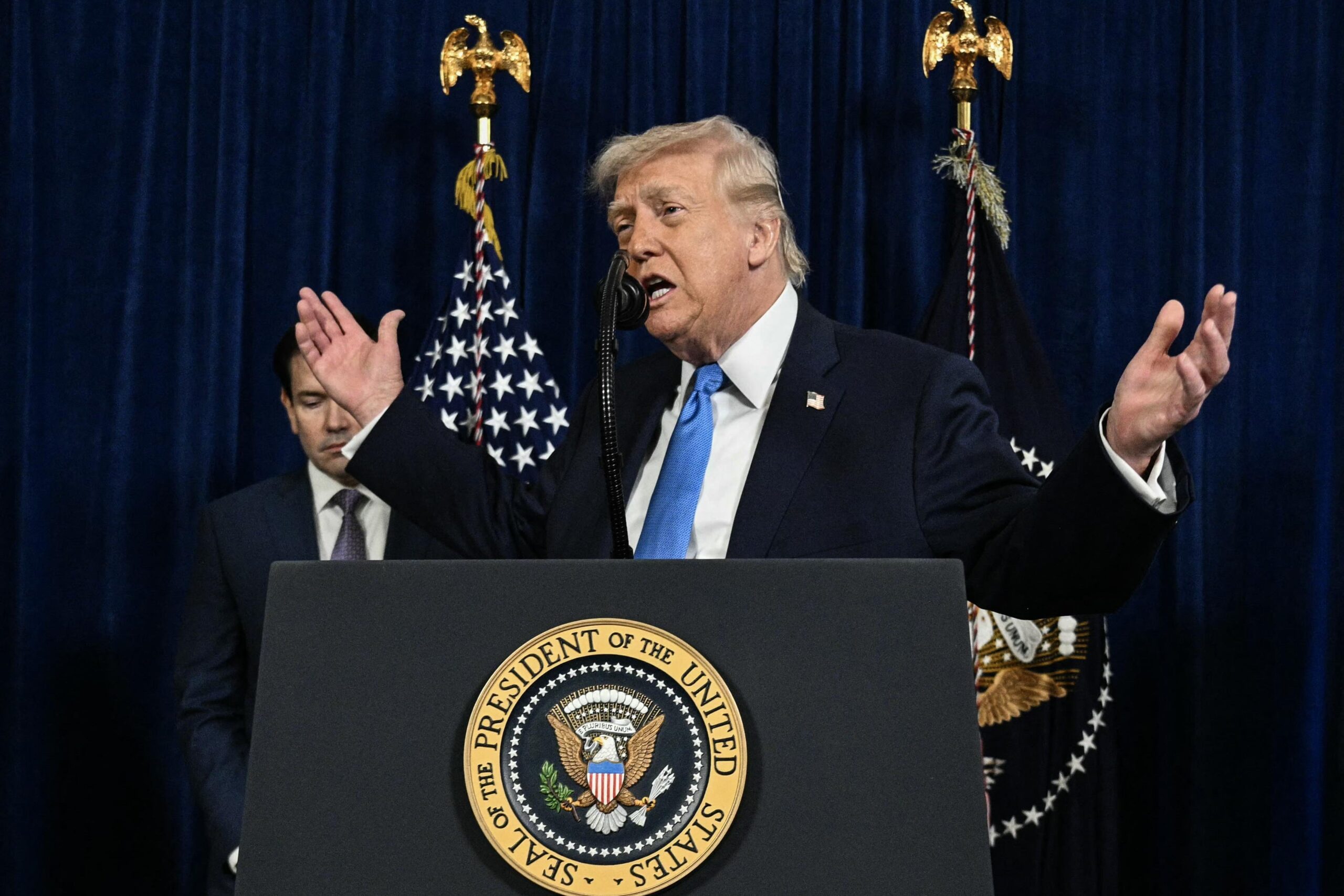
In a press conference on March 2, 2024, President Donald Trump provided a candid overview of the U.S. military’s recent operation to capture Venezuelan leader Nicolás Maduro. This operation, described as a response to “narco-terrorism,” revealed a more profound motive: securing American oil interests in Venezuela. Trump’s comments suggest that the U.S. aims to restore control over Venezuela’s oil infrastructure, which has been a long-standing point of contention for American companies.
Trump’s remarks were strikingly direct, stating, “We’re going to run the country until such time as we can do a safe, proper and judicious transition.” He emphasized that the U.S. military would maintain a presence if necessary, indicating a willingness to enforce U.S. corporate interests in the region. The president highlighted that major U.S. oil companies would invest billions to repair Venezuela’s energy infrastructure, which had been deteriorating since the nationalization of oil assets by socialist regimes.
This operation marks a significant moment in U.S. foreign policy, harking back to historical interventions in Latin America that often prioritized American corporate interests over local governance. Trump articulated a vision of reasserting American dominance in the Western Hemisphere, aligning with the recently issued National Security Strategy that details a “Trump corollary” to the Monroe Doctrine. He stated, “We are reasserting American power in a very powerful way in our home region.”
While the U.S. military’s actions have been framed as a response to drug trafficking—Maduro and his associates were indicted on related charges in the U.S.—Trump’s comments suggest deeper motivations. Just weeks prior, he had pardoned former Honduran president Juan Orlando Hernández, who had faced drug trafficking convictions. This inconsistency raises questions about the administration’s commitment to democratic principles in the region.
In the backdrop of this operation, Trump faced inquiries regarding his support for Venezuelan opposition leaders, including María Corina Machado, a prominent figure in the fight against Maduro. He dismissed her potential leadership, stating, “It would be very tough for her to be the leader,” while neglecting to mention Edmundo González, who was elected in 2024 and subsequently fled to Spain.
The U.S. military’s presence in Venezuela remains uncertain. Trump indicated that many Venezuelan military officers loyal to Maduro might switch allegiances, but the reality of military loyalty is often complex. Additionally, with over 20,000 Cuban personnel integrated into Venezuela’s military and health systems, their role in the evolving landscape is ambiguous.
Broader implications of this military operation extend beyond Venezuela. Trump’s aggressive stance may embolden leaders such as Vladimir Putin in Russia and Xi Jinping in China, potentially impacting geopolitical stability. The operational display of U.S. military strength could also inspire anti-regime activists in Iran, as Trump’s rhetoric has suggested readiness to confront Tehran over human rights abuses.
Cuba, often compared to Venezuela in political discourse, also remains a focus for the U.S. administration. Trump noted, “We want to help the people in Cuba,” hinting at a potential alignment of U.S. policy towards both nations.
As the U.S. aircraft carrier group stationed off Venezuela’s coast remains on high alert, Trump stated, “We’re ready to stage a second and much larger attack if we need to do so.” The situation continues to evolve, with global attention fixed on the implications of U.S. actions in a country of approximately 28.5 million people, where the future governance structure remains uncertain amidst a backdrop of military and political strife.