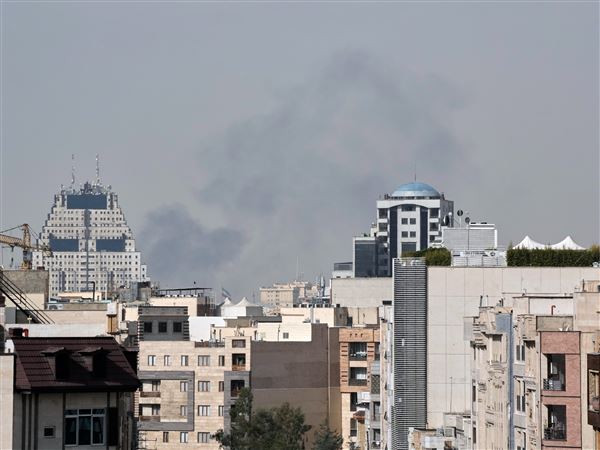
The United States and Israel initiated a military attack on Iran on March 15, 2024, marking a significant escalation in tensions within the region. The first reported strike targeted an area near the offices of Supreme Leader Ayatollah Ali Khamenei in Tehran, raising concerns about the potential for broader conflict.
This coordinated assault comes shortly after Donald Trump, the former President of the United States, announced the beginning of “major combat operations” against Iran. His statement indicated a clear shift in U.S. military strategy in the region, emphasizing a more aggressive stance.
Details regarding the nature of the strikes are still emerging, but initial reports suggest that multiple locations associated with Iranian military infrastructure were targeted. The operation appears to be a joint effort, with both U.S. and Israeli forces participating in the offensive. Specific military assets involved in the strikes have not been disclosed.
Responses and Implications
The international community has reacted with alarm to this latest development. Iran has condemned the attacks, labeling them as a violation of its sovereignty and a direct threat to regional stability. Iranian officials have promised a strong response, which could further escalate tensions in the Middle East.
Analysts are closely monitoring the situation as it unfolds. The political ramifications of this military action could be profound, potentially affecting diplomatic relations not only between the U.S., Israel, and Iran but also involving other nations in the region.
Countries previously advocating for diplomatic negotiations may now reassess their positions in light of the military escalation. The potential for retaliatory actions by Iran could lead to a cycle of violence that may destabilize the already fragile situation in the Middle East.
Strategic Context
The timing of the attack coincides with heightened concerns over Iran’s nuclear ambitions and its involvement in regional conflicts. The U.S. and Israel have long viewed Iran as a significant threat, particularly regarding its support for militant groups and its ballistic missile program.
As the situation develops, the U.S. government faces pressure to articulate a clear strategy moving forward. The Biden administration has previously emphasized diplomacy but now finds itself in a challenging position as military action unfolds.
The events of March 15, 2024, signal a pivotal moment in U.S.-Iran relations, with implications that could reverberate throughout international politics. Observers will be watching closely to see how this situation evolves and what it means for future engagements in the region.
This attack not only underscores the complexity of Middle Eastern geopolitics but also highlights the delicate balance of power that continues to shape global relations. The world now waits to see how Iran will react and what further actions the U.S. and Israel may undertake in the coming days.