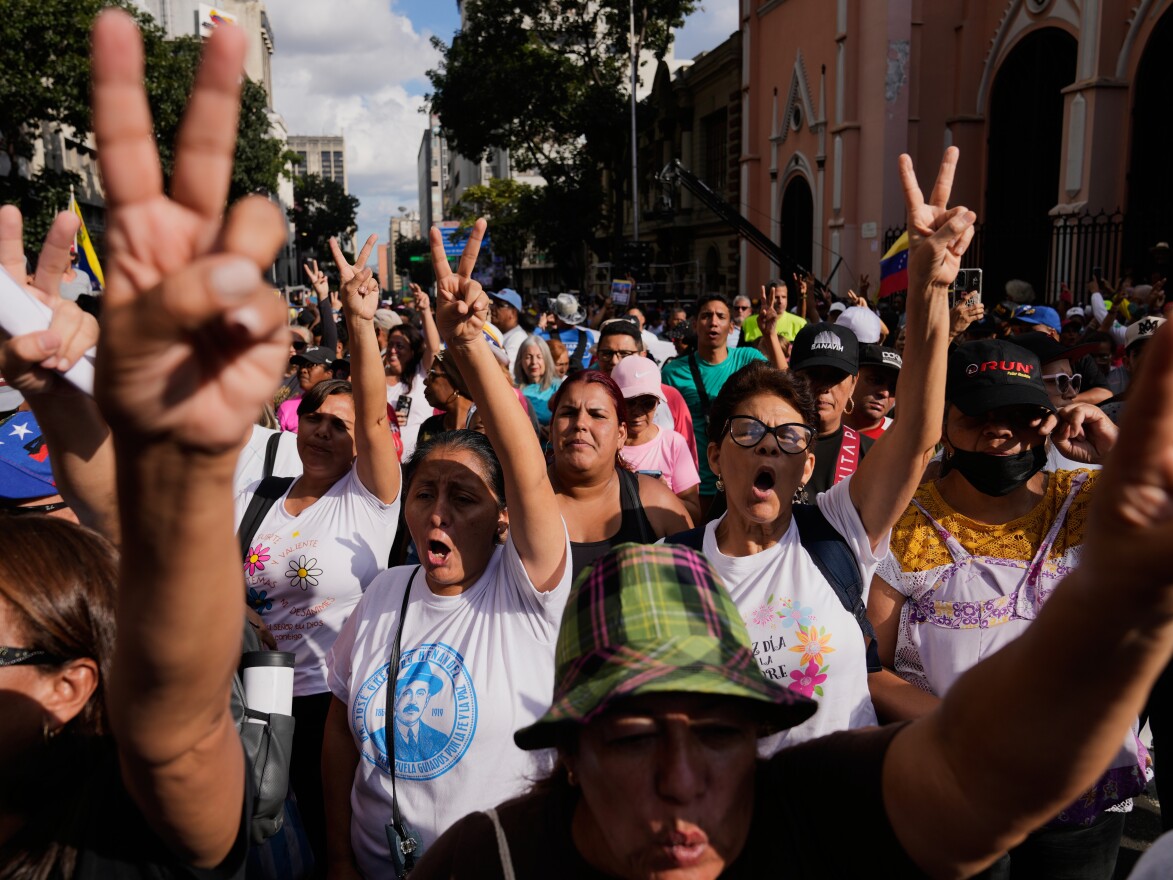
The Venezuelan government has appointed Delcy Rodríguez as interim president following the shocking arrest of Nicolás Maduro over the weekend. This move is aimed at demonstrating the country’s independence from U.S. influence amid international scrutiny and political turmoil. The swearing-in ceremony took place on March 6, 2026, in the capital, Caracas, with lawmakers from Maduro’s party, including his son, present to support the transition.
During the ceremony, Rodríguez, who previously served as vice president under Maduro, expressed her sorrow for the Venezuelan people, citing “illegitimate military aggression” against the nation. Her brother, Jorge Rodríguez, who was reelected as speaker of the National Assembly, administered the oath of office. “If we normalize the kidnapping of a head of state, no country is safe,” Nicolás Maduro Guerra stated in his first public appearance since his father’s arrest. He called for international support to bring his father and stepmother, Cilia Flores, back to Venezuela.
Maduro made his initial court appearance in a U.S. courtroom on charges of narco-terrorism, which the Trump administration cited as justification for his detention. He pleaded not guilty, asserting his innocence and his status as a “decent man.” The U.S. military captured Maduro and Flores during a raid at their residence on a military base in Venezuela.
Following the arrest, U.S. President Donald Trump announced that the United States would temporarily assume control over Venezuela, while Secretary of State Marco Rubio clarified that the U.S. would not engage in day-to-day governance except for enforcing an “oil quarantine.” This measure aims to exert pressure on Venezuela’s oil industry to implement policy reforms. “We expect to see that there will be changes, not just in the way the oil industry is run for the benefit of the people,” Rubio stated on CBS’ “Face the Nation.”
In a shift from her initial defiance, Rodríguez later emphasized the need for “respectful relations” with the U.S. She issued an invitation for collaboration on an agenda focused on shared development, following Trump’s warning that she could “pay a very big price” if she did not comply with U.S. demands.
According to Venezuela’s Supreme Court, Rodríguez’s appointment as interim president was necessary due to Maduro’s “temporary” absence, which is subject to constitutional provisions requiring elections within 30 days when a president is deemed permanently unavailable. Although the Supreme Court did not impose a specific time limit on her term, it allows her to remain in power for up to 90 days, extendable to six months with National Assembly approval.
Support for Rodríguez also comes from the Venezuelan military, a critical power broker in the country’s political landscape. Lawmaker Grecia Colmenares voiced her commitment to bringing back Maduro and Flores, stating, “I swear by the shared destiny we deserve.”
In related developments, a State Department official disclosed that the Trump administration is making preliminary plans to reopen the U.S. embassy in Venezuela. Early preparations for this reopening are underway, contingent on Trump’s decision to return American diplomats to the country.
As Venezuela navigates this significant political shift, the international community watches closely, assessing the potential implications for regional stability and governance within the nation.