Venezuelans are grappling with heightened fear and uncertainty following the capture of former president Nicolás Maduro during a U.S. military raid on January 3, 2024. The raid, which targeted military and civilian areas in Caracas and three other states, has left the country in turmoil as news of the event ripples across communities.
In the early hours of that Saturday, Aurora Velásquez, a 40-year-old resident of Petare, one of Caracas’ largest neighborhoods, was jolted awake by her parrot’s unusual squawking. Moments later, loud explosions shook her home, accompanied by the sound of fighter jets overhead. As chaos ensued, her family turned to social media for updates, only to discover that the U.S. had confirmed its involvement in the attacks. Reports indicated that Maduro and his wife, Cilia Flores, were taken to a prison in New York following their capture.
The military action came just days before Maduro was set to complete the first year of his controversial third term. The 2024 presidential elections were marred by allegations of fraud, with the opposition claiming that their candidate, Edmundo González, was the true victor. Protests erupted across the nation, resulting in thousands of arrests and numerous fatalities at the hands of government security forces.
Residents in Caracas experienced a disturbing silence following the U.S. raid. While Venezuelan expatriates celebrated the news abroad, the mood in the capital was far more subdued. On January 5, the Venezuelan government declared a “state of external commotion,” granting the presidency sweeping powers to detain anyone suspected of supporting the U.S. military operation. The decree authorized police forces to initiate searches and arrests throughout the country, further instilling fear among the populace.
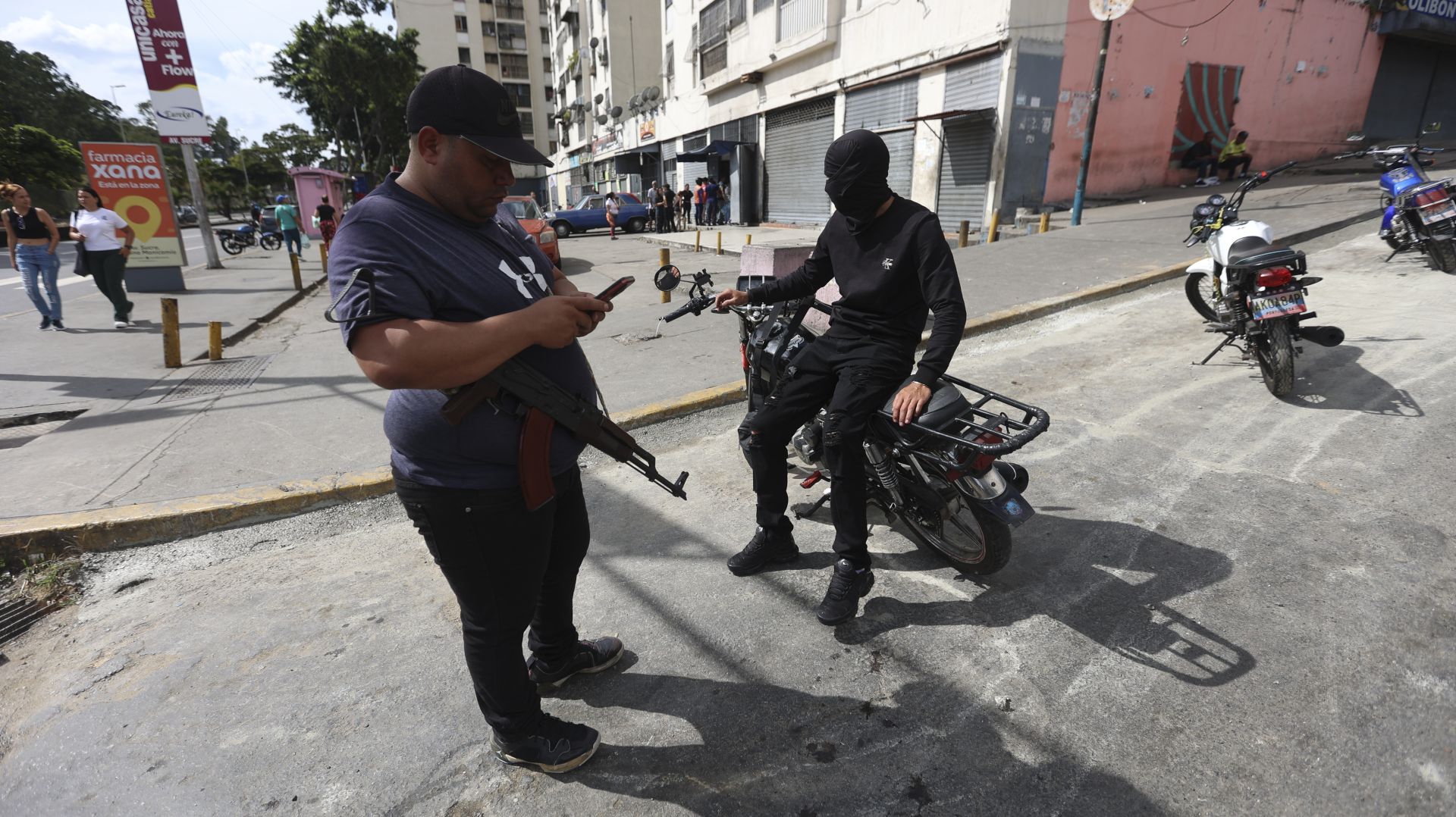
The streets of Caracas are now patrolled by paramilitary groups known as “colectivos,” who intimidate citizens and maintain a visible presence in neighborhoods. Many individuals avoid discussing their opinions on the situation for fear of retribution. A taxi driver in northern Caracas, when asked about the attacks, simply stated, “I have nothing to say.”
As residents navigate this new landscape of fear, they have taken to digital precautions. In WhatsApp groups, users are activating auto-delete functions for messages and sharing tips on concealing sensitive conversations. These measures have become increasingly necessary since the government has intensified its surveillance and crackdown on dissent since the elections.
On January 6, the Venezuelan NGO Caleidoscopio Humano reported that several citizens remained detained after being accused of celebrating Maduro’s arrest. The police in Merida, a western state, announced via social media that they had arrested two individuals for celebrating the “kidnapping” of the former president.
The day following the military action, public transport across Caracas was virtually non-existent, with residents forming long lines outside supermarkets and pharmacies to secure essential supplies. The situation reflects the pervasive uncertainty that has characterized Venezuela under nearly three decades of socialist governance, where severe shortages of food and medicine are the norm.
Despite its vast oil reserves, Venezuela has been plagued by economic turmoil, with inflation reaching an estimated 470% in 2023. The country’s economic crisis has driven approximately 8 million citizens to seek better opportunities abroad, with many young people leaving in search of a more stable future.
The aftermath of the U.S. military raid has left the streets in a state of cautious normalcy. Public transportation has resumed, and businesses have begun to open their doors once again. Yet, many residents remain skeptical about the implications of Maduro’s removal. On January 8, Maduro appeared before a U.S. federal judge, claiming he had been “kidnapped” and maintaining that he is still the president of Venezuela.
In the wake of Maduro’s capture, Delcy Rodríguez, his vice president, was sworn in as acting president, a move that has left many citizens feeling disillusioned. “In the end, we’re back where we started,” remarked Belky González, a 45-year-old housewife. The sentiment among those interviewed reflects a deep-rooted frustration with the ongoing political turmoil, as many feel that despite the change in leadership, the same oppressive tactics continue.
As Venezuelans navigate this unprecedented chapter in their history, calls for a transition towards a more democratic governance structure grow louder. “There has to be a change for the better,” said Tito Sánchez, a car park attendant, emphasizing the need for national consensus. The prevailing hope among citizens is that genuine reform will pave the way for a more stable and prosperous future.