The brutal killings of two Hindu men in Bangladesh have sparked outrage and raised serious concerns about the safety of minorities in the country. Dipu Chandra Das, a 25-year-old garment worker, was lynched and burned on December 18, following unverified rumors that he had made derogatory comments about Islam. Just days later, another Hindu, Amrit Mondal, met a similar fate. Both incidents highlight a troubling pattern of mob violence and state inaction that threatens the fragile fabric of democracy in Bangladesh.
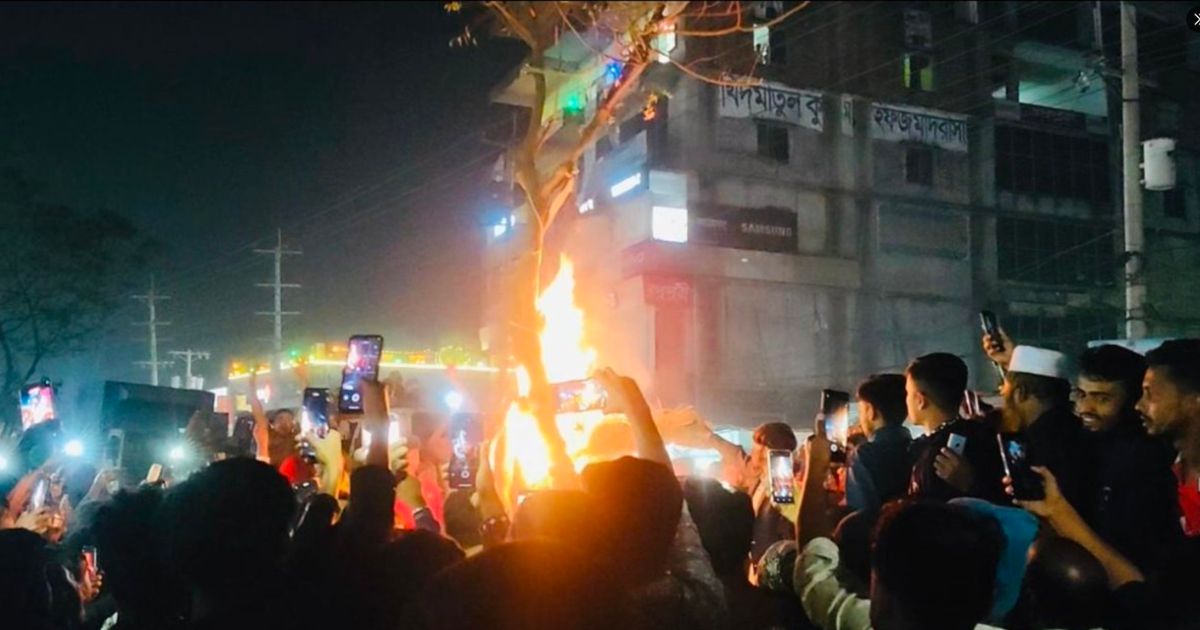
Dipu was not only a father and husband but also the sole provider for his family, including elderly parents, one of whom is disabled. His life was tragically cut short by a mob that acted on rumor rather than evidence. Desperate for protection, Dipu appealed to the police, but instead of safeguarding him, authorities handed him over to the mob. He was beaten, stripped, tied to a tree, and burned alive along the Dhaka-Mymensingh highway, all in full view of the public.
This violence is not an isolated incident. The state’s failure to protect its citizens reflects a broader trend of escalating communal tensions. The killings of Dipu and Amrit are emblematic of a society where accusations can easily lead to lethal consequences, particularly for vulnerable minorities. With no formal charges filed against those responsible, the events illustrate a dangerous climate where mob justice prevails over the rule of law.
Historical Context and Current Implications
The rise of Islamist mob violence in Bangladesh is not a new phenomenon. Historical precedents, such as the genocide of at least 2.8 million Hindus by the Pakistani Army and allied Islamist forces in 1971, haunt the collective memory of the nation. The trauma from that period has resurfaced as political authority weakens and extremist elements seize the opportunity to instigate violence.
Recent political developments further complicate the situation. The return of Tarique Rahman, leader of the Bangladesh Nationalist Party (BNP), after years in exile, coincides with a surge in communal violence and intimidation. His presence has the potential to destabilize the already fragile political landscape, giving rise to fears that the radical Jamaat-e-Islami party may gain undue influence. This scenario could further threaten the safety of minorities in Bangladesh, as their rights become increasingly marginalized.
In light of these events, Prime Minister Sheikh Hasina has stated that her leadership has contributed to Bangladesh’s stability. However, her recent departure amid escalating unrest raises questions about her commitment to protecting all citizens. She emphasized the necessity of restoring constitutional governance and the rule of law before her return, highlighting the need for free elections and the release of political prisoners.
The Role of International Observers
The United States has also taken notice of the deteriorating situation in Bangladesh. On December 28, the U.S. State Department condemned the killings of Dipu and Amrit, urging the Bangladeshi government to uphold the rights of religious minorities and enforce the rule of law. This statement reflects a broader concern that violence against minorities does not merely represent a local issue, but also poses strategic implications for regional stability.
Bangladesh’s geopolitical significance cannot be overlooked. The country shares a border with India, which has invested heavily in a stable, secular Bangladesh as a counterbalance to the instability in Pakistan and Afghanistan. As violence against Hindus increases, India faces not only a humanitarian crisis but also the risk of radicalization and refugee pressures.
The implications of these incidents extend beyond Bangladesh’s borders, influencing international relations and security policies. The normalization of violence against minorities can lead to a significant erosion of democratic values, leaving both domestic and international communities with the responsibility to act.
The killings of Dipu Chandra Das and Amrit Mondal serve as stark reminders of the fragility of democracy and the protections afforded to vulnerable populations. As Bangladesh approaches future elections, the challenge remains: will the state reaffirm its commitment to its citizens, or will the cycle of violence continue unchecked? The world is watching closely, as the stakes are high for the future of Bangladesh and its people.