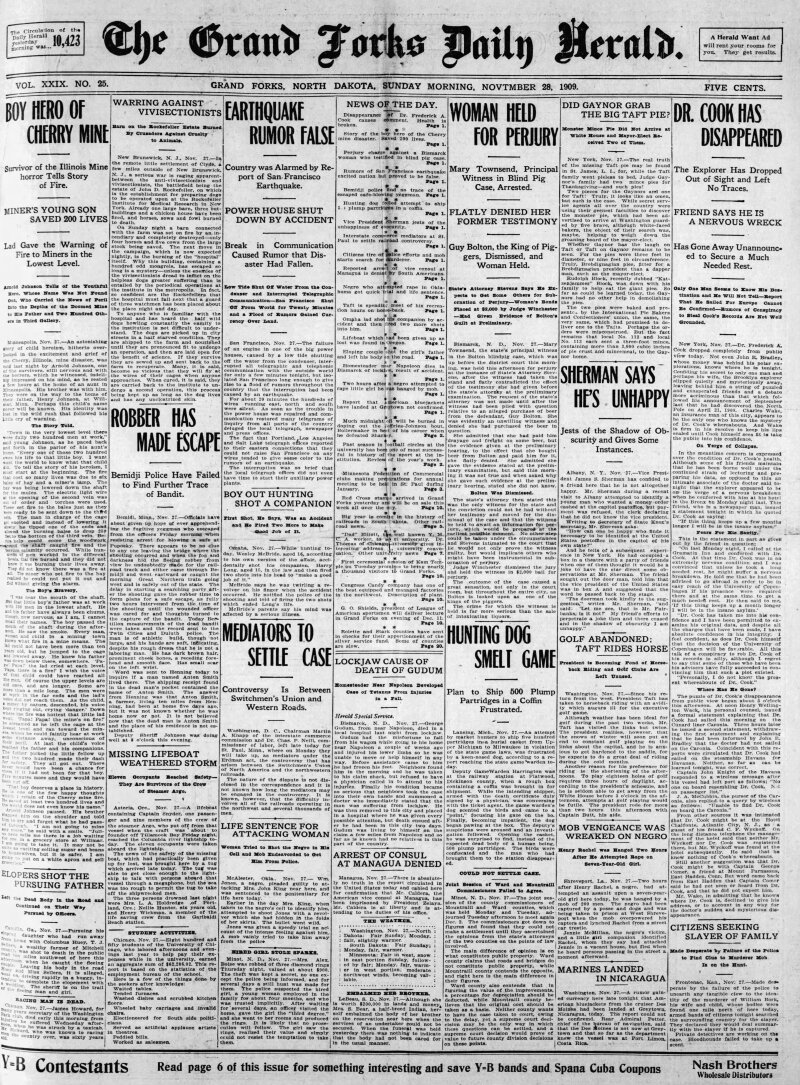
On November 28, 1909, Mary Townsend, the principal witness in a significant liquor case against Guy Bolton, was arrested for perjury in Bismarck, North Dakota. This development unfolded during a district court session where Townsend recanted her earlier testimony regarding Bolton’s involvement in illegal liquor sales.
Townsend had previously testified that she purchased beer from Bolton, a prominent figure in the illicit liquor trade, commonly referred to as a “king of piggers.” However, when questioned in court, she denied having made such purchases and claimed her earlier statements were untrue.
During the proceedings, State’s Attorney Stevens pointed out that Townsend was the state’s only witness and that without her testimony, a conviction could not be secured. Following her contradictory statements, Stevens moved to have her held for perjury, emphasizing the seriousness of the charge.
Judge Winchester subsequently dismissed the jury and set Townsend’s bail at $2,000. The court’s decision reflected the gravity of the situation, as perjury carries more severe consequences than the original charge of illegally selling intoxicating liquors.
As the case progressed, Stevens indicated he might pursue additional charges against others for subornation of perjury. The courtroom buzzed with anticipation as the implications of Townsend’s arrest resonated throughout Bismarck. The incident not only raised questions about the integrity of witness testimony but also highlighted the broader challenges faced in enforcing liquor laws during this period.
This case marks a notable moment in legal history, illustrating the complexities of prosecuting liquor-related offenses, particularly in an era characterized by prohibitionist sentiments and rampant illegal trade. The outcome of this case could have lasting ramifications, both for the individuals involved and for the enforcement of liquor laws in North Dakota.