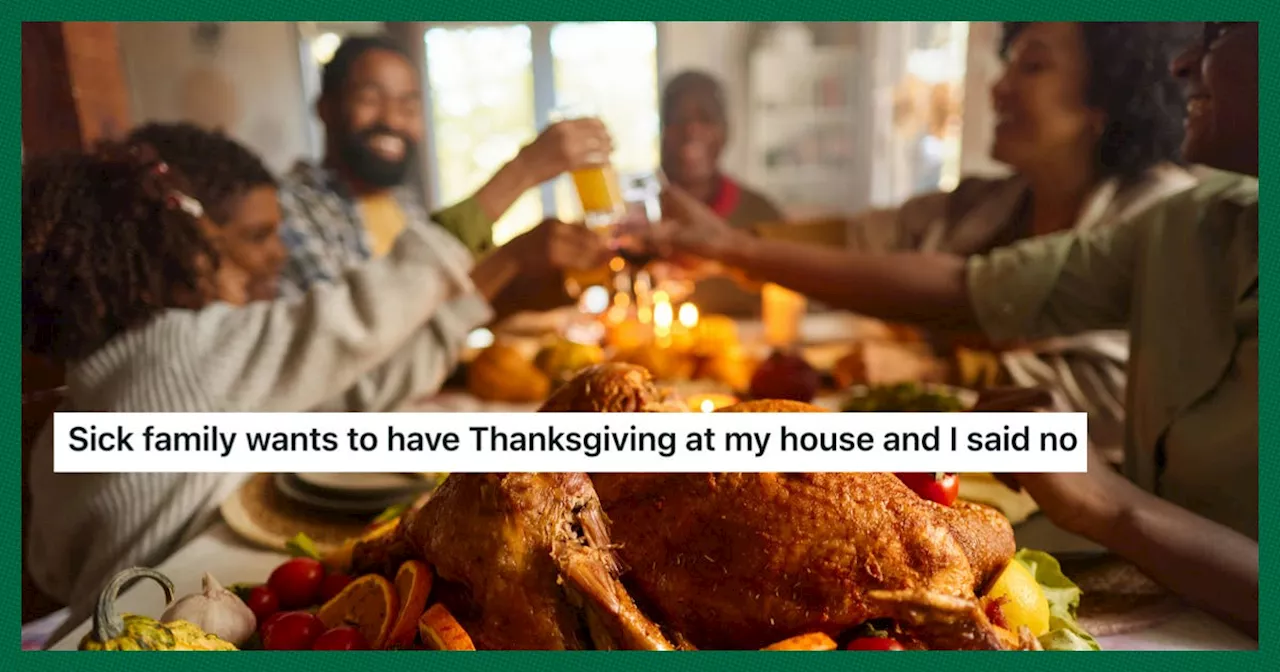
A woman’s decision to deny entry to her sister’s sick family for Thanksgiving has ignited a heated discussion on social media. The incident unfolded on the popular platform Reddit, where the woman sought validation for her choice amid claims of insensitivity from family members. The situation escalated due to health concerns surrounding the contagious nature of a viral illness affecting her sister’s family.
According to the woman’s post, her nephew had been diagnosed with hand, foot, and mouth disease approximately two weeks prior. In a concerning turn of events, both her sister and brother-in-law later contracted the illness from their son. This prompted the woman’s parents to suggest relocating the Thanksgiving dinner to her home, as their residence had become a potential hub for the disease.
In her post, she expressed her discomfort with the idea, stating, “I told my mom that I did not want them in my house because they’re still contagious at this point. I have four children, one of whom gets sick easily.” With prior experience of her children suffering from the same illness, she emphasized the severity of the situation.
Her mother proposed that the sick family could attend Thanksgiving dinner while taking precautions, such as wearing gloves and sitting at a separate table. However, the woman remained unconvinced, noting that her nephew, being under two years old, would not be capable of adhering to such restrictions. “If they were so set on coming to my house for Thanksgiving, why couldn’t they have it at their house?” she questioned.
The conflict escalated when her mother suggested that they should sanitize their home to make it safe for visitors. The woman strongly disagreed, asserting, “They wanted to come to my house and infect my household.” The conversation concluded with her mother in tears and unwilling to continue the discussion.
Responses from Reddit users largely supported her stance. One commenter remarked, “I guarantee you they will not attempt a single good practice at preventing the spread of disease.” Another suggested that she should prepare food for her family and deliver it to her sister’s home, avoiding any potential exposure to illness.
In a follow-up, the woman shared that after further discussions, her father intervened and confirmed that her sister’s family would not be attending Thanksgiving. “Thanksgiving will happen some other day when people aren’t contagious,” she wrote, bringing a resolution to the contentious situation.
This incident raises broader questions about family dynamics, personal boundaries, and health responsibilities during holiday gatherings. As families navigate similar challenges, the balance between familial obligations and health concerns remains a delicate matter.