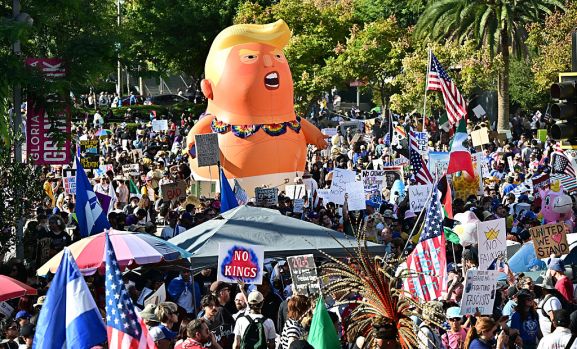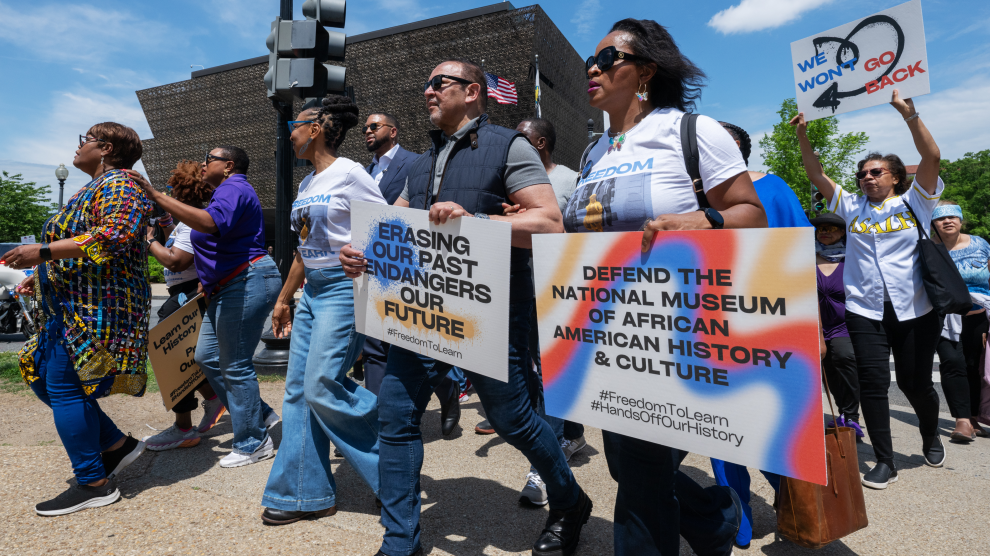
Demonstrators gathered outside the National Museum of African American History and Culture in Washington, D.C., in May 2025, to protest against actions taken by the administration of former President Donald Trump. Critics claim that the administration is actively working to censor and erase significant elements of Black history, including the removal of museum exhibits that paint a comprehensive picture of the United States’ past. Trump has characterized these exhibits as presenting the country in a “negative light,” a sentiment that has sparked widespread discontent among various communities.
One notable aspect of Trump’s second administration is its policies that significantly impact African Americans. The government has targeted numerous programs and initiatives aimed at fostering diversity, equity, and inclusion (DEI). According to journalist Nikole Hannah-Jones, this approach reflects an effort to regress to a time before the civil rights movement. Hannah-Jones argues, “A lot of folks are saying that this administration is rolling back the ’60s, but I’m like, this administration is actually going back further than that.”
As the administration continues to strip references to Black history from educational institutions, public parks, and museums, the question arises: who will preserve and communicate the rich tapestry of experiences that shape American history? This challenge is particularly pressing during Black History Month, a time dedicated to celebrating and reflecting on the contributions of Black individuals and communities.
Preserving History Through Storytelling
In response to this cultural erasure, a group of prominent Black writers is stepping forward to ensure that history is not forgotten. Their mission is to craft narratives that reflect a more inclusive view of American history. During a recent episode of the Reveal podcast, part of a special series for Black History Month, conversations highlighted the critical role of storytelling in maintaining historical awareness.
These writers emphasize the importance of documenting the experiences of marginalized communities. In a climate where official narratives may skew towards a more sanitized version of history, their voices serve as essential counterpoints. The urgency of their work cannot be understated, as they strive to keep alive the stories that reflect the struggles and triumphs of African Americans throughout history.
Their efforts underscore a broader movement towards inclusivity in storytelling, which is crucial for understanding the complexities of the nation’s past. By sharing personal accounts and historical insights, these writers contribute to a more nuanced conversation about American identity.
The Fight Against Historical Erasure
The censorship of Black history in educational and cultural institutions has sparked a wider debate about the role of government in shaping historical narratives. Many argue that such actions not only undermine historical accuracy but also marginalize the contributions of African Americans to the nation’s development.
In this challenging environment, the work of writers, historians, and activists becomes increasingly vital. They are tasked with not only preserving history but also advocating for a more equitable representation of all voices in the historical record. As they continue to engage with audiences through various platforms, including podcasts and public discussions, their influence grows.
The resilience of these storytellers highlights a fundamental truth: history is not merely a collection of facts but a living narrative shaped by the experiences of individuals. In a time when some seek to erase parts of that narrative, the efforts of these writers remind us of the importance of maintaining a comprehensive understanding of our collective past.
As the struggle to preserve Black history continues, it is clear that the fight against censorship is also a fight for identity and recognition. The commitment of these writers ensures that the stories of African Americans will resonate for generations to come, serving as a testament to their enduring impact on the American story.