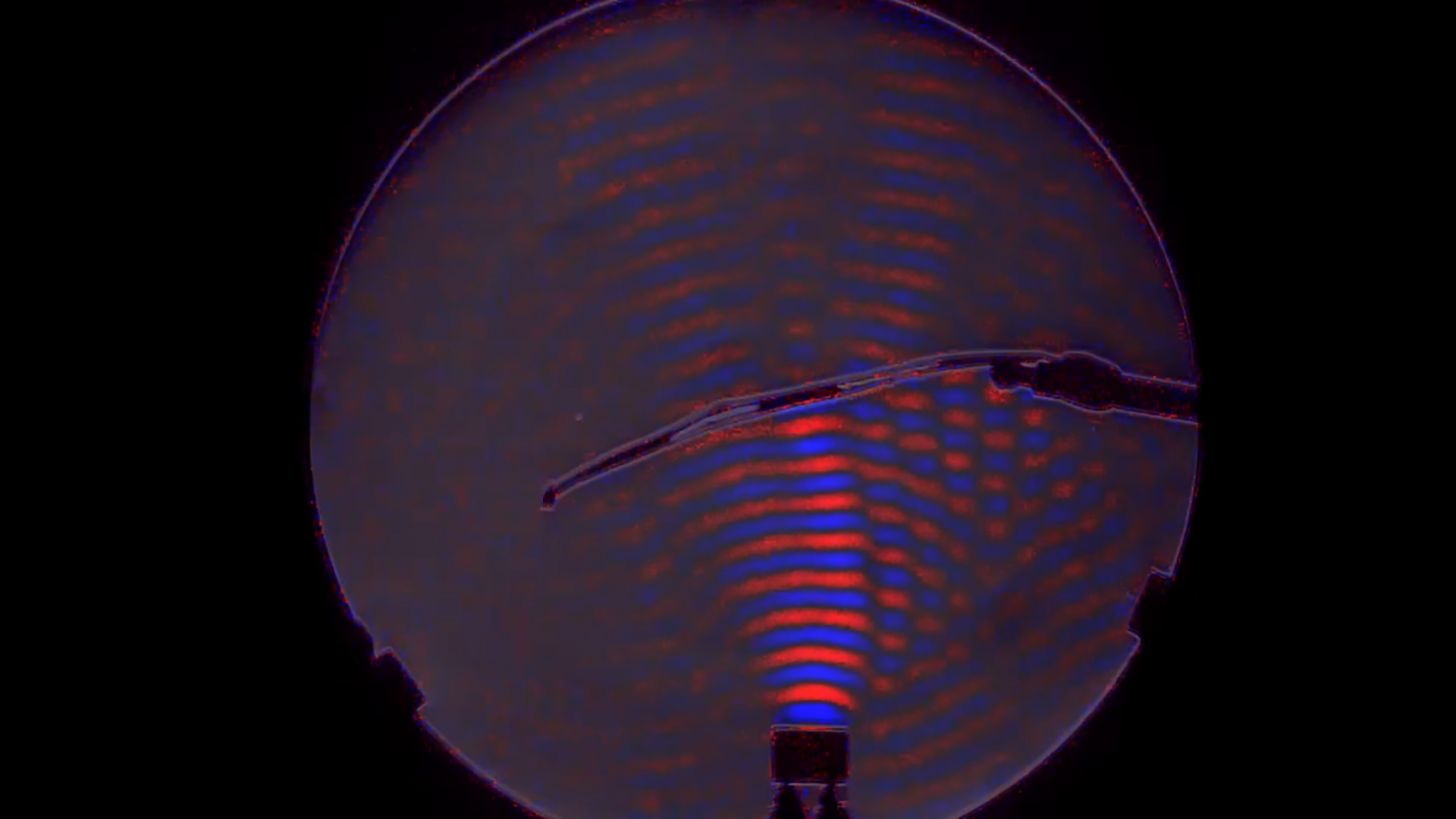
A new imaging technique allows enthusiasts to visualize sound waves using a camera system priced under $200. Developed by PlasmatronX, this innovative project utilizes a unique method to capture the pressure waves we perceive as sound, showcasing them in a way that has not been widely accessible until now.
Transforming Sound into Visuals
The process employed by PlasmatronX revolves around the principles of Schlieren imaging, which traditionally visualizes air currents caused by temperature differences. By adapting this technique, he employs a concave mirror to enhance the refraction of air densities altered by sound waves. This setup captures both constructive and destructive interference, allowing viewers to see sound in a visual format.
While high-speed cameras typically provide the capability to photograph sound waves, they often come with a hefty price tag. PlasmatronX‘s solution offers a more affordable alternative by synchronizing audio capture with optical imaging. This combination allows for the visualization of sound waves without the need for expensive equipment.
Technical Challenges and Solutions
Implementing this system was not without its challenges. Modifications were necessary to the audio circuits to eliminate high-pass filters, which can interfere with the accuracy of sound capture. Furthermore, the LED flash required overvolting to produce a quick strobe effect essential for capturing sound waves accurately.
For those interested in experimenting with this technique, PlasmatronX has made the project accessible on GitHub, providing guides and resources for users to create their own sound-visualizing setups. This initiative not only democratizes access to innovative imaging technology but also invites creative exploration in the realm of sound.
In a world where visual media increasingly intersects with other sensory experiences, PlasmatronX‘s project stands out as an exciting example of how technology can expand our understanding of sound. As this technique gains traction, it opens the door for further experimentation and innovation in visualizing sound waves, potentially leading to new artistic and scientific applications.
This pioneering work underlines the ongoing power of creativity in technology, transforming everyday experiences into captivating visual insights.