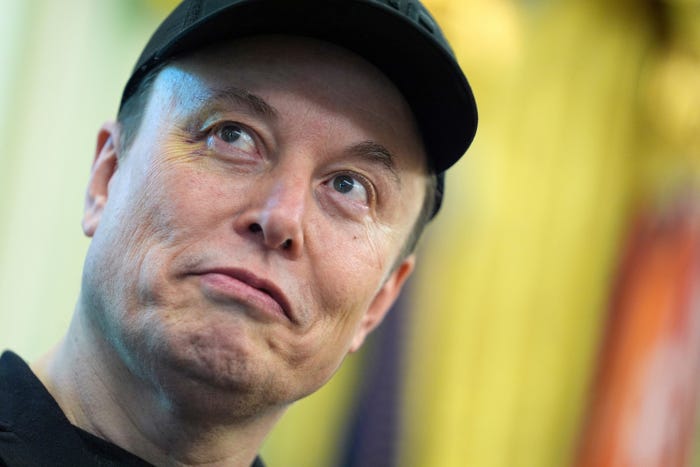
Elon Musk, the CEO of Tesla and SpaceX, recently suggested that saving for retirement could become irrelevant in the next two decades. Speaking on the “Moonshots with Peter Diamandis” podcast, Musk outlined his vision for a future powered by artificial intelligence (AI) and advanced technologies, which he believes will lead to an abundance of resources for everyone.
Musk emphasized that if his predictions about the future come true, traditional financial planning methods, particularly retirement savings, may no longer be necessary. “One side recommendation I have is: Don’t worry about squirreling money away for retirement in 10 or 20 years,” he stated. He explained that advancements in AI, energy, and robotics could enhance productivity to such an extent that everyone would have access to a “universal high income.”
The world’s richest person, with a net worth exceeding $600 billion, painted a picture where individuals could enjoy “better medical care than anyone has today” and have the ability to learn anything for free. Musk envisions a society with no scarcity of goods and services, where people’s desires are easily fulfilled.
Despite this optimistic outlook, Musk cautioned that the transition to such a future may not be smooth. He acknowledged the potential for significant societal disruption and a loss of purpose in a world where traditional work roles may become obsolete. “Now, if you actually get all the stuff you want, is that actually the future you want?” he questioned, highlighting the implications of a life without the need for employment.
Musk is no stranger to making bold predictions. His companies have already disrupted multiple industries—revolutionizing the automotive sector with electric vehicles and transforming aerospace with reusable rockets. Currently, Tesla is advancing self-driving technology, while SpaceX is developing innovative solutions in space travel.
However, Musk’s optimistic vision starkly contrasts with the realities faced by many individuals today. Persistent inflation, high interest rates, and stagnant wage growth have created a financial landscape where millions struggle to afford basic necessities. Access to education, quality healthcare, and homeownership often feels out of reach for a significant portion of the population.
While Musk’s predictions may inspire hope for some, they could also be perceived as unrealistic or even dangerous advice. The concern arises that individuals might take his guidance to heart and cease saving for retirement, only to find themselves unprepared for the future if societal changes do not unfold as he anticipates.
As Musk continues to innovate and shape industries, his comments on retirement savings prompt a broader conversation about the future of work, economic stability, and the role of technology in everyday life. The implications of these changes may be profound, affecting personal finance strategies for generations to come.