The Neumayer III research station in Antarctica faces unique challenges as it endures continuous daylight for over two weeks due to the Earth’s axial tilt. Located on the Ekstrom Ice Shelf, this facility must contend with environmental hazards including ice shelf disintegration and shifting ice. Recent movements have brought the base more than a foot closer to the continent’s coast. Established in 2009, Neumayer III is one of approximately 70 permanent research stations on the continent designed to support scientists conducting year-round studies.
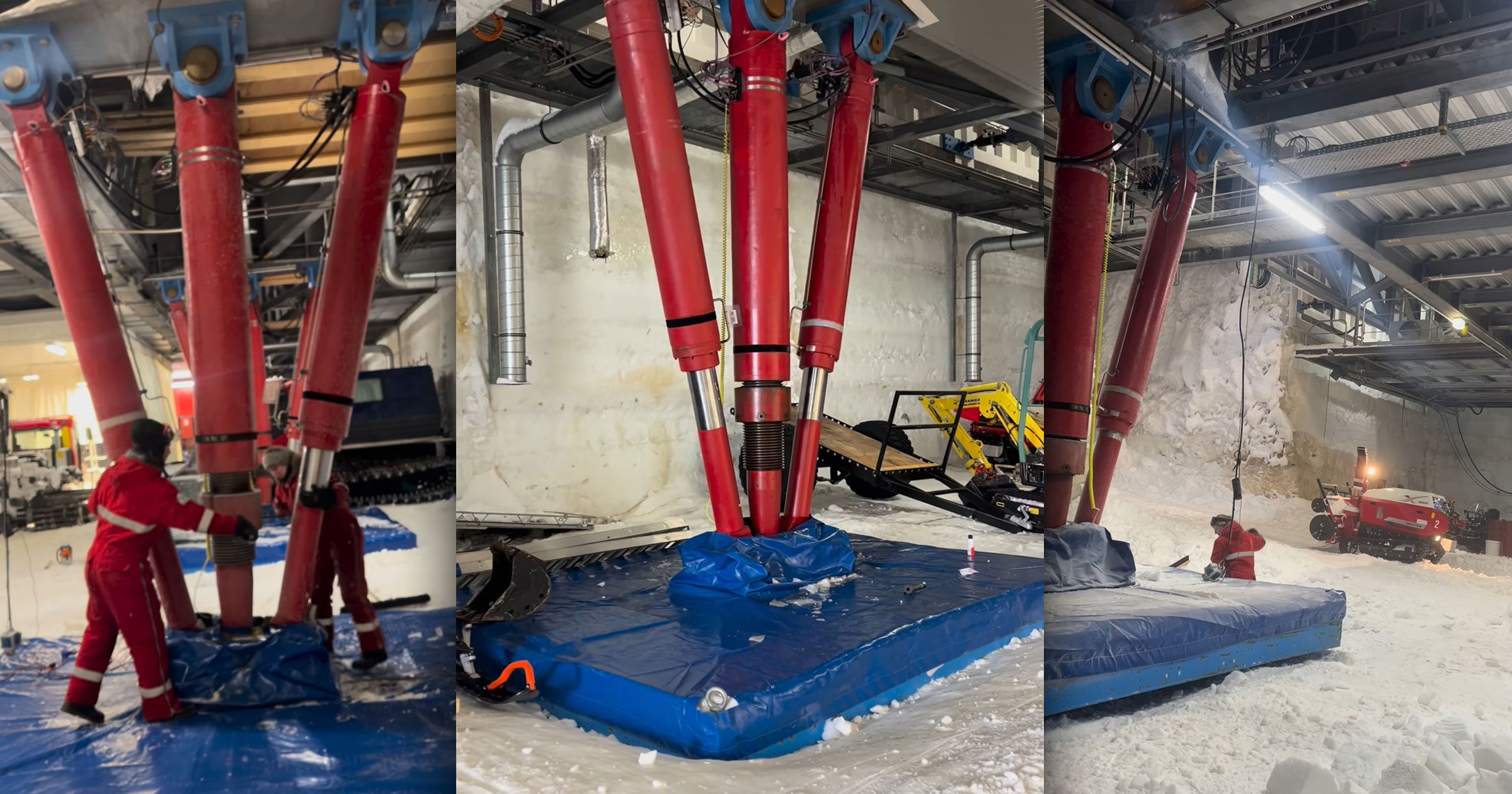
To withstand the harsh Antarctic conditions that caused its predecessors, Neumayer Station and Neumayer Station II, to be vacated in 1992 and 2008 respectively, the current station is elevated on 16 hydraulic stilts. This innovative engineering solution allows the 20,000-square-foot, 2,200-ton structure to maintain stability above the dynamic ice surface.
Engineering Solutions for Extreme Conditions
Swiss engineer and technical lead at Neumayer III, Thomas Schenk, has been stationed at the facility since 2024. He manages overwintering procedures and regularly demonstrates the lifting system that keeps the station operational. Schenk recently shared a video that has gained considerable attention on social media, illustrating the meticulous process involved in maintaining the station’s position.
“Everything here in Antarctica that isn’t built on rock will inevitably sink into the snow sooner or later,” Schenk stated in the video caption. The hydraulic stilts, developed by the German engineering firm IgH, consist of two large parallel steel tubes that house essential infrastructure while allowing the station to adapt to changing conditions.
Each week, engineers align the station to ensure it remains level. Schenk explained, “Every now and then, one of these bipods wanders off — then it’s time to lift and realign.” The video showcases how the team loosens horizontal brackets supporting the station, subsequently lifting each bipod leg using hydraulic cylinders. They then clear fresh snow under the legs with a snow blower, an essential step in maintaining the station’s stability.
Once the snow is in place, the team carefully transfers the weight of the building back onto the leg and checks its alignment. Schenk noted that the station is raised by approximately 6.5 feet each year during the summer season using similar methods.
Challenges Ahead for Antarctic Research
The ongoing adjustments required to keep Neumayer III operational highlight both the ingenuity involved in polar research and the significant challenges posed by climate change. As ice shelves continue to shift and disintegrate, maintaining a research presence in this remote location becomes increasingly complex. The success of the Neumayer III station serves not only as a testament to engineering prowess but also emphasizes the critical need for continued scientific investigation in one of the planet’s most vulnerable regions.
As the international community navigates the implications of climate change, facilities like Neumayer III will play an essential role in advancing our understanding of environmental shifts affecting polar regions. Schenk’s work, alongside that of his team, ensures that this vital research continues, providing invaluable data for future studies.