The Electronics and Telecommunications Research Institute (ETRI) has launched a groundbreaking set of no-code machine learning development tools, offering significant advantages to users with limited artificial intelligence (AI) expertise in sectors like manufacturing, healthcare, and shipbuilding. Announced on November 6, 2023, during a seminar in Gangnam-gu, Seoul, the core technology of the MLOps tool is now available as open source on GitHub, enhancing accessibility for a wider audience.
The new framework, known as TANGO (Target Aware No-code neural network Generation and Operation framework), is designed to automate the generation of neural networks and streamline the deployment process across various hardware environments, including cloud services and on-premise infrastructures. This advancement aims to facilitate the integration of AI in complex industrial applications, overcoming previous barriers that hindered its implementation.
In practical terms, the TANGO framework simplifies tasks that would traditionally require extensive programming knowledge. For instance, while identifying defects in steel during quality inspections might be straightforward for human operators, leveraging AI for this purpose has been challenging. Similarly, while medical professionals can diagnose conditions like tuberculosis through X-ray imagery, the transition to AI-driven predictive models has not been seamless. TANGO addresses these challenges directly by providing a user-friendly interface that allows domain experts to deploy AI solutions more effectively.
Historically, the development of AI applications has relied heavily on a division of labor where domain experts focus on data labeling while software developers manage the technical aspects of AI model training and software installation. As the demand for AI applications across industries has surged, so has the need for qualified professionals in both AI and software development. ETRI’s new tools aim to bridge this gap by offering a solution that both simplifies the development process and enables non-experts to contribute to AI projects.
In addition to the TANGO framework, ETRI has introduced LLMOps tools to support the development of generative AI. This initiative has led to significant achievements, including the filing of 24 patents, the publication of three papers at the NeurIPS conference, and 13 publications in scientific journals. Furthermore, the commercialization efforts have generated approximately 10 billion KRW in revenue.
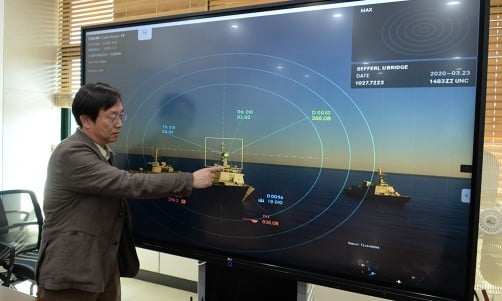
A notable partnership has emerged with Avenotics, a company specializing in autonomous maritime navigation solutions. Selected for a project overseen by the Ministry of Science and ICT, Avenotics aims to commercialize TANGO’s technology. The company has received an investment of 1.3 billion KRW from various sources, including Korea Science and Technology Holdings and the Korea Credit Guarantee Fund. This collaboration is set to enhance Avenotics’ capabilities in deploying AI solutions that generate contextual information for navigators.
ETRI’s research team is also actively promoting wider adoption of the TANGO framework through pilot demonstrations with partner institutions. For example, Weda Co., Ltd. has developed an AI service for on-site employees in the steel and automotive parts manufacturing sectors. This service is specifically designed for vision-based inspections of complex shapes, such as automotive components.
In another collaborative effort, Lablup Inc. has partnered with KT Cloud to launch services that optimize deployment for generative AI applications, including a GPU cloud rental service. Additionally, Seoul National University Hospital is working on AI technology to analyze chest CT images. The goal is to automatically generate diagnostic reports, with plans to validate the technology across four hospitals.
The LLMOps tools, which facilitate generative AI development, are being advanced in collaboration with Acryl Inc.. The source code for Acryl’s commercial product, Jonathan, is fully available on GitHub, with ongoing enhancements being made to core algorithms.
Kim Tae-ho, Software Project Manager at the Institute of Information & Communications Technology Planning & Evaluation (IITP), remarked, “TANGO technology is truly the best open source project in Korea and is contributing greatly to enhancing the competitiveness of the domestic software industry in the field of artificial intelligence development tools.” Meanwhile, Jo Chang Sik, Principal Researcher at ETRI, indicated plans to expand the TANGO project into generative AI, ensuring continuous sharing of development expertise to facilitate industry commercialization.
Moving forward, ETRI intends to release updated versions of the source code on GitHub every six months and host an annual public seminar to share insights and technical developments with the community. The inaugural TANGO public seminar has attracted 944 participants from 552 institutions, highlighting the growing interest in AI technologies and their applications.
The advancements by ETRI are backed by support from the Ministry of Science and ICT and the IITP, underlining the collaborative efforts to foster innovation in AI and machine learning across various sectors.