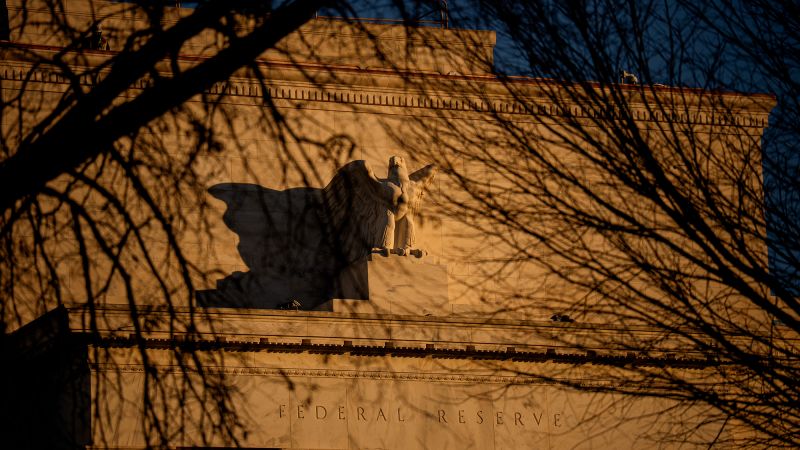
The Federal Reserve is confronting significant challenges as the ongoing oil crisis escalates, driven by geopolitical tensions, particularly the conflict involving Iran. This week, Fed policymakers will convene to assess how soaring oil prices, which recently surged to as high as $120 per barrel for West Texas Intermediate (WTI), will impact the U.S. economy. The implications of these price hikes threaten to increase costs for consumers and businesses alike, potentially leading to a slowdown in hiring and overall economic growth.
The situation has created a precarious balancing act for the Fed, particularly as Kevin Warsh, nominated by former President Donald Trump to lead the central bank, awaits Senate confirmation. The dual pressures of rising inflation and a weakening labor market complicate the decision-making process. Historically, the Fed has not faced an oil shock of this magnitude since the 1973 Arab-Israeli War, which precipitated a period of stagflation in the United States.
Comparing Historical Contexts
The landscape of the U.S. economy has transformed significantly since the 1970s. As the largest oil producer globally, the United States is less reliant on imported crude oil than it was during previous crises. Nevertheless, the current situation poses a greater disruption to global energy markets, with experts estimating that the volume of Gulf oil production currently affected by the conflict is substantially higher than in the past. Nicholas Mulder, a history professor at Cornell University, noted that approximately 20 million barrels are currently impacted, compared to around 4.5 million during the 1973 crisis.
In October 1973, Egypt and Syria’s surprise attack on Israel triggered a broader conflict that led to OPEC’s oil embargo against Western nations. The embargo had profound economic repercussions, as the U.S. was heavily dependent on foreign oil at the time. Under then-Fed Chair Arthur Burns, officials hesitated to raise interest rates, viewing the inflationary pressures as largely beyond the scope of monetary policy. Their eventual “stop and go” approach to rate adjustments allowed inflation to become entrenched, failing to stabilize the economy.
Today, the Federal Reserve’s perspective has shifted. Officials recognize the importance of monetary policy in responding to economic shocks. However, the current crisis introduces unique challenges. As noted by Josh Freed, senior vice president for the climate and energy program at Third Way, the physical damage from Iranian attacks on energy facilities adds a layer of complexity. This uncertainty could exacerbate the crisis beyond the levels experienced during the oil embargo of the 1970s.
Immediate Impact on Americans
The effects of the oil crisis are already apparent for consumers. Americans are experiencing increased prices at the pump, and the conflict in Iran has begun to influence inflation expectations. The latest consumer sentiment survey from the University of Michigan indicated a 2% decline in consumer sentiment, with many respondents explicitly referencing the war as a factor affecting their outlook.
On the employment front, the Bureau of Labor Statistics reported a loss of 92,000 jobs in February, raising the unemployment rate from 4.3% to 4.4%. While a separate report indicated a rise of 400,000 job openings in January compared to December, the number of unemployed individuals still exceeds available positions.
According to Tani Fukui, senior director of economic and market strategy at MetLife Investment Management, there is little doubt that inflation will be affected by the current geopolitical tensions. The magnitude of this effect, however, remains uncertain.
As the Federal Reserve navigates this complex landscape, the key question for Americans is not only how high fuel prices will rise but also whether the central bank can effectively apply lessons from history to prevent a significant economic downturn. The decisions made in the coming weeks could have lasting implications for the U.S. economy and the financial well-being of millions of citizens.