Presidential libraries serve as more than mere historical archives; they are significant financial enterprises that reflect the legacies of former leaders. Currently, the United States has four living former presidents, each exhibiting distinct post-presidential behaviors. Among them, George W. Bush stands out for his relatively low-profile approach, particularly in contrast to Bill Clinton and Barack Obama, who remain active in public life.
Bush’s presidential library, the George W. Bush Presidential Center, located on a 23-acre site at Southern Methodist University in Dallas, Texas, exemplifies the intertwining of historical preservation and financial strategy. The center not only archives the records of the 43rd president but also serves as a venue for philanthropic fundraising and educational initiatives.
Financial Aspects of Presidential Libraries
The costs associated with maintaining these libraries are substantial. According to the National Taxpayer’s Union Foundation, the annual expenses for the network of presidential libraries have surged to over $100 million. These libraries, although structured as tax-exempt charities, require significant financial backing to operate effectively.
Shilo Brooks, the newly appointed CEO of the Bush Presidential Center, has outlined a clear financial strategy. The total fundraising efforts for the center reached approximately $1 billion, encompassing initial construction, endowment drives, and ongoing contributions. Brooks emphasizes the ongoing need for support, stating, “We still need to raise $14 million each year for our annual budget. Our endowment helps a great deal, but it doesn’t cover everything. We still need people to give.”
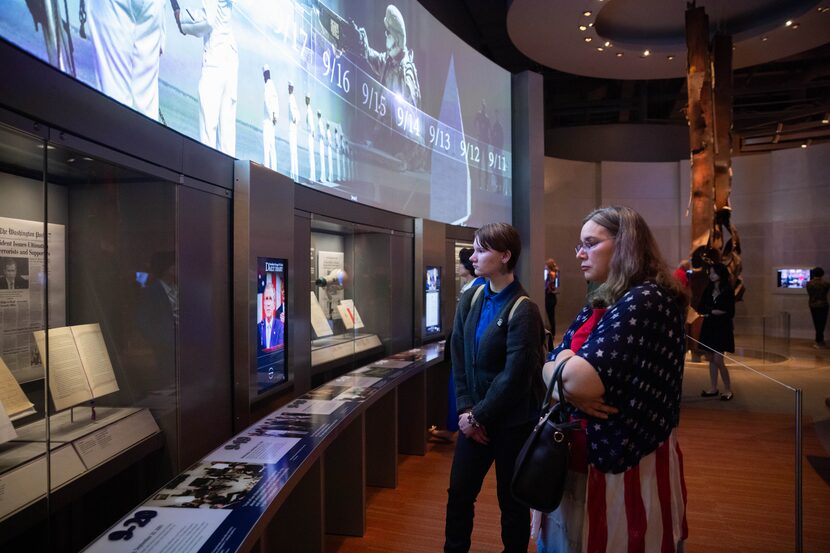
Brooks’ leadership aims to ensure that the library is not viewed solely as a shrine to Bush’s presidency but as an interactive center that educates visitors about his time in office. The center includes replicas of the Oval Office, exhibits highlighting significant events such as the September 11 attacks and Hurricane Katrina, as well as Bush’s notable contributions to global health through the PEPFAR initiative.
Bush’s Legacy and Philanthropy
One of Bush’s most lauded achievements is the implementation of the President’s Emergency Plan for AIDS Relief (PEPFAR) in 2003. Initially announced with a budget of $15 billion over five years, this initiative has been described as “the largest international health initiative in history.” PEPFAR has since expended over $125 billion, garnering praise from various quarters for its impact on combating the AIDS epidemic in Africa.
Additionally, Brooks highlights Bush’s unexpected talent for painting, noting, “Nobody would have thought that he would have become a painter. But he did. And he’s a darn good one.” This artistic endeavor may add a unique dimension to Bush’s legacy, potentially becoming part of the narrative surrounding his post-presidential life.
The contrasting public personas and approaches of Bush, Clinton, and Obama illustrate differing philosophies on life after the presidency. While Clinton and Obama remain prominent figures in political and social discourse, Bush’s quieter life post-presidency invites curiosity about his legacy beyond the Oval Office. As the Bush Presidential Center continues to evolve, it embodies the complexities of presidential legacies, financial realities, and ongoing public engagement.