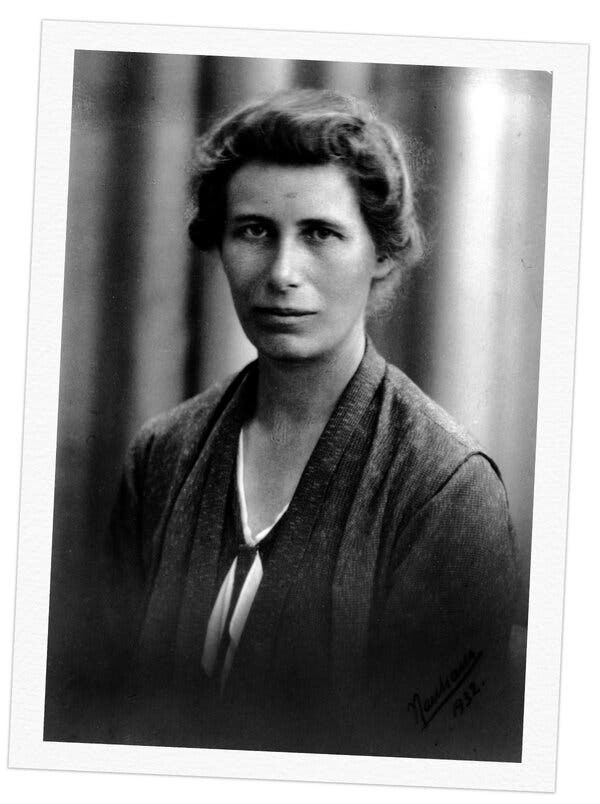
Inge Lehmann, a Danish seismologist, made a groundbreaking contribution to Earth science in September 1936 with her discovery of the Earth’s inner core. This revelation significantly altered the understanding of the planet’s structure, challenging the prevailing notion of a molten interior. Lehmann’s findings were published in a French scientific journal under the cryptic title “P’.”
Despite being a woman in a predominantly male field, Lehmann’s work was characterized by rigorous detail and extensive calculations. Her article spanned nearly 30 pages, filled with meticulously crafted graphs and tables that laid out her theory. She proposed that the Earth contained a solid inner core, fundamentally different in composition from the molten outer layers that had been widely accepted by scientists of her time.
The Breaking Point of Current Understanding
Lehmann’s journey into the depths of the Earth began with her analysis of seismic readings from a 1929 earthquake in New Zealand. At that time, seismology was a nascent field, primarily male-dominated and lacking the advanced technology available today. The science focused on understanding the Earth through the waves generated by earthquakes. These waves include primary or pressure waves (P waves), secondary waves (S waves), and surface waves.
P waves, known for their ability to travel through solids, liquids, and gases, are the fastest seismic waves. Lehmann observed that when P waves traversed the Earth, their behavior suggested the presence of a different internal structure than previously thought. In her analysis, she noted the unexpected way these waves interacted with the Earth’s layers, leading her to theorize a solid inner core surrounded by a liquid outer core.
A Legacy of Innovation
Lehmann’s insights laid the groundwork for modern seismology and geophysics. Her ability to connect seismic data with geological implications was revolutionary. She provided a framework for future scientists to understand the Earth’s internal dynamics, influencing decades of research in the field.
Her work, however, was not immediately recognized. The scientific community was slow to embrace her ideas, reflecting the challenges faced by women in science during that era. Lehmann chose to remain unmarried, dedicating her life to her research and breaking through the barriers of her time.
Inge Lehmann’s contributions have since been acknowledged, highlighting her pivotal role in transforming the study of the Earth. Today, she is celebrated not only for her scientific achievements but also for inspiring future generations of scientists, particularly women in the field.
In recognition of her legacy, institutions continue to honor her work, ensuring that her name and her discoveries will not be overlooked in the annals of scientific history.