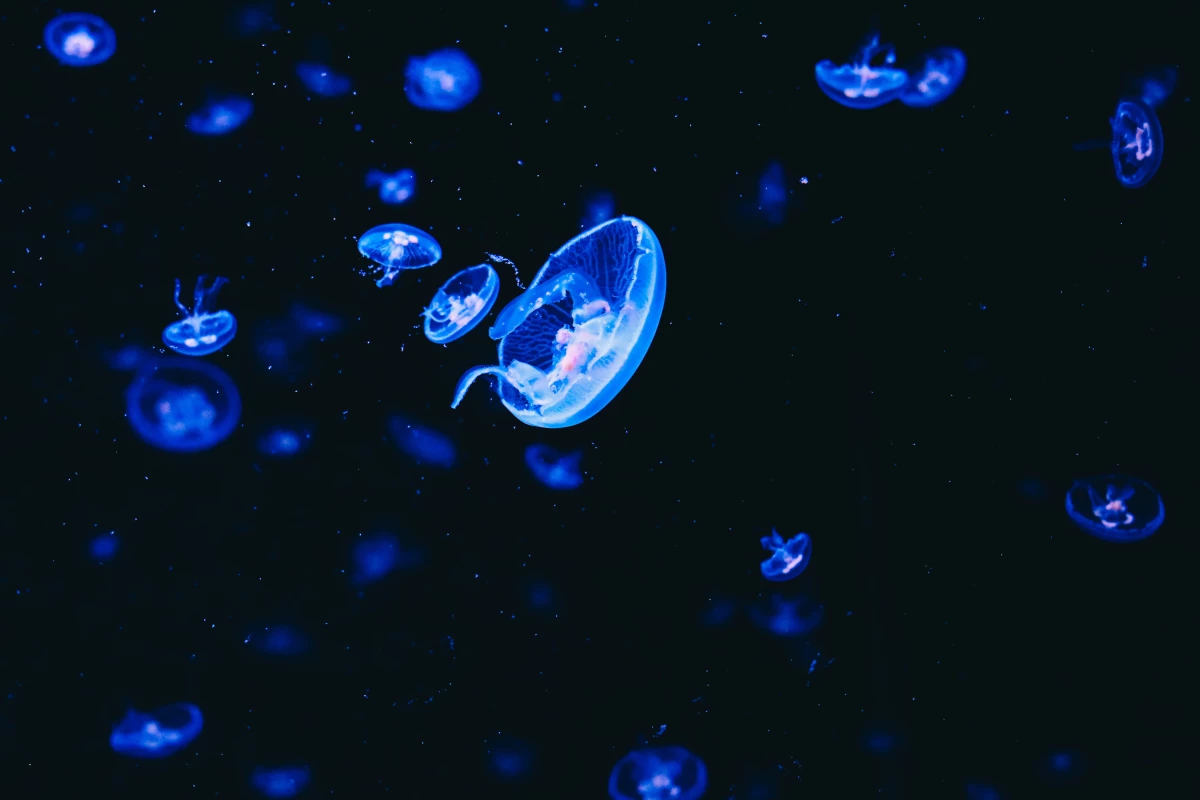
Research has revealed that jellyfish and sea anemones share intriguing similarities with humans when it comes to sleep patterns. A study published in Nature Communications indicates that these ancient creatures not only exhibit sleep behaviors but also adhere to a sleep schedule that mirrors that of humans, spending approximately one-third of their day asleep. This discovery sheds light on the evolutionary significance of sleep, suggesting it may have developed long before the brain to assist in cellular maintenance under stress.
Dr. Lior Appelbaum, a neurobiologist at Bar-Ilan University, emphasized the importance of sleep even in animals lacking a central brain. “Sleep is important even for animals without a brain. It helps them recover from cellular stress and carry out cellular maintenance,” he stated in an interview with New Atlas. The question of why animals sleep has long baffled researchers, as sleep is observed across various species, yet its purpose remains a subject of debate.
To investigate the evolutionary roots of sleep, Appelbaum and his research team focused on two specific cnidarians: the upside-down jellyfish (Cassiopea andromeda) and the starlet sea anemone (Nematostella vectensis). The researchers utilized infrared cameras and movement-tracking software to monitor the animals’ activity patterns throughout a standard 24-hour cycle, consisting of 12 hours of light and 12 hours of darkness.
The findings revealed that jellyfish, which host photosynthetic algae, are predominantly active during daylight hours, sleeping primarily at night and even indulging in midday naps akin to human behavior. In contrast, sea anemones were observed to be more active at night, resting more during the early morning hours.
To differentiate between sleep and mere inactivity, the researchers assessed the animals’ responses to stimuli such as light and food. Appelbaum defined a sleep-like state in jellyfish as exhibiting fewer than 37 pulses per minute for over three minutes, while sea anemones demonstrated a sleep-like condition through eight minutes or more of stillness. “What was surprising was that both animals sleep approximately eight hours, which is interesting because we also sleep approximately one-third of our lives, and they have more or less the same part,” Appelbaum noted.
The study further delved into what drives these sleep patterns. Previous research indicated that increased DNA damage in nerve cells could promote sleep in zebrafish. Building on this foundation, the team exposed jellyfish and sea anemones to ultraviolet (UV) radiation and chemicals known to induce DNA damage. They also disrupted the animals’ sleep through subtle disturbances, such as water pulses or gentle currents.
The results showed that DNA damage escalated during the animals’ waking periods and was cleared during their nighttime rest. Jellyfish and sea anemones responded to this cellular stress by increasing their sleep duration, implying that sleep plays a critical role in facilitating necessary cellular repairs. “Sleep evolved way before the brain – it’s essential for cells, cellular maintenance, and neurons,” Appelbaum concluded.
This study marks a significant advance in our understanding of sleep’s evolutionary origins and its fundamental role in the health of various organisms, even those without a centralized nervous system. The research not only highlights the complexity of sleep across different species but also serves as a compelling reminder of the shared biological needs among diverse life forms.