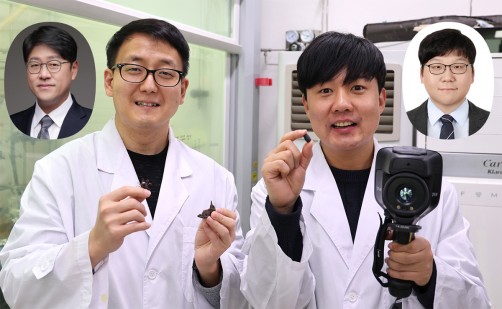
A research team from Korea has developed an innovative 4D printing technology that utilizes waste sulfur from petroleum refining processes to create self-actuating, recyclable structures. This pioneering work, led by Dr. Dong-Gyun Kim from the Korea Research Institute of Chemical Technology (KRICT), along with Professor Jeong Jae Wie of Hanyang University and Professor Yong Seok Kim of Sejong University, marks a significant advancement in materials science.
The technology relies on sulfur-rich polymers that can respond to external stimuli such as heat, light, and magnetic fields. According to the United States Geological Survey (USGS), global sulfur production reached approximately 85 million tons in 2024, primarily as a by-product of petroleum refining. The research highlights the importance of converting this industrial waste into valuable resources, specifically through the creation of “sulfur plastics.” These materials are gaining recognition for their potential in circular economy applications.
Sulfur plastics exhibit unique properties, including the ability to transmit infrared light, which conventional plastics cannot. This characteristic makes them suitable for applications in infrared camera lenses. Additionally, their capacity to capture heavy metals positions them as effective components in water purification systems. Despite these advantages, the application of sulfur plastics in 3D printing has faced challenges due to their densely cross-linked structures, which hinder flowability.
To address these limitations, the research team engineered a loosely cross-linked sulfur polymer network. This innovation allows the material to be extruded and printed into complex 3D structures with ease. By carefully controlling the sulfur content and the cross-linked network structure, the researchers achieved 4D printing capabilities with shape-memory properties. These structures can autonomously change shape in response to heat or light, eliminating the need for additional mechanical systems.
A remarkable feature of this technology is the ability to use a near-infrared (NIR) laser for just eight seconds to trigger a chemical welding process. This process temporarily breaks and reconnects internal bonds, allowing printed components to be securely joined without adhesives. The result is the creation of intricate 4D structures akin to assembling LEGO blocks.
Furthermore, the team incorporated 20% magnetic particles into their designs, leading to the development of soft robots measuring less than 1 centimeter. These robots can move autonomously without external power sources, utilizing both the shape-memory properties of the polymer and their magnetic responsiveness to follow external magnetic fields.
Another significant aspect of this breakthrough is its closed-loop manufacturing capability. Once the printed 4D structures reach the end of their lifecycle, they can be melted down and fully reused as printing feedstock. This ensures complete recycling of the material, fostering a sustainable manufacturing system.
Dr. Dong-Gyun Kim emphasized the impact of their research, stating, “This study represents the first example of upcycling industrial sulfur waste into advanced robotic materials. Smart materials that can move autonomously and be recycled are expected to become key drivers of future soft robotics and automation technologies.”
The findings of this study were published in the journal Advanced Materials. KRICT, a non-profit research institute funded by the Korean government since 1976, aims to advance national chemical technologies across various fields, including chemistry, materials science, environmental science, and chemical engineering. The institute is committed to addressing global challenges within chemistry and engineering, contributing to a sustainable future.
The research received support from the KRICT core research program, the Ministry of Science and ICT of Korea, and the U.S. Army International Technology Center. For more information on KRICT and its initiatives, visit https://www.krict.re.kr/eng/.