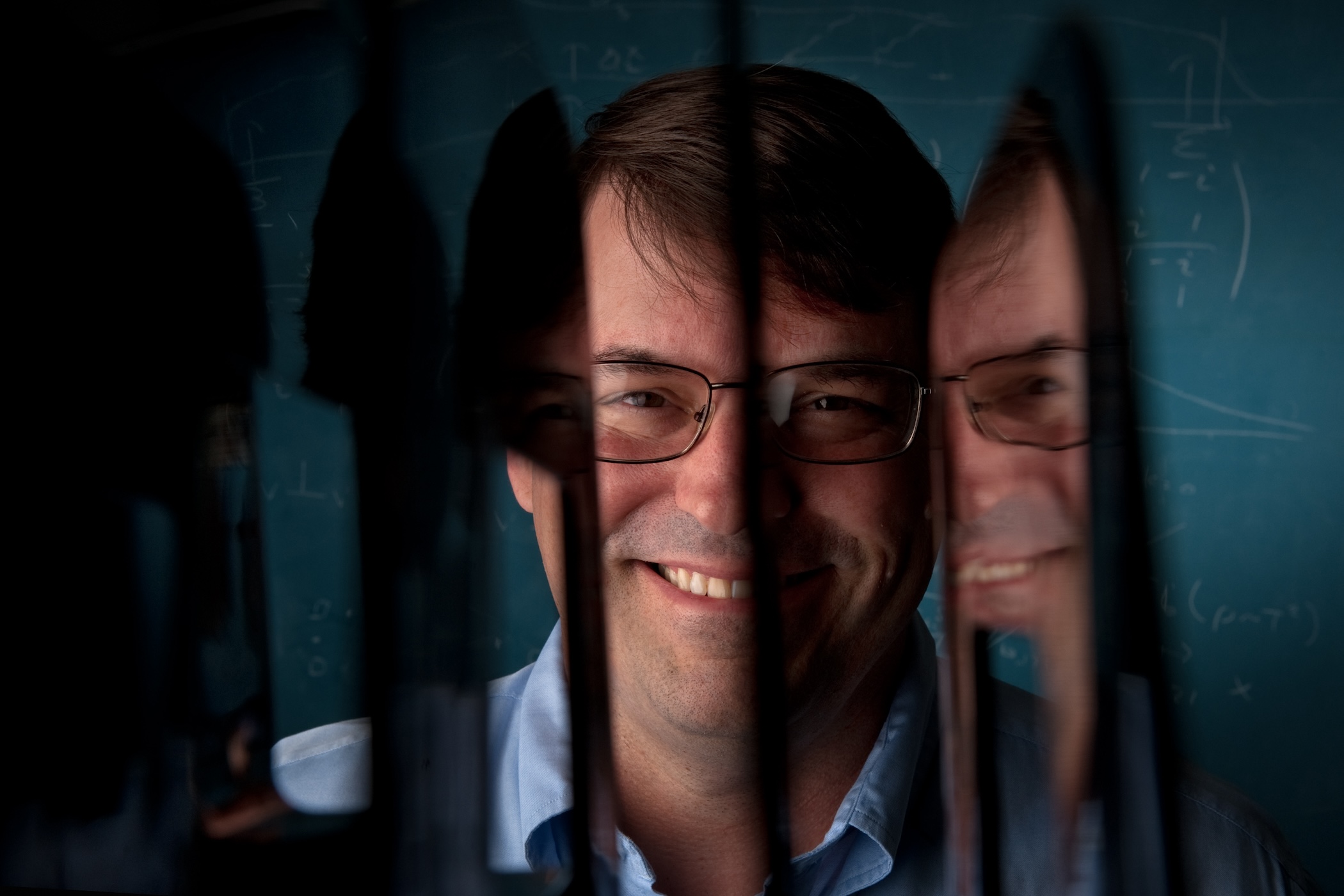
Distinguished physicist Steven R. White will deliver the 2026 Chhabra-Landau Lecture at the University of Georgia on February 26, 2026. White, a prominent figure in the field of physics and astronomy at the University of California, Irvine, is recognized for his significant contributions to the simulation of quantum systems.
The lecture, part of UGA’s Center for Simulational Physics, will occur at 14:55 in the Physics Building, room 202. Attendance is free and open to the public, and a light reception is scheduled to follow the event.
White’s participation in this lecture series is notable, as it is part of UGA’s esteemed Provost’s Seminar Series, which highlights influential members of the National Academies of Sciences, Engineering and Medicine and the American Academy of Arts and Sciences. According to Phillip Stancil, head of the department of physics and astronomy in the Franklin College of Arts and Sciences, “I’m excited that Dr. White’s presentation is not only a part of the highly regarded Provost’s Seminar Series but also the Chhabra-Landau Lecture Series on computer simulations.”
As a condensed matter physicist, White specializes in the intricate simulation of quantum systems. He is particularly acclaimed for inventing the Density Matrix Renormalization Group, a groundbreaking method for simulating quantum phenomena across various physics and chemistry domains. Notably, White is the recipient of the Aneesur Rahman Prize in Computational Physics, the highest honor awarded by the American Physical Society in this field. His memberships include prestigious organizations such as the American Academy of Arts and Sciences and the National Academy of Sciences.
The title of White’s lecture, “Combining Monte Carlo and Tensor Networks to Beat the Quantum Exponential,” promises to shed light on two powerful computational techniques. He will provide foundational insights into both Monte Carlo simulations and tensor networks, illustrating how their combination can lead to significant advancements in understanding complex quantum problems.
For additional information regarding the lecture, interested parties can contact Phillip Stancil at the University of Georgia. This event represents a unique opportunity for students, faculty, and the public to engage with a leading mind in contemporary physics and gain insights into the future of scientific research in quantum systems.