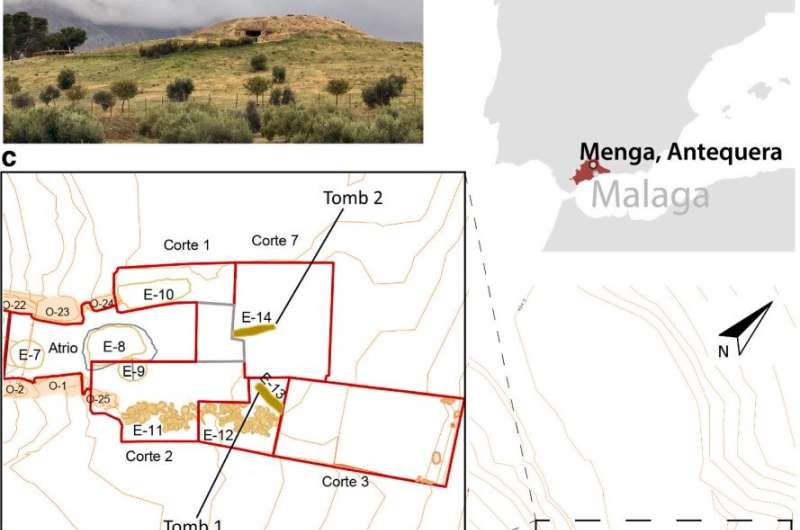
The Menga dolmen, a significant Neolithic monument located in Antequera, Spain, has revealed new insights into its cultural importance over millennia through recent archaeological research. A study published on January 14, 2026, in the Journal of Archaeological Science: Reports combines DNA analysis of medieval burials within the dolmen with historical context, highlighting its continued relevance from ancient times through to the medieval period.
Prolonged Use of the Menga Dolmen
Constructed in the fourth millennium BCE, the Menga dolmen is a megalithic structure that served as a collective burial site for Neolithic communities. Over the centuries, it has maintained its function as a burial ground, with archaeological findings indicating intense funerary activity between the 2nd and 4th centuries AD and evidence of habitation from the 5th to 7th centuries AD.
The latest research focuses on two medieval burials dating to approximately the 8th and 11th centuries AD, as determined by radiocarbon dating of the skeletal remains. While overall preservation of the remains was poor, the researchers noted that both individuals were positioned similarly, lying on their right side with their heads oriented southwest, consistent with the monument’s axis of symmetry.
During the time these burials occurred, the Iberian Peninsula was under Islamic rule, yet it also housed Christian, Jewish, and potentially pagan communities. This multicultural backdrop adds complexity to the interpretation of the burial practices observed at the site.
Diverse Ancestry Revealed Through DNA Analysis
The research team was able to extract usable DNA from one of the individuals, referred to as Menga1. This male individual displayed a European Y-chromosome lineage and a mitochondrial DNA lineage linked to some modern North Africans. Further analysis uncovered a genetic composition that included approximately 44% Iberian, 18% North African, and 37% Levantine ancestry.
The authors of the study indicate that North African and Levantine genetic influences were widespread in southern Iberia since at least the third or fourth century CE. These patterns likely resulted from increased movement of people across the Mediterranean, facilitated by trade connections established by the Greeks, Phoenicians, and Carthaginians, and later through the Roman Empire.
With the Islamic period beginning in 711 CE, interactions with North Africa likely intensified due to shared cultural practices and political developments. This genetic diversity underscores the cultural complexity of medieval Spain.
The findings not only enhance understanding of the burial practices at the Menga dolmen but also reflect the broader cultural interactions in the region. The study’s authors emphasized that regardless of the faith practiced by the individuals interred, their alignment with the axis of the megalithic monument signifies the enduring symbolic significance of the Menga dolmen for over 5,000 years.
As researchers continue to uncover the layers of history surrounding the Menga dolmen, this latest study serves as a reminder of the site’s role as a focal point of cultural continuity and diversity in the ever-evolving landscape of Antequera.