A metal detectorist in Norway made a significant archaeological discovery by uncovering a rare Viking Age grave. The find, located in Trøndelag County, features a burial that dates back to the 800s and includes intricate jewelry and artifacts. This remarkable site adds to a year filled with various treasure discoveries, including Iron Age hoards and ancient shipwrecks.
After discovering an ornate oval brooch, metal detectorist Roy Søreng contacted researchers from the Norwegian University of Science and Technology (NTNU). Following this initial contact, a team of archaeologists began excavating the site to preserve the area’s historical significance. The excavation remained undisclosed to prevent any potential damage to the site and its contents.
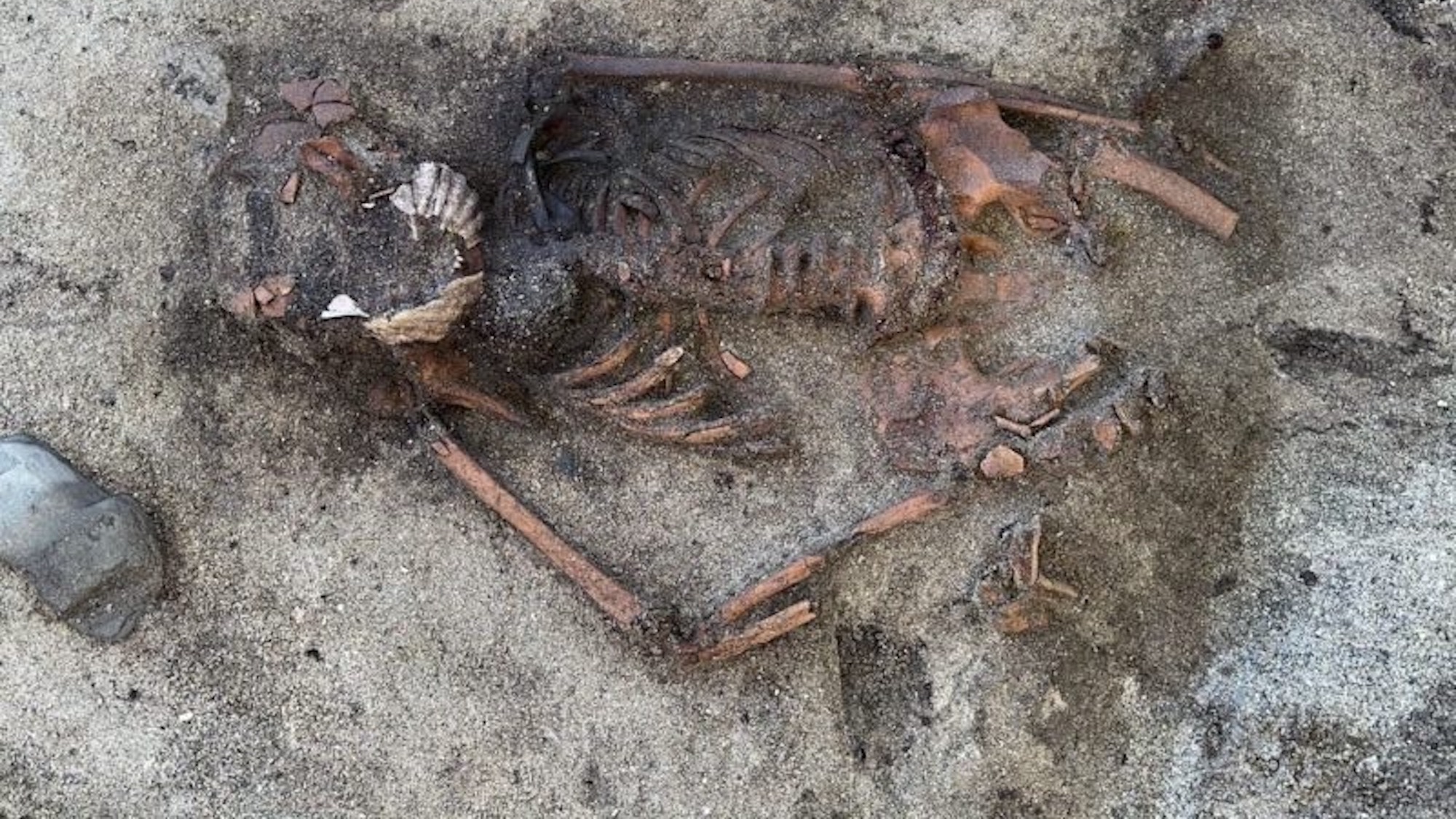
According to Raymond Sauvage, head engineer at NTNU’s Department of Archaeology and Cultural History, the grave likely belongs to a woman buried with a typical Viking Age costume and a set of jewelry. “This indicates that she was a free and probably married woman, perhaps the mistress of the farm,” Sauvage noted. The burial contains skeletal remains, two oval brooches, and a ring buckle that would have been used to fasten a petticoat.
A particularly intriguing element of the grave is the presence of two scallop shells, which partially covered the deceased’s mouth. While scallop shells became associated with Christianity during the Middle Ages, their occurrence in pre-Christian graves is exceptionally rare. “This practice is not previously known from pre-Christian graves in Norway. We don’t yet know what the symbolism means,” Sauvage explained.
The excavation team also discovered bird bones, likely wing bones, nearby. These findings suggest that both the shells and bones were intended to convey symbolic meanings to those attending the burial. The discovery follows another significant find in the same field earlier this year, where archaeologists recorded a pristine skeleton.
Field supervisor Hanne Bryn emphasized the urgency of the excavation, noting that they quickly recognized the new skeletal grave was at risk of damage from upcoming ploughing activities. Fortunately, landowner Arve Innstrand permitted the excavation to proceed, allowing researchers to preserve the grave and its artifacts.
Next steps for the research team include examining the skeleton, preserving the associated objects, and conducting samples for dating and DNA analysis. “The goal is to learn more about the person and about possible kinship to the previous find from the same location,” Sauvage stated. Researchers plan to investigate the individual’s height, gender traits, and any potential signs of disease.
As the excavation continues, the discoveries at this site promise to shed light on Viking Age customs and the lives of individuals during that period, contributing valuable knowledge to the understanding of Norway’s historical heritage. The findings reinforce the importance of collaborative efforts between amateur detectorists and professional archaeologists in uncovering the past.