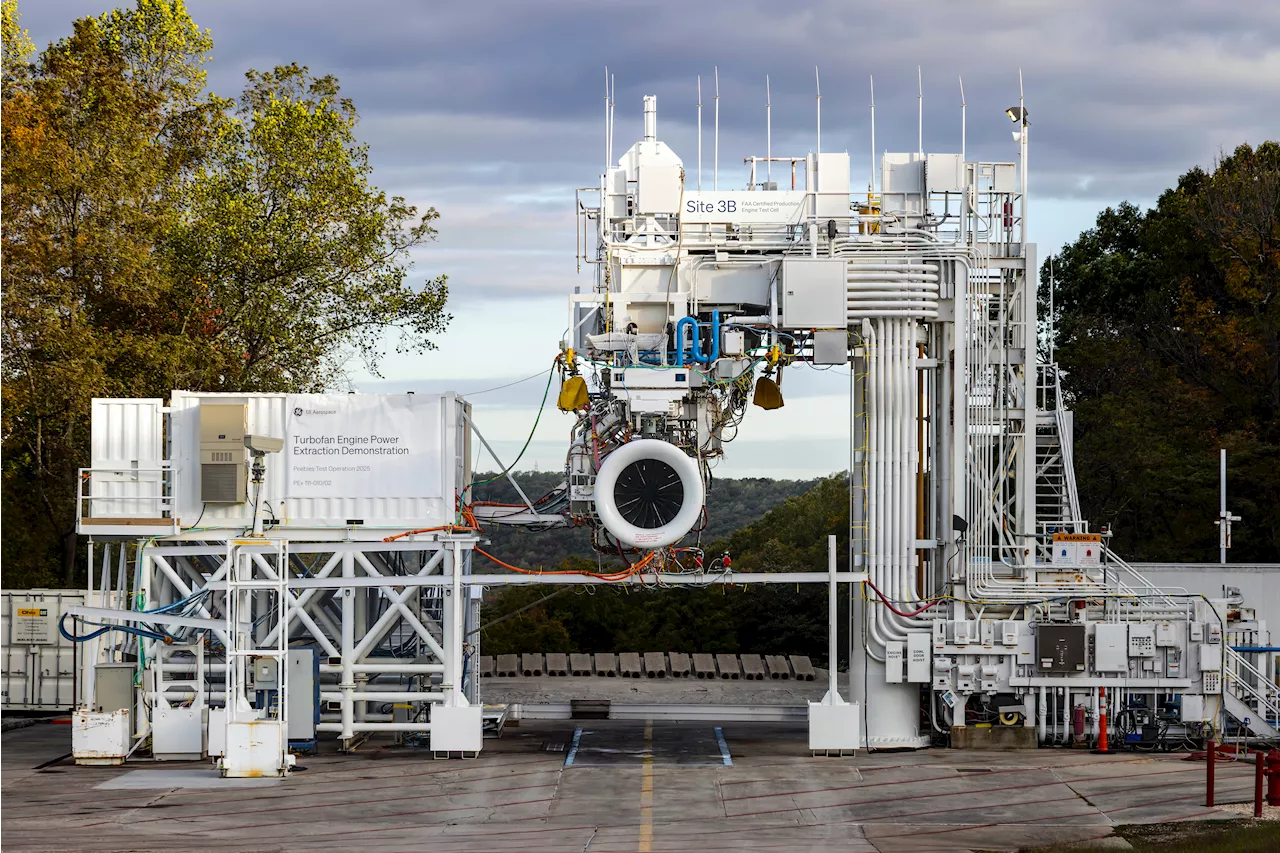
NASA and GE Aerospace have successfully tested a groundbreaking electric hybrid engine that has the potential to power commercial airliners. The test took place at GE Aerospace’s Peebles Test Operation site in Ohio in December 2023. This hybrid engine is a modified version of the GE Aerospace Passport engine and represents a significant advancement in aviation technology.
The demonstration marked the first successful test of an integrated hybrid engine system. While researchers had previously tested individual components such as power system controls and electric motors, this occasion showcased the full capabilities of the hybrid engine. “Turbines already exist. Compressors already exist. But there is no hybrid-electric engine flying today. And that’s what we were able to see,” stated Anthony Nerone, manager of NASA’s project.
The modified Passport engine demonstrated its ability to extract energy from certain operations and redistribute that power effectively to other areas. This hybrid system operates on conventional jet fuel, supplemented by electric motors. Despite the seemingly straightforward concept, the execution required significant innovation and integration of new components into a cohesive system that can reliably meet the power demands of single-aisle aircraft.
The complexity of this test was underscored by Laura Evans, acting project manager for HyTEC at NASA Glenn Research Center, who noted, “They had to integrate equipment they’ve never needed for previous tests like this.” The successful demonstration involved the engine mounted and performing various functions it would need if integrated into an aircraft, rather than merely serving as a preliminary exercise.
The timing of this achievement is crucial as U.S. aviation increasingly seeks power systems that enhance efficiency while reducing fuel costs. NASA has been at the forefront of hybrid aircraft engine technology since it began developing the concept nearly two decades ago, a time when such advancements seemed nearly impossible, according to Nerone. The research conducted under the HyTEC contract aims to produce hybrid engines that consume up to 10% less fuel than current leading models.
As both NASA and GE Aerospace analyze data from the demonstration and prior tests, they are making strides toward a compact engine test scheduled for this decade. The successful integration of this technology brings them closer to practical applications, marking a significant step forward in hybrid engine development.
The work is ongoing, but this demonstration highlighted a pivotal moment in aviation technology, paving the way for future innovations in fuel efficiency and performance in commercial flight.