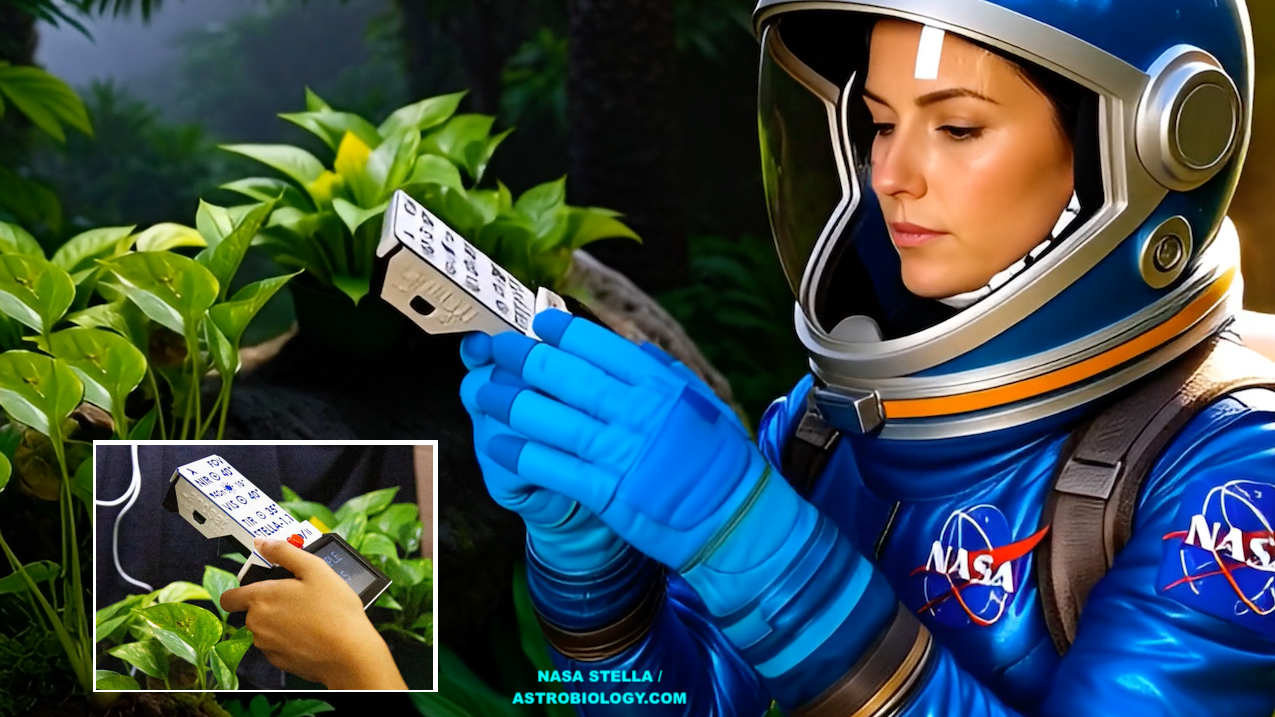
NASA has unveiled an innovative project called STELLA (Science and Technology Education for Land/Life Assessment), which aims to make remote sensing technology accessible to a broader audience. The project encourages individuals, including students and amateur scientists, to build low-cost sensors that can monitor environmental conditions, enhancing opportunities for hands-on learning and research.
STELLA’s Vision for Open Science
The initiative marks a significant shift in how remote sensing technologies can be utilized beyond traditional scientific communities. According to a recent paper authored by NASA scientists and engineers, these instruments can be assembled using commercially available components and even 3D-printed housings. This democratization of technology not only promotes education but also allows for exciting new avenues in scientific research.
The paper, titled “Democratizing Remote Sensing Science With Low-Cost Open-Source Instruments for Research and Education,” details the capabilities of STELLA instruments, which measure light spectra over 18 channels in the visible and near-infrared ranges. This allows for detailed observations of both natural and built surfaces, as well as evaluations of vegetation reflectance characteristics.
The most basic model, the STELLA-Q, can be assembled for approximately $200 by connecting components with inexpensive cables. More advanced models, such as the STELLA-1, support additional sensors that measure surface temperature and ambient air parameters, enabling more comprehensive environmental assessments.
Engaging the Next Generation of Explorers
Located at NASA’s Goddard Space Flight Center, the STELLA program is particularly focused on engaging a younger demographic often referred to as the “Artemis Generation.” These are the future researchers and explorers who will venture to other worlds. By providing practical experience with remote sensing, STELLA aims to inspire a new wave of scientific inquiry among students.
Participants in the STELLA program gain hands-on experience with the scientific process, developing analytical thinking skills while interacting with real satellite data. This approach not only enhances learning but also fosters a culture of citizen science, where individuals can contribute to meaningful environmental research.
The open-source nature of the software, written in a user-friendly variant of the Python programming language, ensures that anyone can easily access and analyze the data collected using these instruments. Data is recorded in plain text on a micro-SD card, further simplifying the process for users.
Through STELLA, NASA envisions a future where remote sensing technology can be used widely, allowing for extensive data collection and analysis. This not only reduces the logistical challenges of sample return missions but also enables rapid data transmission, facilitating immediate scientific insights.
As NASA continues to explore the possibilities of life on other planets, the capabilities developed through the STELLA project will be crucial. Understanding how extraterrestrial ecosystems function, including their similarities and differences to Earth’s life systems, will enhance our ability to conduct astrobiology expeditions effectively.
The project is supported by various contributors, including the University of Virginia, which has provided additional resources for the STELLA initiative. The collaborative effort highlights the importance of community involvement in advancing scientific knowledge and exploration.
For more information about the STELLA project and to access the complete paper detailing its methodologies and findings, visit the official NASA website. This initiative represents a significant step toward making advanced scientific tools available, encouraging the next generation to engage with science in innovative and impactful ways.