NASA engineers are conducting extensive tests on technology designed for Mars exploration in various deserts across the United States. These trials aim to enhance the performance of equipment that will eventually be used on the Red Planet. The agency’s rigorous testing procedures emphasize the importance of thorough preparation before deploying instruments into space.
One of the most notable locations for these tests is **Death Valley National Park** in California, recognized for its extreme conditions. Engineers have utilized this unforgiving terrain since the 1970s for various Mars missions, including the **Viking lander** and most recently, the **Perseverance** rover’s landing system. This year, they returned to the park to address issues with the **Ingenuity** helicopter, which faced challenges during its operational life.
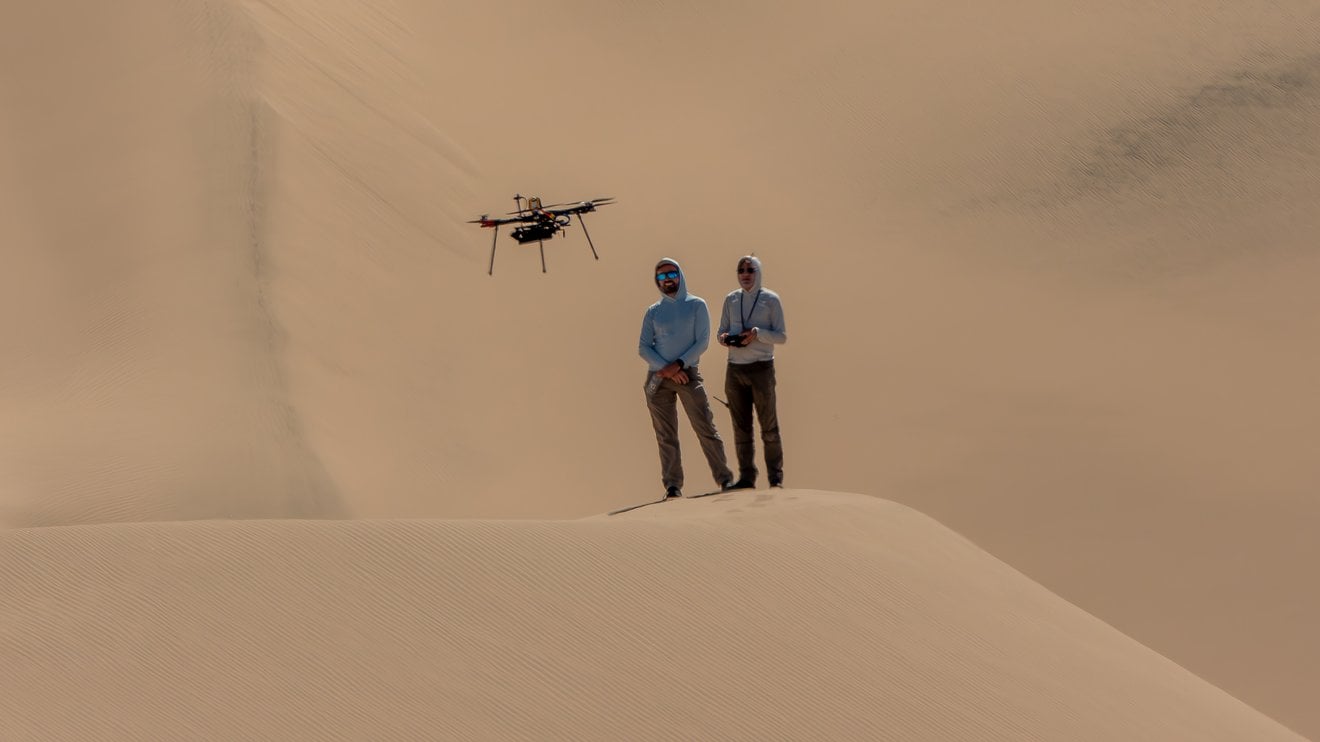
In temperatures reaching **45°C**, engineers focused on updating the drone’s software, specifically the flight algorithm that had struggled with featureless terrain. As Ingenuity completed more than 70 flights, the landscape it traversed became increasingly uniform, complicating its ability to determine speed accurately. Enhancing the algorithm to navigate these types of surfaces is crucial for future missions, and testing in Death Valley provides valuable real-world data rather than relying solely on simulations.
Another testing site is the **Mojave Desert**, home to the **Dumont Dunes**. This location offers a diverse array of sand formations that present similar challenges to those expected on Mars. Engineers from NASA’s **Jet Propulsion Laboratory** have been utilizing this terrain to ensure that their algorithms can effectively handle both varied and featureless landscapes.
In addition to aerial technology, NASA is also developing ground-based systems. The **Legged Autonomous Surface Science in Analogue Environments for Mars (LASSIE-M)** robot is designed to traverse rocky and sandy terrains. Its unique “dog” form factor allows it to estimate the physical properties of the surfaces it encounters. Researchers at NASA’s **Johnson Space Center** in Houston conducted tests at **White Sands National Park** in New Mexico, known for its missile testing history and its suitability as a NASA testing site. The LASSIE-M’s ability to maintain stability and monitor surface conditions is vital, as it serves as a scout for future explorers, whether rovers or humans.
Not all testing occurs in arid environments. The **Langley Research Center** in Virginia has been testing the **Mars Electric Reusable Flyer (MERF)**, an autonomous flying machine designed for longer-distance travel than Ingenuity. MERF features vertical take-off and landing capabilities and a downward-facing camera for surface recognition. The recent flight tests in Virginia aimed to assess the aerodynamic performance of a half-scale prototype, ensuring the lightweight materials could withstand the forces exerted during take-off and landing.
A press release from NASA highlights the extensive Mars-related research still underway, despite challenges faced by the agency. Engineers and scientists remain committed to advancing technology for exploring the Red Planet, demonstrating resilience in the face of obstacles on Earth. As NASA continues to push the boundaries of space exploration, these rigorous tests in domestic deserts play a crucial role in preparing for future missions.