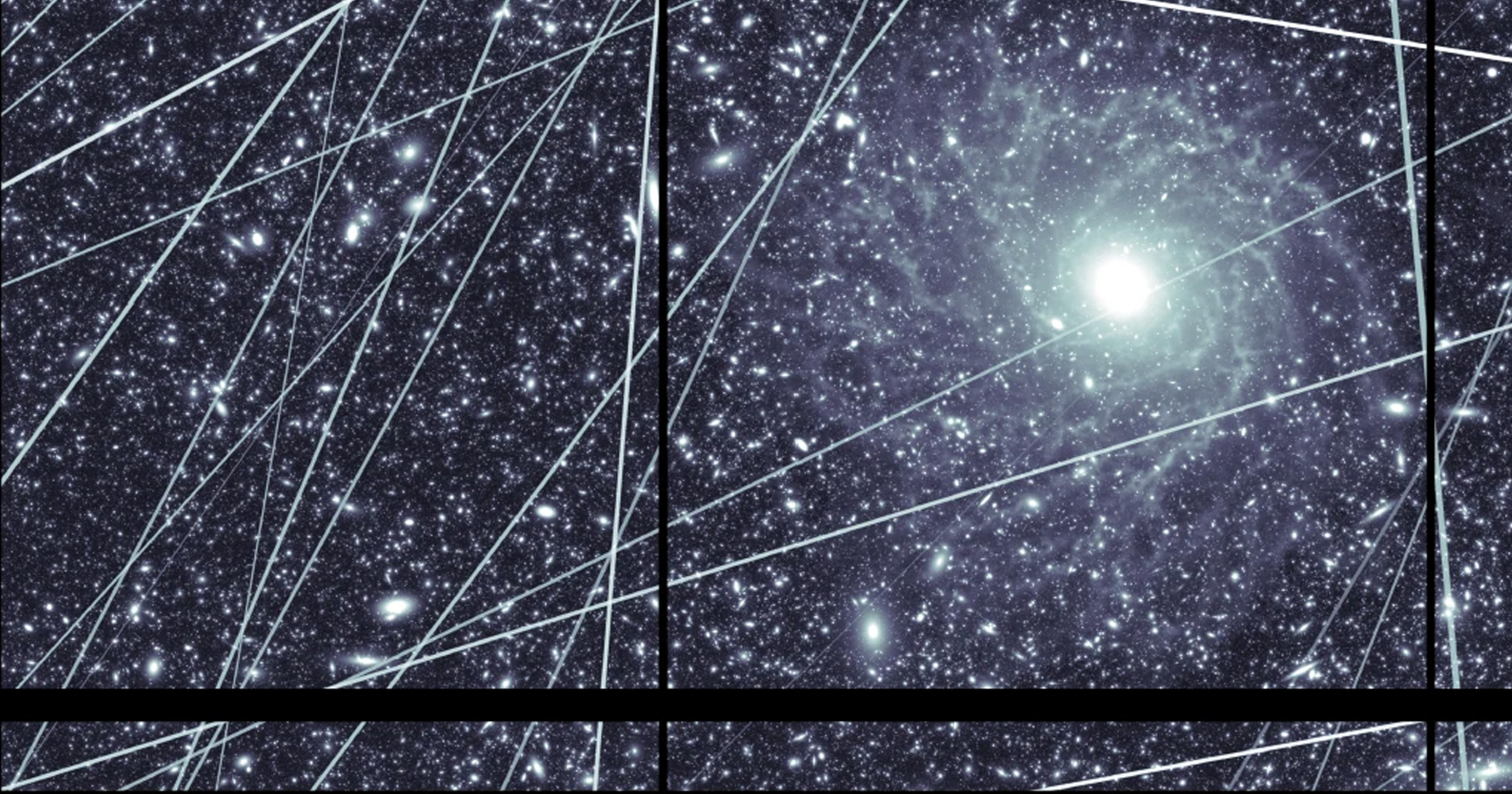
A recent study by NASA researchers indicates that the proliferation of SpaceX’s Starlink satellites poses a significant threat to the Hubble Space Telescope and other astronomical observatories. The study, led by Alejandro Serrano Borlaff, highlights the potential for light pollution and radio interference to severely disrupt astronomical observations.
The research reveals that if current satellite deployment plans are realized, approximately one out of every three Hubble images could be affected by light pollution. SpaceX has received approval from the US Federal Communications Commission to launch up to 12,000 satellites into low Earth orbit (LEO), with aspirations for an additional 30,000 satellites in the coming years. Researchers warn that the total number of satellites in LEO could reach as high as 500,000 within the next decade.
Impact on Future Astronomy Missions
The implications of this satellite congestion extend beyond Hubble. According to Borlaff and his team, upcoming space telescopes will likely experience even greater challenges. For instance, the European Space Agency’s upcoming ARRAKIHS mission, scheduled for the 2030s, is projected to have bright streaks of light appear in 96 percent of its images. In an even more concerning forecast, NASA’s SPHEREx mission could see light pollution contaminate 99 percent of its images.
“This is the first scientific study whose main objective is to investigate the effects of light pollution on space telescopes, taking into account these plans announced by the industry,” Borlaff stated. The research emphasizes the urgent need for international regulatory frameworks to address the growing number of satellites and their potential impact on astronomical research.
Call for International Cooperation
As the number of satellites in LEO continues to rise, the astronomical community is increasingly calling for collaboration among spacefaring nations to mitigate the potential harm. Without coordinated efforts to limit commercial satellite activities, the future of astronomical observation may be at risk.
While the exact trajectory of satellite deployment remains uncertain, the time to address these challenges is limited. The outcomes of these developments will depend on regulatory responses and the willingness of countries, including the United States, to prioritize the protection of astronomical research against commercial interests.
The findings underscore a critical intersection between technological advancement and scientific integrity, raising essential questions about the balance between innovation and preservation in the realm of space exploration.