NASA’s Perseverance rover has made a groundbreaking discovery on Mars, capturing evidence of electric discharges within dust devils. This phenomenon, long suspected but never observed, confirms that lightning occurs in the Martian atmosphere. The findings were detailed in a recent study published in the journal Nature.
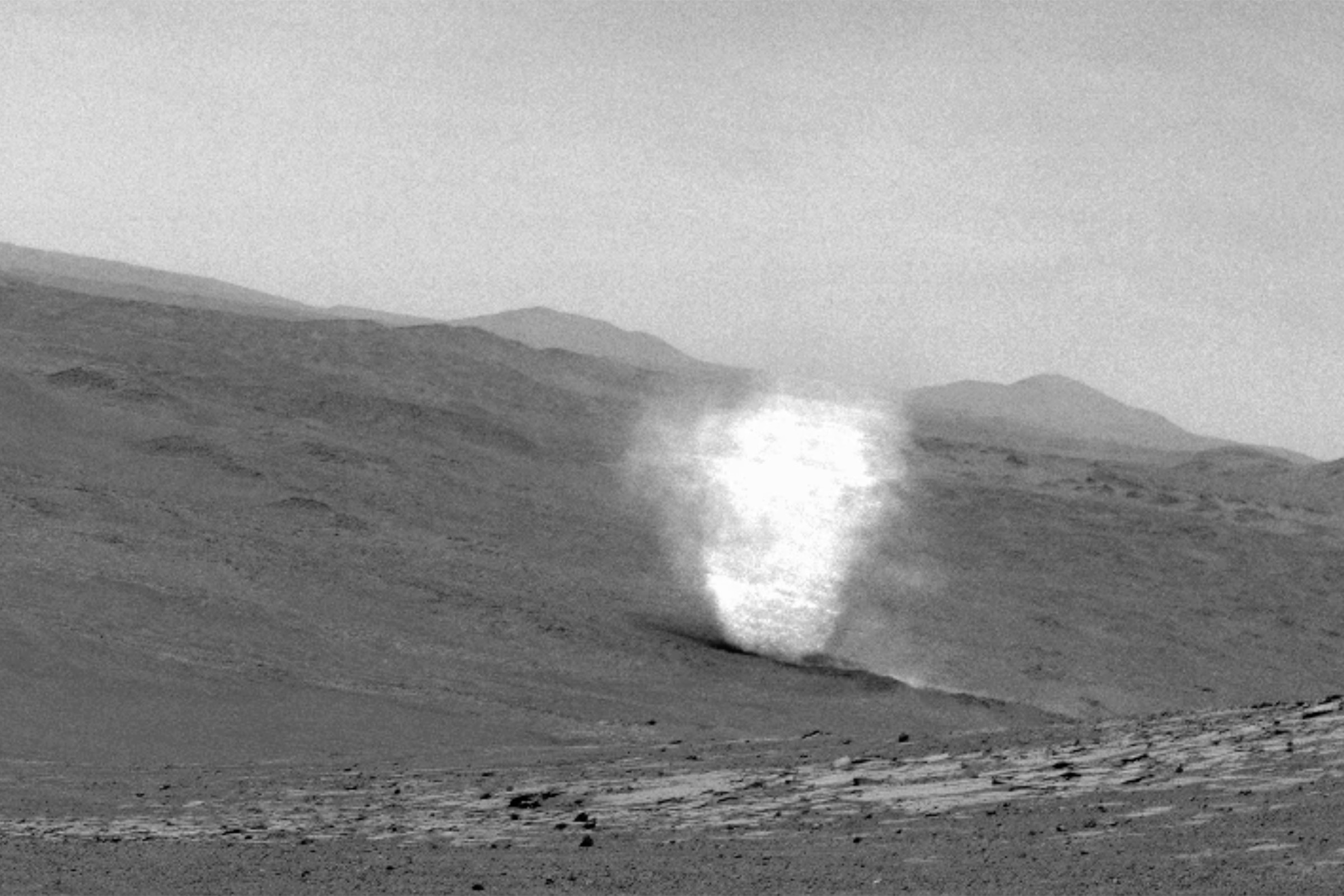
Dust devils, which are whirlwinds created by rising columns of warm air, are common on the Red Planet. As on Earth, these whirlwinds form when warm air near the ground rises quickly, displacing cooler air. Researchers had theorized that dust particles within these dust devils generate static electricity through friction, similar to the triboelectric effect experienced when shuffling on carpet and touching a doorknob.
Baptiste Chide, a planetary scientist from L’Institut de Recherche en Astrophysique et Planétologie and lead author of the study, noted the significance of this discovery. “Triboelectric charging of sand and snow particles is well documented on Earth, particularly in desert regions, but it rarely results in actual electrical discharges,” Chide explained in a statement from NASA. “On Mars, the thin atmosphere makes the phenomenon far more likely, as the amount of charge required to generate sparks is much lower than what is required in Earth’s near-surface atmosphere.”
The absence of detected lightning on Mars had been a longstanding frustration for scientists, especially given its presence on more distant planets like Saturn and Jupiter. The breakthrough required a measure of luck; the Perseverance rover’s microphone, part of the SuperCam instrument, was designed to analyze the sounds of Martian rocks being lasered. Unexpectedly, it began recording electrical disturbances, logging a total of 55 since its mission commenced in 2021. Notably, 16 of these discharges were recorded during the passage of a dust devil directly over the rover.
Scientists concluded that these electrical discharges were not linked to the planet’s frequent dust storms, as the frequency did not increase during such events. Instead, the dust devils, which passed over the rover more often than anticipated, provided the necessary conditions for detection, allowing researchers to confirm their hypothesis.
The implications of this discovery are significant. Lightning can catalyze unique chemical reactions and alter the chemical balance of Mars’ surface. This raises the possibility of creating complex compounds and even organic molecules, which could have profound implications for our understanding of life on other planets.
As exploration of Mars continues, this discovery enhances our knowledge of the planet’s atmospheric phenomena and their potential effects on the environment. The findings not only provide a deeper insight into Martian weather patterns but also fuel curiosity about the planet’s capacity to support life in any form.