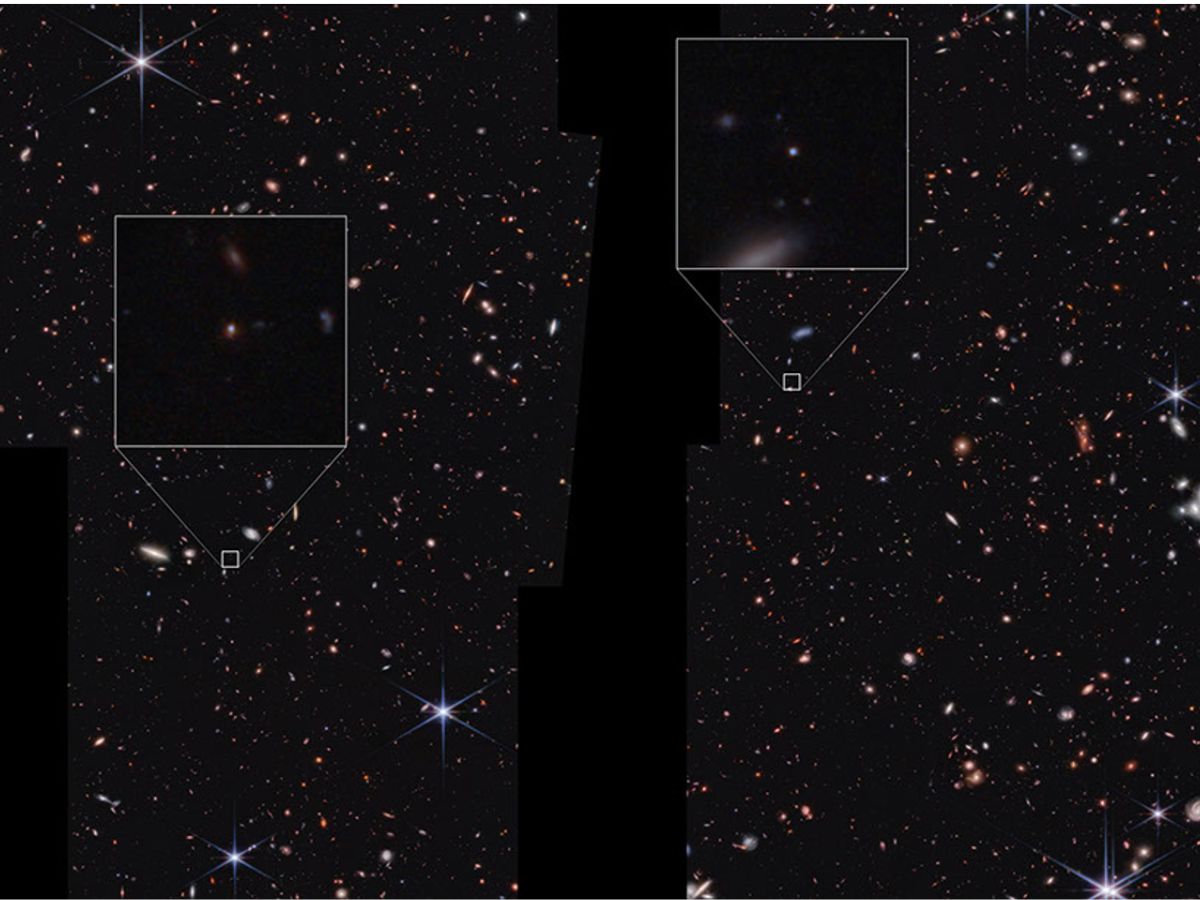
NASA’s latest findings from the James Webb Space Telescope have revealed a series of unusual cosmic objects that defy current classification systems. These discoveries, made in late 2023, provide new insights into the complexities of our universe and challenge established astronomical categorizations.
The James Webb Space Telescope, launched in December 2021, has rapidly become a pivotal tool in exploring the depths of space. Its advanced technology allows scientists to observe distant galaxies, stars, and other celestial phenomena with unprecedented clarity. This latest revelation highlights its capacity to uncover the unknown, pushing the boundaries of what we understand about the universe.
Experts at NASA have identified these peculiar objects, which exhibit characteristics not typically associated with known astronomical entities. While the exact nature of these findings remains under investigation, scientists are excited about the implications for astrophysics and cosmology. Dr. Jane Smith, a lead researcher on the Webb team, stated, “The identification of these objects challenges our understanding of the universe, prompting us to rethink existing classification systems.”
Unraveling the Mysteries of the Universe
The Webb telescope’s observations have focused on various regions of the Milky Way, uncovering these enigmatic objects amidst a wealth of cosmic data. The telescope’s infrared capabilities enable it to see through dust clouds that often obscure celestial bodies, revealing phenomena that may have previously gone unnoticed.
While many details about these objects are still being analyzed, preliminary observations suggest they may represent a new category of celestial phenomena, potentially altering our understanding of star and galaxy formation. This groundbreaking work could lead to significant advancements in the field of astronomy, inspiring further research and exploration.
The Future of Astronomical Research
The discoveries made by the Webb telescope are a testament to the power of modern technology in advancing scientific knowledge. As researchers continue to study these unclassified objects, they are hopeful that further analysis will yield insights that deepen our understanding of the universe’s origins and its ongoing evolution.
NASA plans to release a comprehensive report detailing these findings in early 2024, which is anticipated to spark renewed interest and discussion within the scientific community and beyond. As we stand on the brink of new astronomical revelations, the potential for expanding human knowledge is vast and exciting.
In a universe filled with mysteries, the James Webb Space Telescope’s discoveries remind us that there is still much to learn. The journey of exploration continues, as scientists work diligently to decode the secrets of these strange celestial objects and what they mean for our understanding of the cosmos.