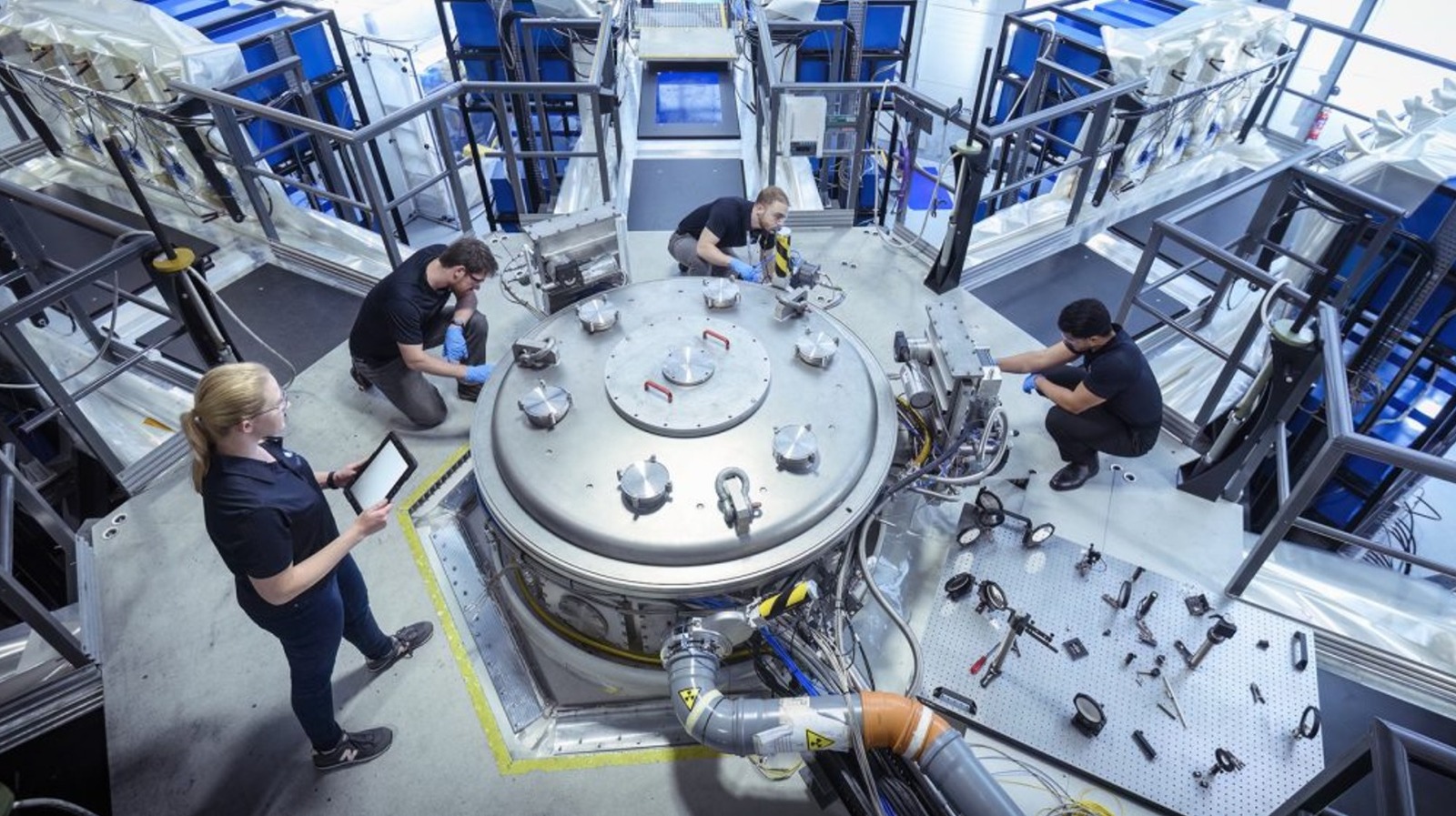
Recent research on neutrinos, famously elusive particles, suggests a potential flaw in the standard model of particle physics, which has long been regarded as a cornerstone of modern physics. The findings, led by Francesca Dordei from the Italian National Institute for Nuclear Physics (INFN), indicate that the interactions of these particles could challenge our current understanding of the universe’s fundamental forces.
New Insights into Neutrino Behavior
The standard model effectively catalogs known particles and forces, yet it fails to incorporate gravity alongside the other three fundamental forces. This limitation has spurred physicists to seek a more comprehensive framework. Dordei and her colleagues have identified a potential “crack” in the model through their extensive analysis of neutrinos, particles so light that they were once thought to be massless.
Neutrinos are characterized by their weak interactions with matter, allowing them to pass through objects undetected. Despite this, recent studies have quantified their interactions through a parameter known as charge radius. The research team examined data from a variety of sources, including neutrinos generated in nuclear reactors, particle accelerators, and nuclear fusion processes within the sun.
Team member Nicola Cargioli noted the complexity of consolidating data from numerous experiments, including sensitivity tests using dark matter detectors. “We have used basically all of the data [there is],” said Christoph Ternes from the Gran Sasso Science Institute, who contributed to the study.
Identifying a Mathematical Degeneracy
While the results aligned with the standard model’s predictions regarding the neutrino’s charge radius, the researchers uncovered a significant observation concerning weak interactions. They identified a “mathematical degeneracy,” indicating that both the standard model and a slightly altered model could explain the same data. Notably, this alternative model appeared to fit the observations more accurately, hinting at a possible inadequacy within the standard framework.
The new analysis does not yet constitute a definitive discovery, but it serves as a crucial first step in a broader investigation into the standard model’s validity.
The implications of these findings could be profound. If the identified inconsistencies are validated, they could prompt a fundamental reevaluation of particle physics. Cargioli remarked, “If we have found a crack, then we may have to rethink everything.” This could lead to the identification of new particles and forces that interact with neutrinos, expanding our understanding of the universe.
Omar Miranda from the Center for Research and Advanced Studies of the National Polytechnic Institute emphasized the challenges of measuring neutrino interactions, particularly at low energy levels, which are crucial for this study. Advances in detector technology, particularly those designed for dark matter research, have recently made such measurements feasible.
In light of these findings, José Valle from the University of Valencia called for further ultra-precise experiments involving neutrinos. Enhanced measurements of their electromagnetic properties could illuminate aspects of their internal structure, offering deeper insights into particle physics.
The ongoing research into neutrinos represents a vital step forward in our quest to understand the universe. As more advanced detectors come online in the coming years, scientists anticipate gathering additional data that could either reinforce or challenge these findings.