The study of neutron stars reveals some of the most extreme objects in the universe, formed from the remnants of massive stars that have exhausted their nuclear fuel. These stars, which range in mass from eight to twenty times that of the Sun, undergo a catastrophic collapse, resulting in a supernova explosion. What remains is a stellar remnant roughly the size of a city, yet it can possess more mass than the Sun itself, creating conditions of density and gravity unmatched anywhere in nature.
When a massive star reaches the end of its life, the fusion process in its iron core ceases, leading to a rapid loss of pressure. This causes the core to collapse under its own gravity, forcing electrons to combine with protons to form neutrons. The result is an object that exhibits neutron degeneracy pressure, a quantum force that prevents total collapse and inhibits the formation of a black hole. This extraordinary process yields a neutron star, characterized by its crushing gravity, ultra-strong magnetic fields, and rapid rotation.
Structure and Properties of Neutron Stars
Neutron stars are structured into distinct layers shaped by extreme pressures. The outer crust consists of tightly packed atomic nuclei, while deeper within, neutrons escape atomic bonds in a phenomenon known as “neutron drip.” Below this lies a superfluid outer core saturated with free neutrons and potentially exotic particles. In the innermost regions, conditions may transition into quark matter, further illustrating the unique properties of these stellar remnants.
The maximum mass limit for neutron stars, known as the Tolman–Oppenheimer–Volkoff boundary, is estimated to be around 2.2 solar masses. Beyond this threshold, neutron degeneracy pressure can no longer support the star, leading to a collapse into a black hole. This defines a clear demarcation between neutron stars and black holes, highlighting the extreme conditions that govern their existence.
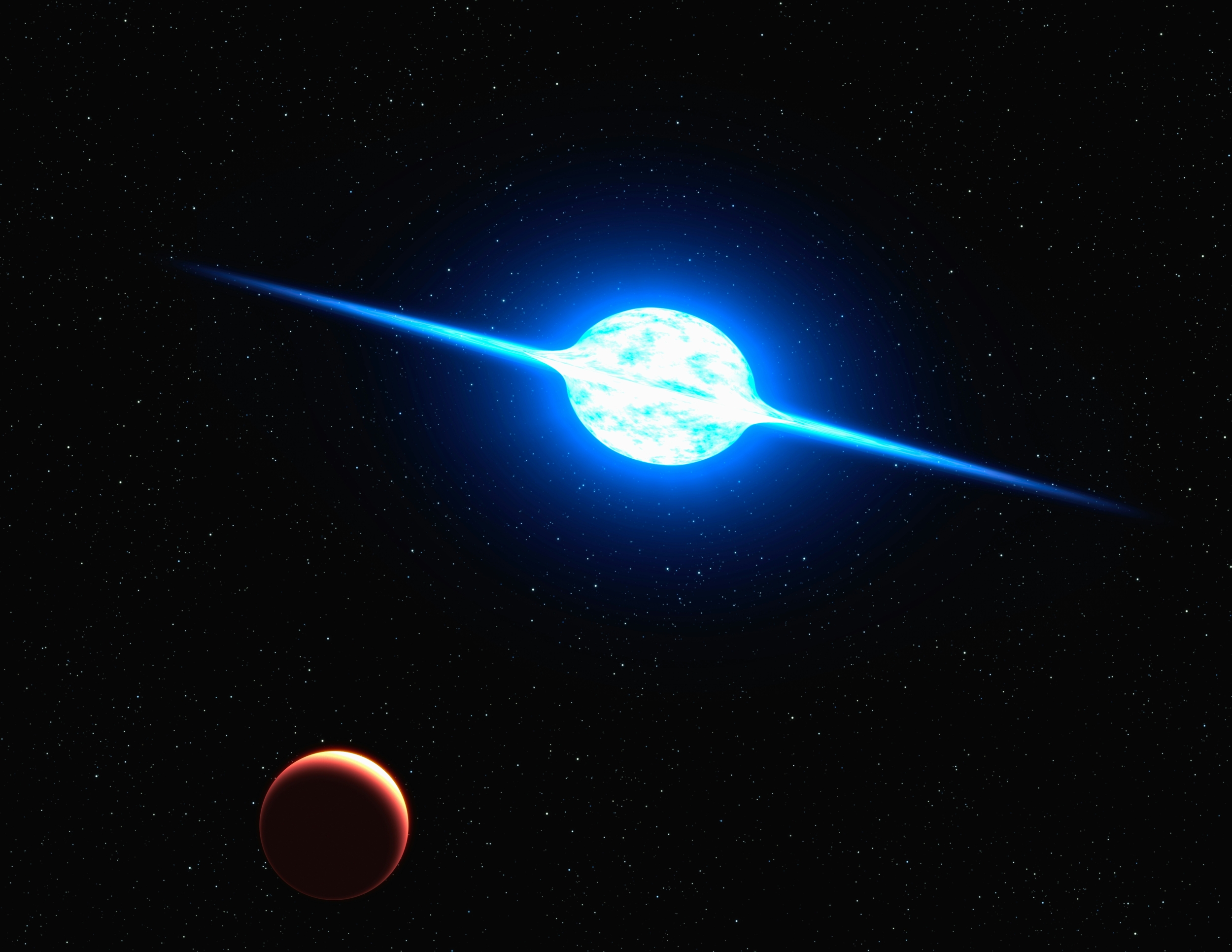
As neutron stars collapse, they conserve angular momentum, which results in an accelerated rotation speed. A progenitor star that rotates once every day can transform into a neutron star that spins hundreds of times per second. Some millisecond pulsars, for example, can achieve rotational frequencies exceeding 700 hertz, emitting precisely timed radio pulses detectable across vast distances in the Milky Way.
The Role of Neutron Stars in Astrophysics
Neutron stars play a pivotal role in expanding our understanding of astrophysical phenomena. A rare subclass known as magnetars, for instance, can have magnetic fields exceeding 10^15 gauss. These intense magnetic fields can fracture the star’s crust, resulting in starquakes that release bursts of gamma rays far more powerful than typical supernova emissions. This showcases how neutron stars can store and release enormous amounts of energy through magnetic processes.
Timing irregularities, referred to as glitches, also provide insights into the exotic interiors of these stellar remnants. These sudden changes in rotation rates are thought to occur when superfluid vortices within the core unpin and redistribute angular momentum, leading to brief but significant alterations in spin.
The field of gravitational-wave astronomy has also transformed the study of neutron stars. The detection of GW170817, which was linked to the merger of neutron stars, confirmed that these events emit ripples in spacetime that can be measured across hundreds of millions of light years. Such discoveries have established a direct connection between neutron stars and the synthesis of heavy elements, including gold and platinum, thereby shaping cosmic structures.
Recent observations have refined our knowledge of neutron stars’ densities and radii. For instance, measurements suggest that typical neutron stars are approximately 11 to 13 kilometers wide. This information, gathered through instruments such as the Neutron Star Interior Composition Explorer (NICER) aboard the International Space Station, helps constrain models of neutron star equations of state, ruling out both overly soft and extremely rigid internal matter configurations.
Neutron stars also undergo significant cooling during their early life stages due to neutrino emission, shedding heat rapidly over the first hundred thousand years. As neutrino output diminishes, the cooling process transitions to being dominated by photon radiation, allowing astronomers to estimate the ages of neutron stars through thermal measurements. Sudden temperature drops observed in cooling curves provide evidence for superfluidity within the core, offering rare observational proof of quantum behavior on a cosmic scale.
In addition to their fascinating physical properties, neutron stars play a crucial role in the chemical evolution of galaxies. Binary neutron star mergers eject neutron-rich material into the interstellar medium, seeding galaxies with heavy elements vital for the formation of planets and life. Without the contributions of these stellar remnants, many elements in the periodic table, particularly those heavier than iron, would be exceedingly rare in the universe.
Neutron stars, as remnants of collapsed stars, demonstrate the extremes of matter and the fundamental forces operating within them. They combine intense gravity, density, magnetism, and rotation into compact laboratories that cannot be replicated on Earth. From pulsars to magnetars, these objects are essential in testing the boundaries of nuclear physics, relativity, and quantum mechanics.
As observational tools continue to advance, the study of neutron stars will provide increasingly profound insights into the nature of the universe. Gravitational waves, X-ray mapping, and precise timing arrays enable scientists to explore how neutron stars form, evolve, and collide, deepening our understanding of matter in conditions that define the cosmos’ most extreme environments. Each discovery brings us closer to unraveling the mysteries of these captivating celestial bodies.