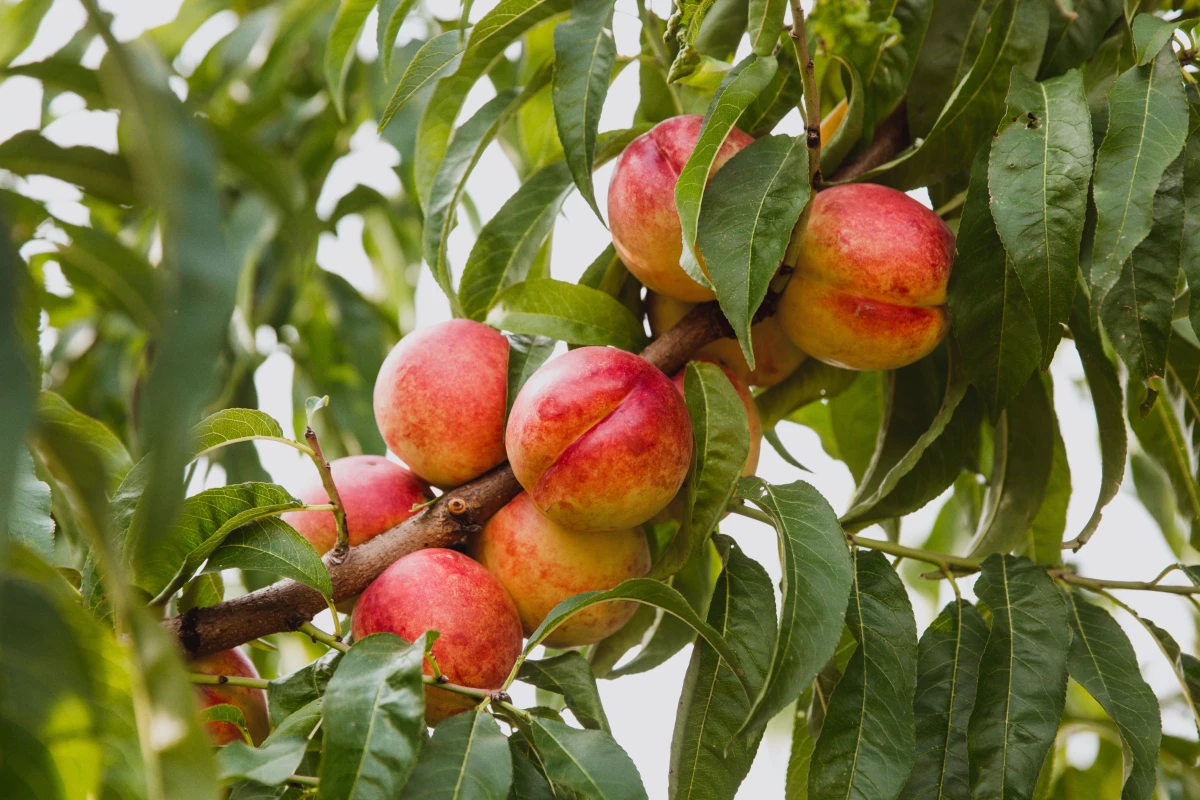
Farmers may soon have a more efficient way to determine the ripeness of their fruit without sacrificing yield. Researchers at Universitat Rovira i Virgili in Spain have developed a technique that analyzes the leaves of fruit trees to gauge the ripeness of the fruit itself. This innovative approach could minimize the need for farmers to pick and test fruit, which often reduces overall harvest.
The research, conducted over a period of 11 weeks on 12 nectarine trees in a commercial orchard, employs two types of spectrometers. These devices perform near-infrared and mid-infrared scans on both the top and underside of leaves adjacent to the fruit. The way leaves absorb or reflect light from the spectrometers reveals important information about the fruit’s ripeness.
Dr. Daniel Schorn, a member of the research team, explained, “The leaves undergo physiological and biochemical changes as the fruit ripens, due to the direct connection between the metabolism of the leaves and that of the fruit. These changes are reflected in their spectral fingerprint.” This connection allows the technology to accurately indicate various ripeness-related characteristics, particularly fruit weight and firmness.
While the current system shows promise for assessing key attributes, other factors such as sugar content, pH, and acidity are not as precisely indicated at this stage. Nevertheless, the researchers are optimistic that continued development will enhance the system’s capabilities.
One of the advantages of this leaf-scanning method is that it avoids the physical damage often associated with direct fruit scanning. Traditional methods can leave marks on the fruit’s skin, which can lower its market value. The aim is to eventually implement this technology in the field using portable scanners, allowing farmers to evaluate the ripeness of entire crops based on representative samples.
Such advancements could enable farmers to selectively harvest only ripe fruits from individual trees, leaving unripe fruits to mature further. This not only optimizes the harvest process but could also lead to increased profitability through reduced waste.
The findings of this study were published in the journal ACS Agricultural Science & Technology, highlighting the potential impact of this technology on modern agriculture. With ongoing research, the hope is to refine this technique to further benefit farmers around the world.