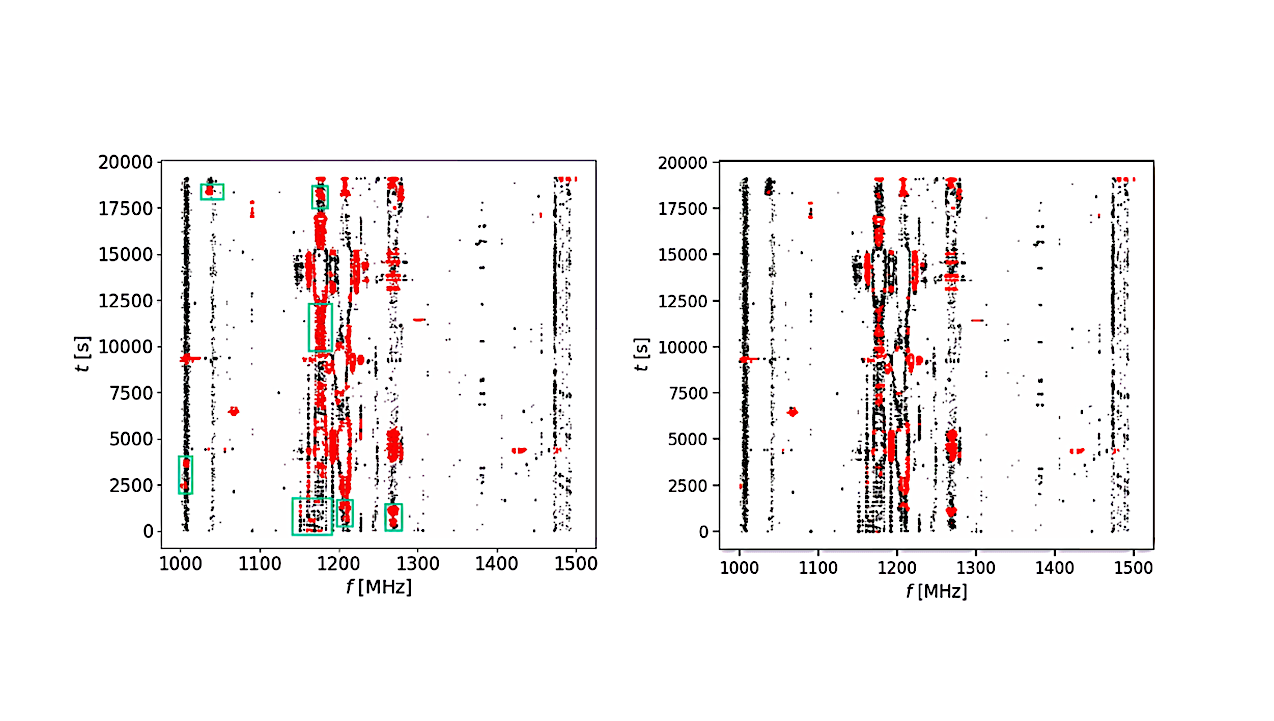
The ongoing search for extraterrestrial intelligence (SETI) has taken a significant step forward with the introduction of an enhanced machine learning approach aimed at addressing radio frequency interference (RFI). Researchers have applied the Density-Based Spatial Clustering of Applications with Noise (DBSCAN) algorithm to mitigate residual RFI in archival data from the FAST-SETI survey, conducted in July 2019.
RFI presents a major hurdle in SETI efforts, particularly for sensitive instruments such as the Five-hundred-meter Aperture Spherical radio Telescope (FAST). Initial mitigation techniques effectively remove persistent and drifting narrowband RFI, but residual interference often complicates data analysis. The new approach, detailed in a paper accepted for publication in The Astronomical Journal, showcases how advanced machine learning can improve detection accuracy while speeding up processing times.
After implementing the DBSCAN algorithm, researchers successfully identified and removed 36,977 residual RFIs, achieving an impressive reduction rate of approximately 77.87%. This outcome marks a significant improvement, representing a 7.44% increase in removal efficiency compared to previous machine learning methodologies. Furthermore, the execution time for this process was reduced by 24.85%, highlighting the algorithm’s effectiveness.
The team, comprising researchers including Li-Li Zhao, Xiao-Hang Luan, and others, noted that despite the successful removal of residual RFIs, they were able to retain candidate signals that are consistent with findings from earlier studies. One signal in particular was kept for further analysis, indicating that the DBSCAN algorithm not only enhances RFI mitigation but also supports the identification of potential extraterrestrial technosignatures.
This advancement in machine learning is crucial as SETI continues to explore the cosmos for signs of intelligent life. By improving RFI mitigation, researchers are better equipped to analyze data from instruments like FAST, ultimately enhancing the chances of discovering new signals from beyond Earth.
In summary, the application of the DBSCAN algorithm represents a significant leap forward in the quest for extraterrestrial intelligence, combining improved RFI mitigation techniques with enhanced computational efficiency. This innovative approach could pave the way for more effective and efficient SETI surveys in the future.
For more information, the full research can be accessed via arXiv at arXiv:2512.15809.