New research led by a team from Texas State University has revealed that rock art along the Pecos River dates back to approximately 6,000 years ago. This study identifies complex metaphysical concepts within the imagery that significantly influenced the belief systems of various Mesoamerican cultures. The findings were published in the journal Science Advances and highlight the importance of these ancient artworks.
The research team, including Karen Steelman, Ph.D., Carolyn Boyd, Ph.D., and Phil Dering, Ph.D., conducted extensive analysis of the Pecos River style rock art. According to Boyd, the team successfully dated one of the world’s most distinctive rock art traditions. “With 57 radiocarbon dates from 12 sites, we’ve learned that Indigenous communities began to paint these sacred, polychromatic murals almost 6,000 years ago,” she stated.
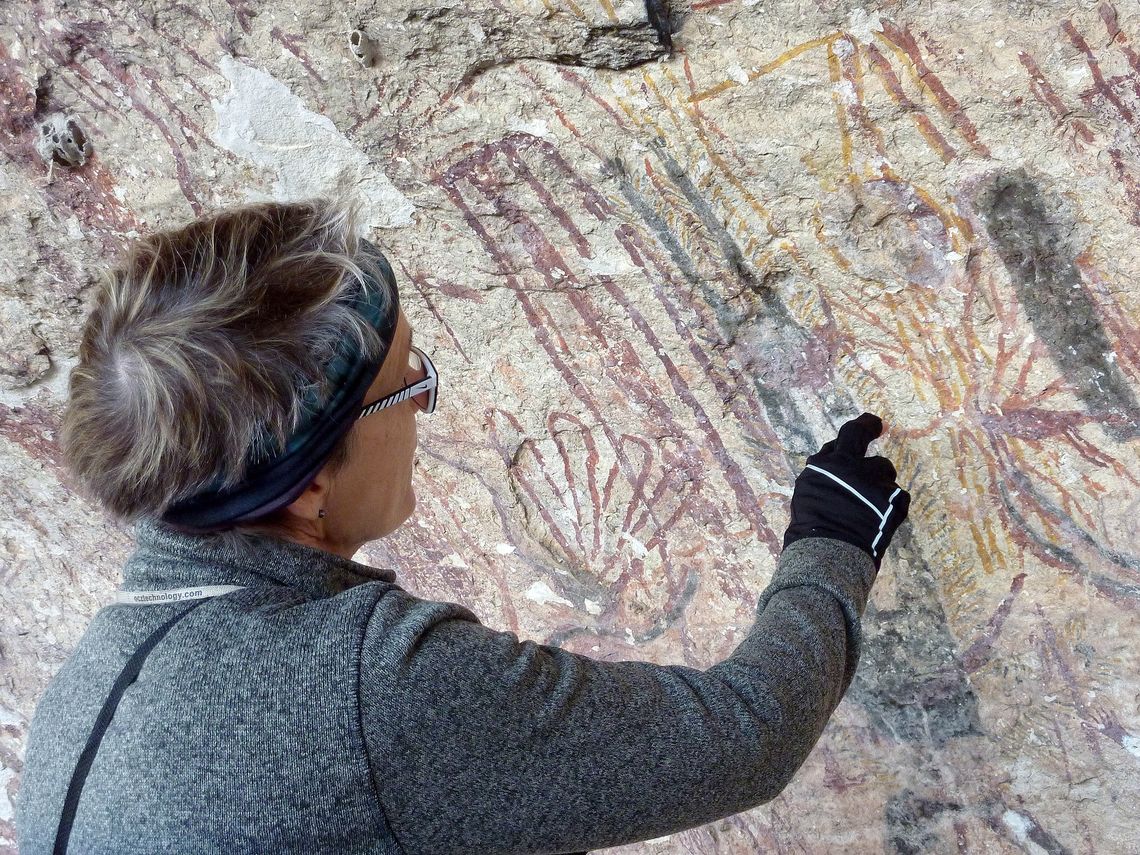
The murals, found in limestone rock shelters, depict a variety of figures, including human and animal forms, arranged in intricate designs. Some of these murals extend more than 100 feet long and 20 feet tall, showcasing the artistic expertise of the forager societies in southwest Texas and northern Mexico. The arid climate of the region has remarkably preserved these prehistoric artworks.
Previously, many archaeologists believed that the expansive murals were created over centuries, with various artists contributing to them over time. The new radiocarbon dating presents a different narrative. Boyd noted, “Another huge shocker is that the dates within many of the murals clustered so closely as to be statistically indistinguishable, suggesting that they were produced during a single painting event as a visual narrative.” This challenges the long-held view that the murals were random accumulations of images.
Utilizing advanced techniques, the research team gathered 57 direct radiocarbon dates and 25 indirect oxalate dates for the pictographs. Bayesian modeling estimates indicate that the Pecos River style originated between 5,760 and 5,385 years ago and likely concluded between 1,370 and 1,035 years ago. Stratigraphic and iconographic analyses revealed that eight of the murals conformed to a consistent set of rules and an established iconographic vocabulary.
This evidence suggests that the Pecos River style paintings were not only artistic expressions but also contained significant cultural messages. Boyd emphasized that these murals encapsulated sophisticated metaphysical concepts that influenced later Mesoamerican agricultural societies. “The compositional nature of the murals was further supported by our analysis of the painting sequence,” she explained. “Using a digital microscope to retrace the steps followed by the original artists, we discovered that the painters adhered to a rule-bound color application order.”
The meticulous layering and planning of paint demonstrate the high level of sophistication in these artworks, which were passed down through generations for over 4,000 years. Boyd highlighted the link between these ancient narratives and contemporary Indigenous communities, stating, “Today, Indigenous communities in the U.S. and Mexico can relate the stories communicated through the imagery to their own cosmologies.”
This latest research unveils what Boyd describes as “a vast and ancient library of painted texts documenting 175 generations of sacred stories and Indigenous knowledge.” The findings not only enhance our understanding of the Pecos River rock art but also underscore the enduring legacy of these ancient cultures in shaping belief systems across the New World.