Researchers at the Korea Institute of Energy Research (KIER), led by Dr. Hookyung Lee, have unveiled a groundbreaking electrified heat treatment technology. This innovation replaces fossil fuels with electricity in the metal heat treatment process, particularly for producing galvanized steel strips used in automobiles and household appliances. The new technology is poised to have significant implications across energy-intensive industries, supporting efforts to decarbonize industrial processes.
The South Korean government is accelerating decarbonization initiatives, aiming to meet national greenhouse gas reduction targets by 2035. This includes a target to achieve up to a 31% reduction in emissions from 2018 levels through various measures, such as electrifying industrial processes and increasing the production of low-carbon products. As a result, industries like steel manufacturing are facing mounting pressure to adopt innovative heating technologies.
Innovative Approach to Annealing
Traditionally, galvanized steel strips are produced using a Continuous Galvanizing Line (CGL) process, where steel plates are coated by passing through a molten zinc bath. This process involves annealing, a heat treatment that enhances the material’s ductility and formability. Historically, this stage has relied on fossil fuels, such as natural gas, to heat the annealing furnaces. Consequently, the process contributes significantly to greenhouse gas emissions, accounting for approximately 15% of South Korea’s total national emissions, including carbon dioxide and nitrogen oxides.
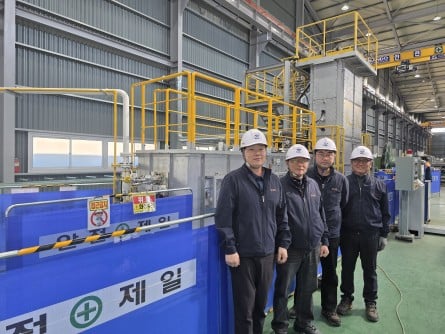
To tackle this environmental challenge, the KIER research team has developed a “carbon-free annealing system” that operates exclusively on electricity. This system replaces the conventional burners in annealing furnaces with electric heating elements. During trials that simulated commercial production conditions, the technology demonstrated a remarkable reduction of over 98% in carbon dioxide and nitrogen oxide emissions.
The innovation lies in the design of the furnace. The team maintained the essential refractory structure and steel-strip conveying mechanism of traditional furnaces, while implementing electric heating elements strategically positioned in both the upper and lower sections. This design allows for rapid and uniform heating through high-temperature radiant heat, minimizing heat loss.
When the new system was tested on steel strips measuring 0.49 millimeters at 750°C, the results indicated that the color, microstructure, and mechanical properties matched those produced using conventional methods. Furthermore, the emissions were significantly lower, showcasing that carbon emissions can be drastically reduced without sacrificing productivity or quality.
Economic and Environmental Benefits
The electric annealing furnace offers additional benefits. It eliminates the need for fuel and air supply systems, burners, and exhaust systems, leading to a reduction of approximately 40% in capital investment costs and installation footprint. When powered by renewable energy sources like wind and solar, this system can facilitate a truly carbon-free heat treatment process, aligning with global environmental regulations, including the Carbon Border Adjustment Mechanism (CBAM).
Dr. Hookyung Lee emphasized the significance of this advancement, stating, “This demonstration is the world’s first case to show that carbon-free heating can be achieved simply by replacing burners with electric heating elements.” Looking ahead, the research team intends to expand this technology further, aiming to develop an AI-based design and operation system that optimizes heating-element configurations. This initiative could enhance efficiency, taking into account variables such as steel-strip width, thickness, and conveying speed.
The results of this transformative study were published in September 2025 in the journal Applied Thermal Engineering, known for its focus on energy and thermal engineering. The research received support from Korea’s Ministry of Trade, Industry and Energy, and the demonstration was conducted in collaboration with Samwoo Eco Co., Ltd. at their facilities.
This innovative technology not only represents a significant step towards decarbonizing the steel industry but also positions South Korea at the forefront of sustainable industrial practices. As global pressures increase for reduced emissions, solutions like this could play a crucial role in meeting future environmental standards.