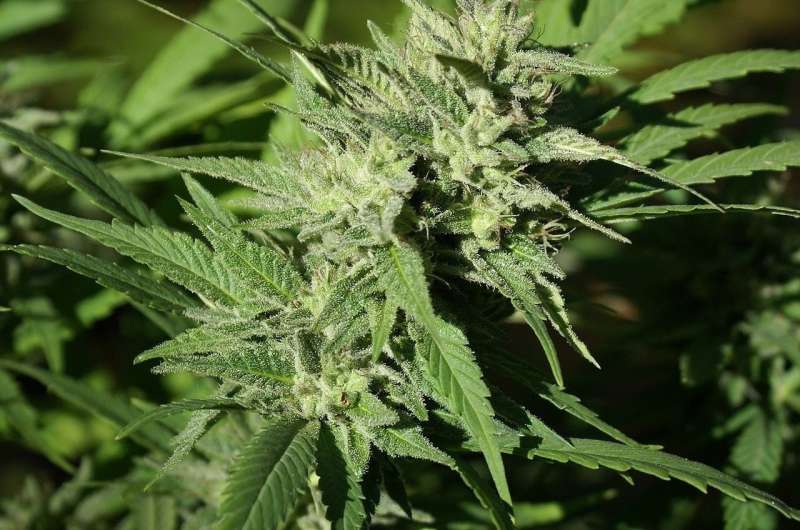
Researchers at Wageningen University & Research have made significant strides in understanding the origins of prominent cannabis compounds, including THC, CBD, and CBC. In a groundbreaking study published online on December 26, 2025, in the Plant Biotechnology Journal, they experimentally demonstrated how cannabis acquired the ability to produce these cannabinoids, which have notable medicinal properties.
The research team focused on reconstructing ancient enzymes that were active millions of years ago in the ancestors of cannabis plants. This process revealed that the biosynthesis of cannabinoids, such as THC, likely originated in a relatively recent ancestor of cannabis, followed by a series of gene duplications that led to the specialization of enzymes. These enzymes are essential for cannabinoid production, with modern cannabis plants relying on specific enzymes to create distinct bioactive compounds.
Evolutionary Insights and Practical Applications
The findings provide valuable insights into the evolutionary history of cannabis. The common ancestor of the enzymes was capable of producing multiple cannabinoids simultaneously. Over time, evolutionary changes led to the emergence of enzymes that focused on specific compounds. Researchers employed a method known as ancestral sequence reconstruction to infer the characteristics of these ancient enzymes based on DNA from contemporary plants.
By resurrecting these ancestral enzymes in the laboratory, the researchers were able to test their functionality. The study indicates that these reconstructed enzymes are not only more robust but also easier to produce in microorganisms, such as yeast. This advancement is particularly relevant as biotechnological methods for cannabinoid production continue to grow in popularity.
Robin van Velzen, a lead researcher in the study, emphasized the practical implications of their work. “What once seemed evolutionarily ‘unfinished’ turns out to be highly useful,” he stated. The robust nature of the ancestral enzymes makes them appealing candidates for new applications in biotechnology and pharmaceutical research.
Future Impact on Medicinal Cannabis
One of the most promising aspects of this research is the potential for developing new cannabis varieties with enhanced medicinal properties. For instance, one of the reconstructed enzymes specifically produces CBC, known for its anti-inflammatory and analgesic effects. Currently, no cannabis plant has a naturally high content of CBC, but introducing this enzyme into cannabis plants could lead to innovative medicinal strains.
The findings from Wageningen University & Research not only deepen our understanding of cannabis evolution but also pave the way for practical applications that could benefit the medical community. As researchers continue to explore the potential of these ancient enzymes, the future of cannabinoid production appears increasingly promising.
This study represents a significant step forward in both evolutionary biology and the biotechnological production of cannabinoids, showcasing how fundamental research can lead to groundbreaking advancements in medicine and agriculture.