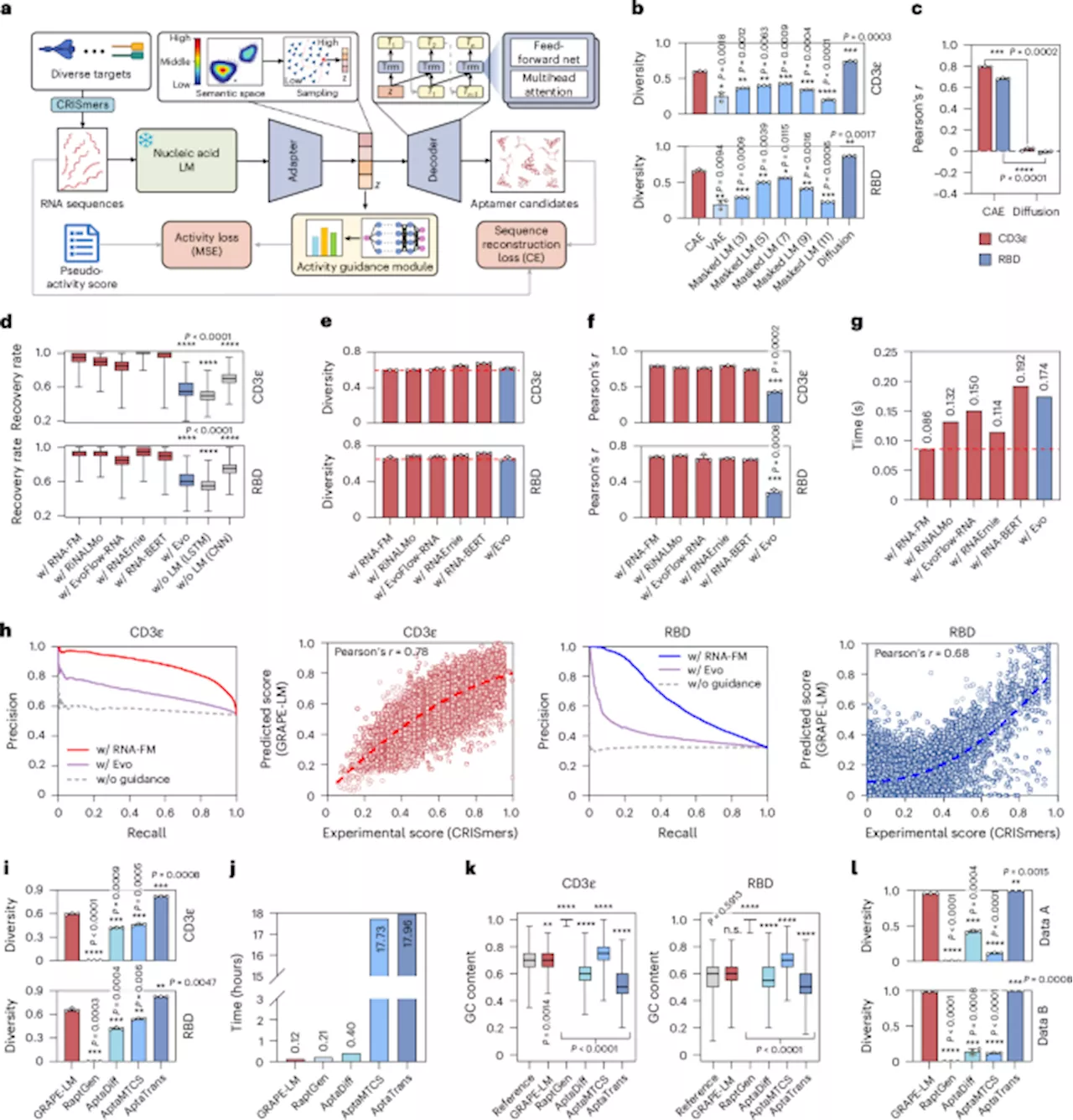
Research has unveiled a groundbreaking advancement in the field of biomolecular engineering with the introduction of GRAPE-LM, an innovative framework designed for the rapid evolution of RNA aptamers. This development addresses a significant challenge in biotechnology that has persisted despite recent advancements in artificial intelligence and language models. Traditional methods for aptamer discovery typically require labor-intensive, multi-round screening processes, which can be time-consuming and inefficient.
GRAPE-LM stands out as a pioneering solution, enabling a one-round evolution of RNA aptamers. The framework combines a transformer-based conditional autoencoder with nucleic acid language models, utilizing data from CRISPR−Cas-based screening conducted in intracellular environments. This integration allows for the effective identification of high-affinity RNA aptamers with remarkable efficiency.
Validation Across Diverse Targets
The efficacy of GRAPE-LM has been validated through experiments involving three distinct targets: the human T cell receptor CD3ε, the receptor-binding domain of the SARS-CoV-2 spike protein, and the oncogenic transcription factor c-Myc. In each case, GRAPE-LM demonstrated the ability to generate RNA aptamers that not only matched but often surpassed the performance of those developed through traditional multi-round selection methods.
This significant achievement was made possible through a single round of CRISPR−Cas-based screening, showcasing GRAPE-LM’s potential to streamline the aptamer selection process. The results indicate that aptamers generated using this novel approach can effectively bind to their respective targets with higher specificity and affinity than those derived from conventional methods.
Implications for Future Research and Applications
The implications of this research extend beyond academic curiosity. The ability to quickly and efficiently generate high-quality RNA aptamers could revolutionize therapeutic development, diagnostics, and biosensing technologies. Aptamers are increasingly recognized for their potential applications in various fields, including medicine, where they can be used for targeted drug delivery and cancer therapy.
The project was supported by multiple prestigious organizations, including the National Key Research and Development Program of China and the National Natural Science Foundation of China, highlighting its significance in the global scientific community. Researchers from the Shenzhen Institute of Advanced Technology played a crucial role in the development and validation of GRAPE-LM, further establishing the institution as a hub for cutting-edge research in synthetic biology.
In conclusion, the introduction of GRAPE-LM represents a major step forward in the directed evolution of RNA aptamers, promising to enhance the efficiency and effectiveness of biomolecular research. As the scientific community continues to explore the capabilities of this framework, its potential applications may lead to significant advancements in biotechnology and medicine, ultimately benefiting a wide array of fields and industries.