This week, significant scientific discoveries emerged, revealing insights into human history, cosmic phenomena, and innovative technologies. Among the highlights is the discovery of a human population that remained genetically isolated for approximately 100,000 years, alongside remarkable findings about the largest spinning structure in the universe, and advancements in water extraction technology.
Human Isolation and Genetic Diversity
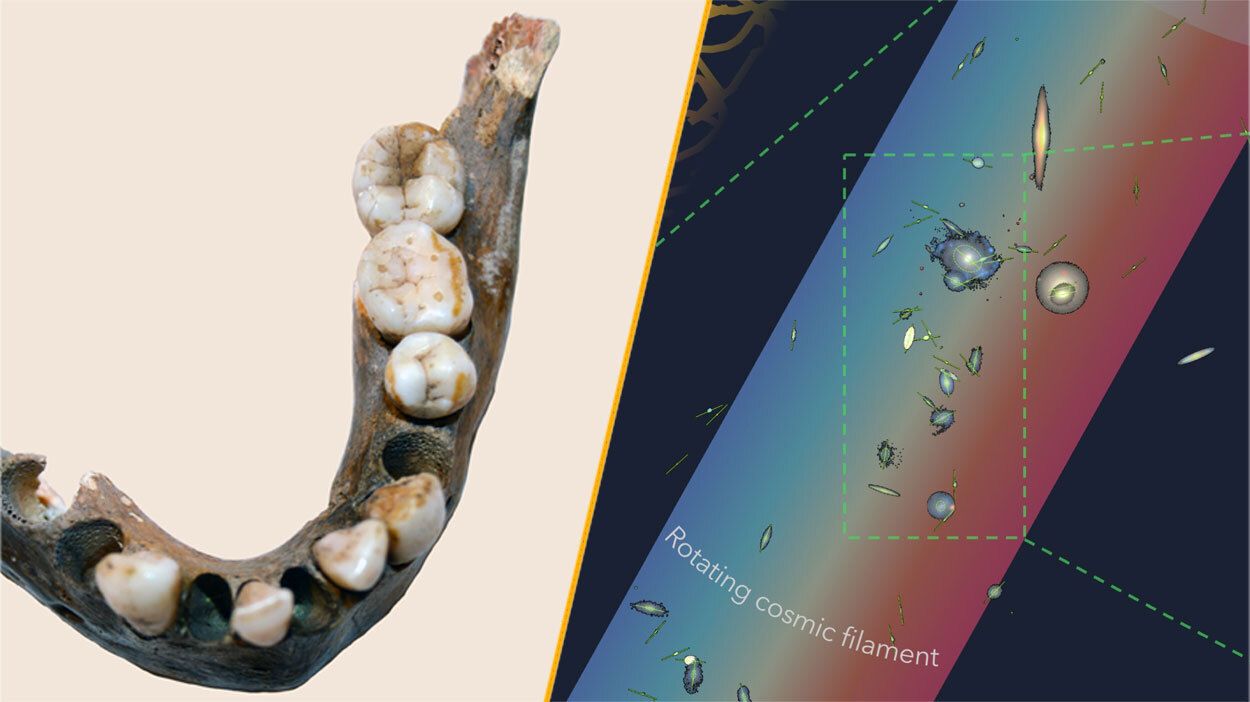
Researchers have reported intriguing findings from southern Africa, where a human population lived in isolation for 100,000 years. This study focused on skeletal remains discovered south of the Limpopo River, which flows from South Africa into Mozambique. The remains, dating back to more than 1,400 years ago, exhibited a genetic makeup markedly different from contemporary humans. According to the study, these individuals represent “an extreme end of human genetic variation,” shedding light on the diversity of human evolution.
In a separate investigation, archaeologists in China unearthed a massive pit filled with skulls near a 4,000-year-old city. The majority of these skulls belonged to males, diverging from sacrificial patterns observed in nearby sites, raising questions about the cultural practices of ancient civilizations. Meanwhile, a 2,700-year-old tomb in Greece intrigued researchers with its unusual contents, including a woman adorned with an upside-down crown.
Cosmic Discoveries and Technological Innovations
Astronomers also made headlines this week with the discovery of the largest spinning object in the universe, located approximately 140 million light-years away. This colossal rotating filament, wider than the Milky Way, is connected to a chain of 14 galaxies. It spins at an impressive speed of around 68 miles per second (or 110 kilometers per second), illustrating the vast dynamics of our universe.
Additionally, the interstellar comet 3I/ATLAS has captivated scientists with its unique features. Observations from the Joan Oró Telescope in Spain revealed spiral jets on the comet’s surface, suggesting the presence of “ice volcanoes.” As the comet approaches the sun, its rapid heating indicates that ice is sublimating, aligning it with other solar system bodies.
In a significant technological breakthrough, engineers at MIT have developed a method to extract drinking water from the atmosphere. This innovative device uses ultrasound to rapidly condense water vapor, achieving results 45 times more efficient than traditional evaporation methods. Although the device requires a power source, researchers believe pairing it with solar cells could address water scarcity, particularly in arid regions.
As these discoveries unfold, they highlight the ongoing exploration of both our planet’s history and the vast universe beyond. Scientists continue to make strides in understanding the complexities of human evolution, the mysteries of space, and the challenges of modern living, showcasing the interconnectedness of scientific inquiry across diverse fields.